| Text i dokument <itemDescription> |
-
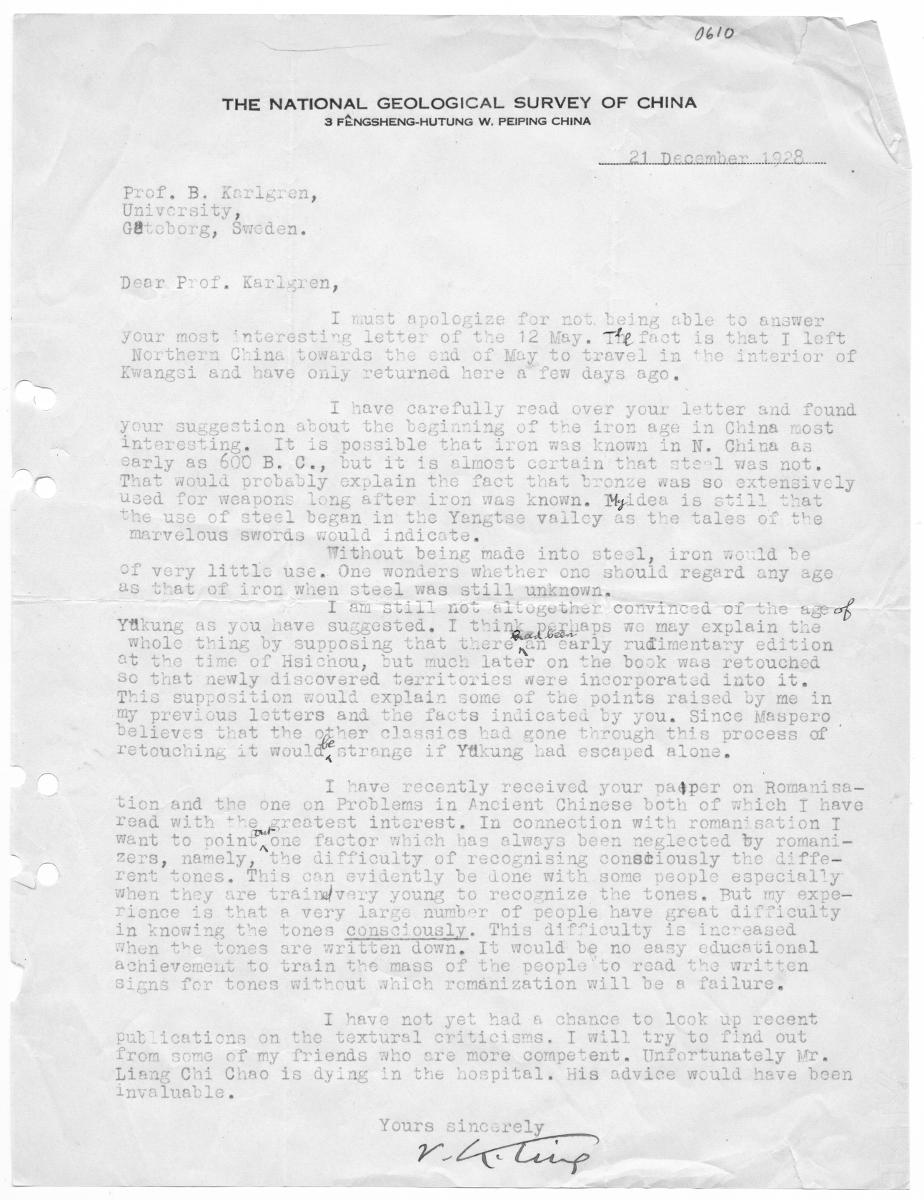
SRA RE ST RE NR NA je AGT ÖRE. Je Ne THE NATIONAL GEOLOGICAL SURVEY OF CHINA TV 3 FENGSHENG-HUTUNG W. PEIPING CHINA Å IR TDSTSMHST: GEA RICO: Ba OR STSTSA: UNTVErSILY sg Eon Oweden. Pear Prof. Kartenen, ; I-Must apologize for not being able to answer JÖOUT” MOST INLeresting TetCber Of-GAe sker May . The fac ÖT is TNeST I Pe Northern China towards the end of May to travel in the interior of Kwangsi...
Visa hela
SRA RE ST RE NR NA je AGT ÖRE. Je Ne THE NATIONAL GEOLOGICAL SURVEY OF CHINA TV 3 FENGSHENG-HUTUNG W. PEIPING CHINA Å IR TDSTSMHST: GEA RICO: Ba OR STSTSA: UNTVErSILY sg Eon Oweden. Pear Prof. Kartenen, ; I-Must apologize for not being able to answer JÖOUT” MOST INLeresting TetCber Of-GAe sker May . The fac ÖT is TNeST I Pe Northern China towards the end of May to travel in the interior of Kwangsi and have only returned here a few days ago. I have carefully read over your letter and found OMt-tCHS beginning of the iron age in ONine most interesting. It is possible that iron was known in N. China as garly äs 600 B.,C,y but: it i8 almost certainithat stesl was not. That would probably explain tne fact that bronze was so oxtensively 1C be your. suggestion ab - I use SR Weapons long TE iron was known. Fo töRe TSRS0 ERE The use of steel began in the SR se. valley as the tales of the nav ÄT SNe swords would indicat Without being "made into Sn iron would be y little use. One wonders whether one should regard any age t-of irogc when steel was still unknowna S N I am Still not altogether convinced of the agoct Ytikung as you have suggested. I Clinka pg sr haps we may explain the whole thing by supposing that tnere',an NT rudimentäry edition AL The time OC:HStenou, Dub mack later on the book was retouched Sö that: newly discovered Territories were incorporated into. it. This supposition would explain some: of the points raised by me in My previous letters and the facts indicated by you. Since Maspero believes that the tre classics had gone through this process of retouching it would( strange if Ytlkung nad escaped al0ne. Ke I have recently received your pagper on Romanis 38 — tion and the one on Problems in Ancient Chinese both of which I have read with the greatest interest. In connection with romanisation TI want to point one factor which has alweys been neglected by romani— Z2er8, namely, the difficulty of recognising constiously tne - diffe= rent tones. This can evidently be done with some people especially When. tney are traimfvery VOUNS =O -=reCO2NIAG— Ne GORS]Pse rr BUGG my expe- rience is that a very large number of people have great difficulty e iP kNöwIBe the tones :COnSe:ouUs kyr. ATS -TLETLeViiy 5. tIpeCTeased When the tones: are written down, It woulä be no easy KÄR achievement to train the mass of the people to feat he written + Signs för tones without walich romanization will be a "failure I have not yet Had -a chance to ktook up recent PUB I TCATtTIONS: HON -bRG- Lex LUTA GC BITILC SNIA bow CLYT0 0 ETINATÖVG from some of my friends who are more competent. Unfortunately Mr. Trang CHi-Chao Iis dying. 10 tie höspitals LS advice: wowd save been invaluable. | Yours sincerely v FIRE
Stäng
|

 ARTIKLAR I WIKIPEDIA
 ARTIKLAR I WIKIDATA
 BILDER I WIKIMEDIA COMMONS