| Typ <itemType> |
Objekt/föremål |
| Plats <presPlaceLabel> |
Asien, Pakistan, Mohenjo-daro, Indus Valley |
| Description <itemDescription> |
-
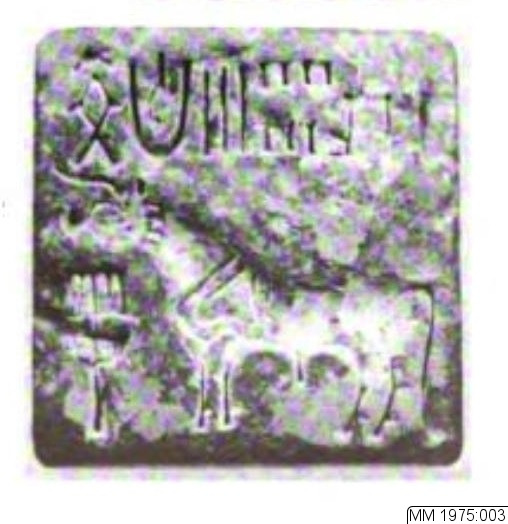
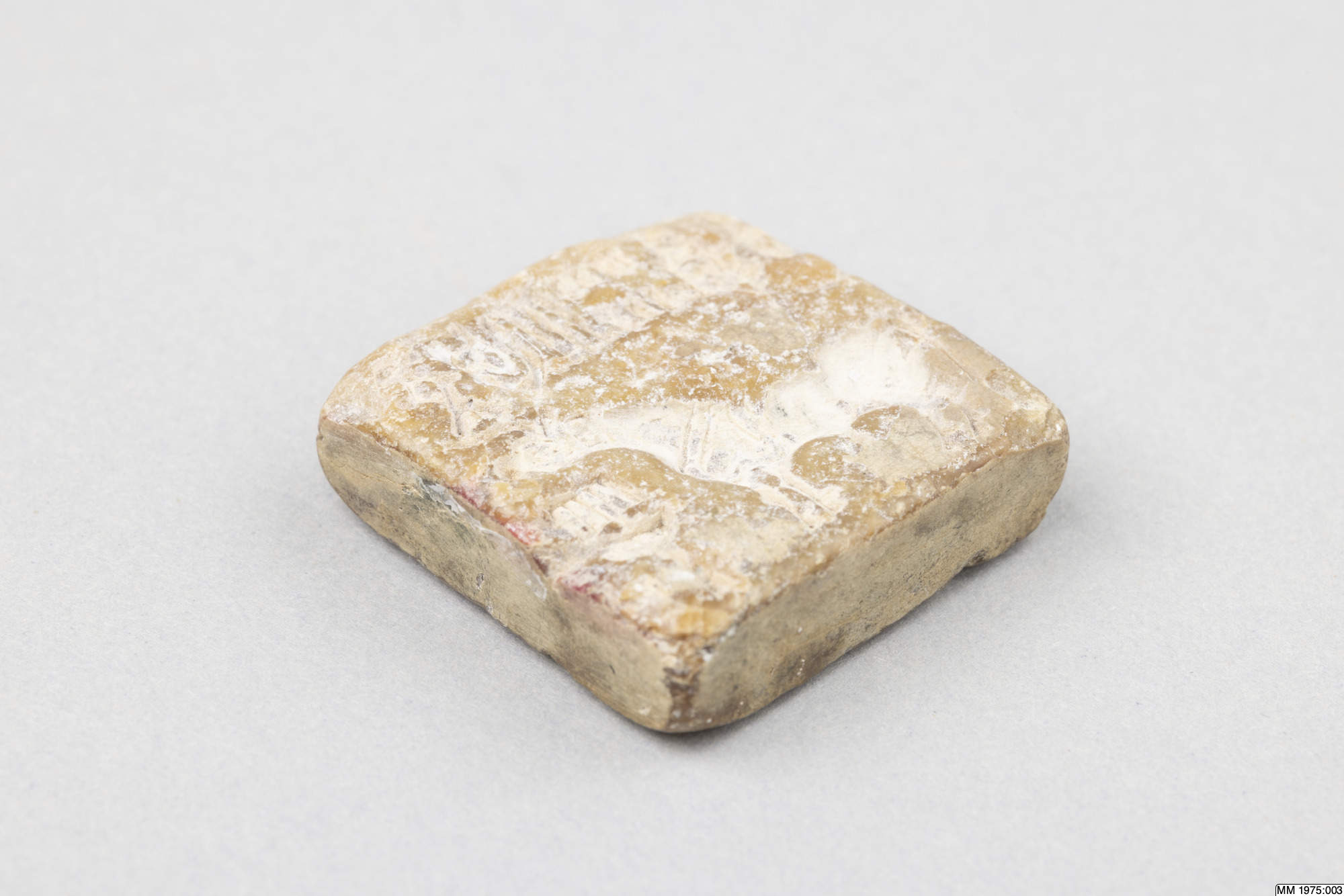
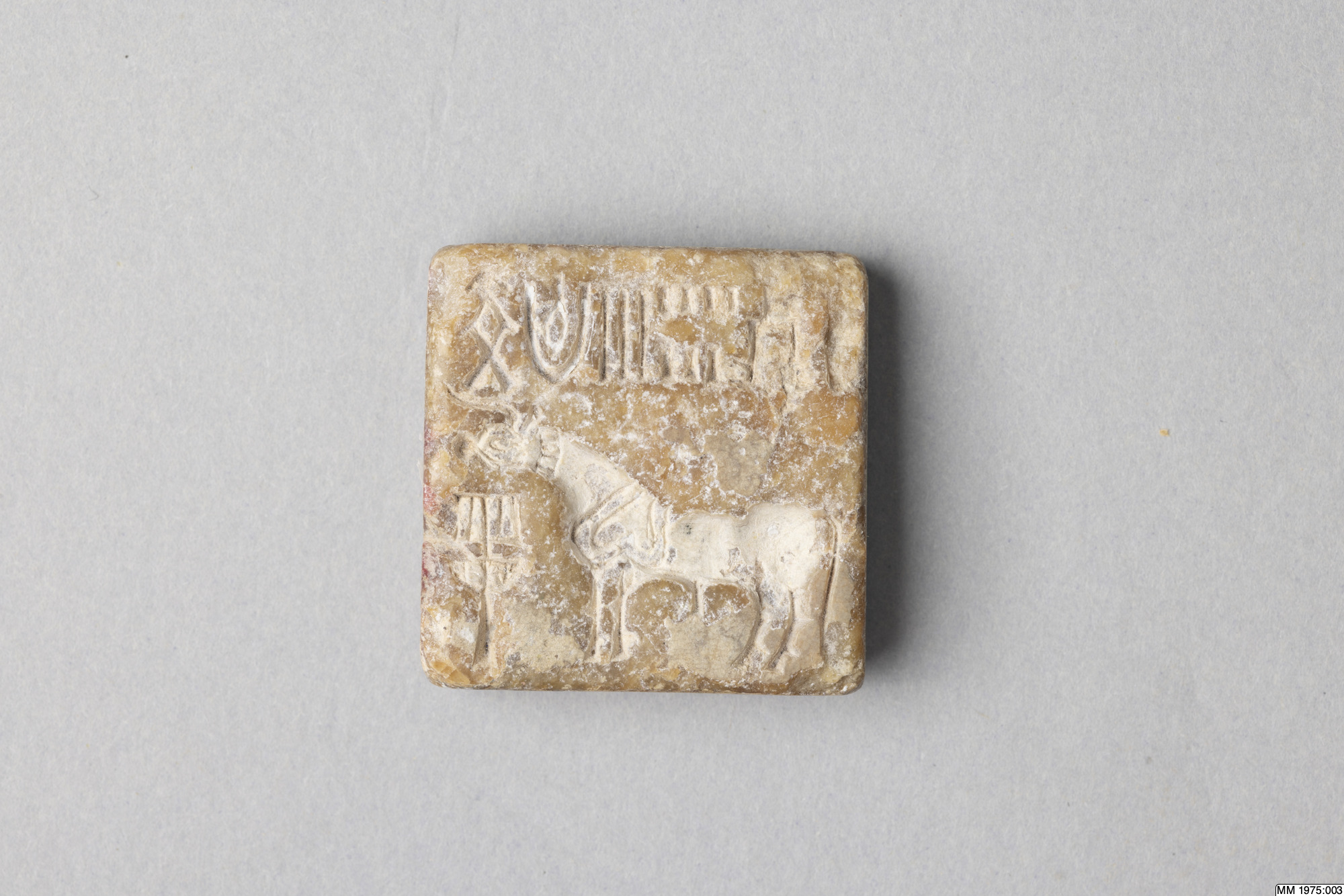
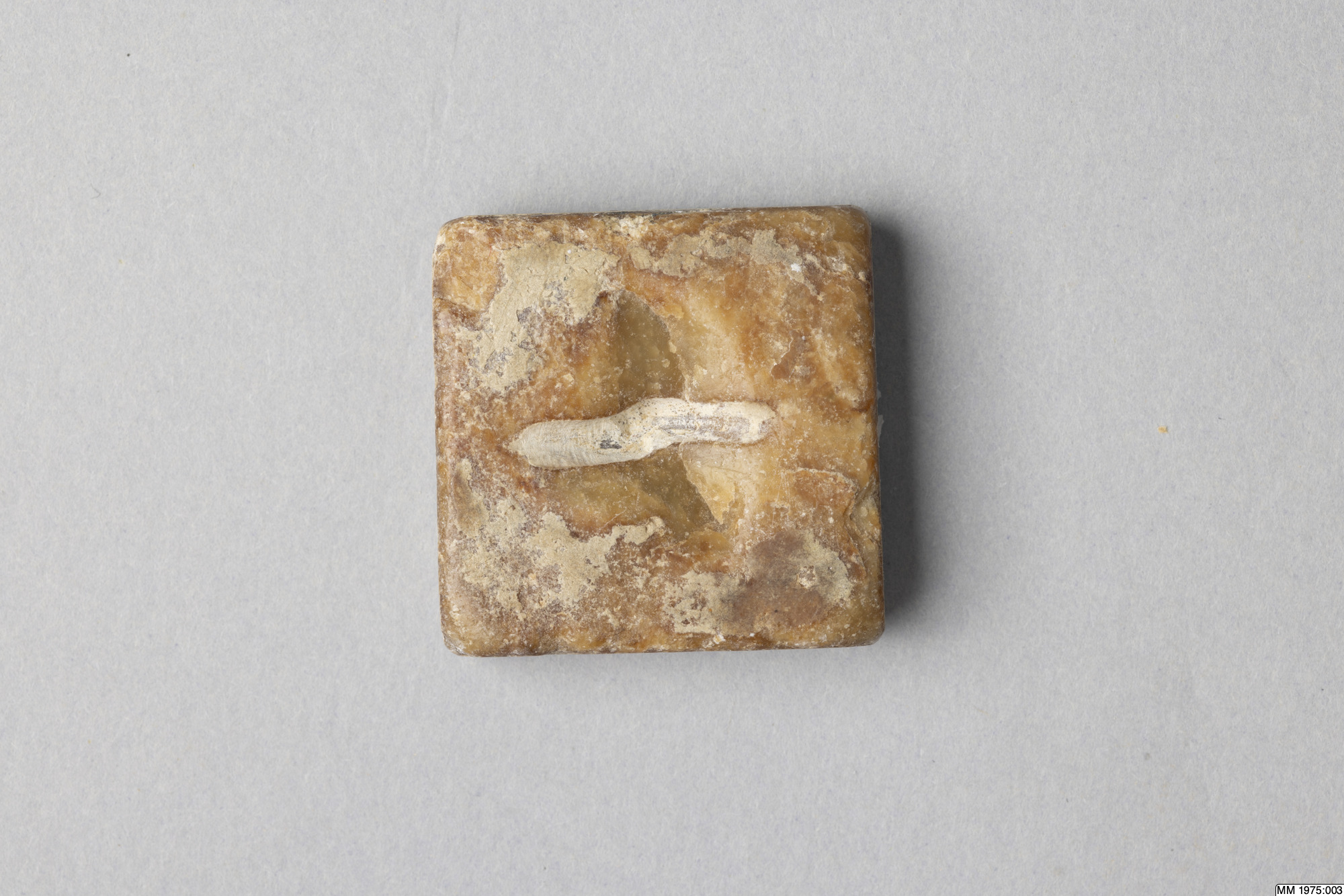
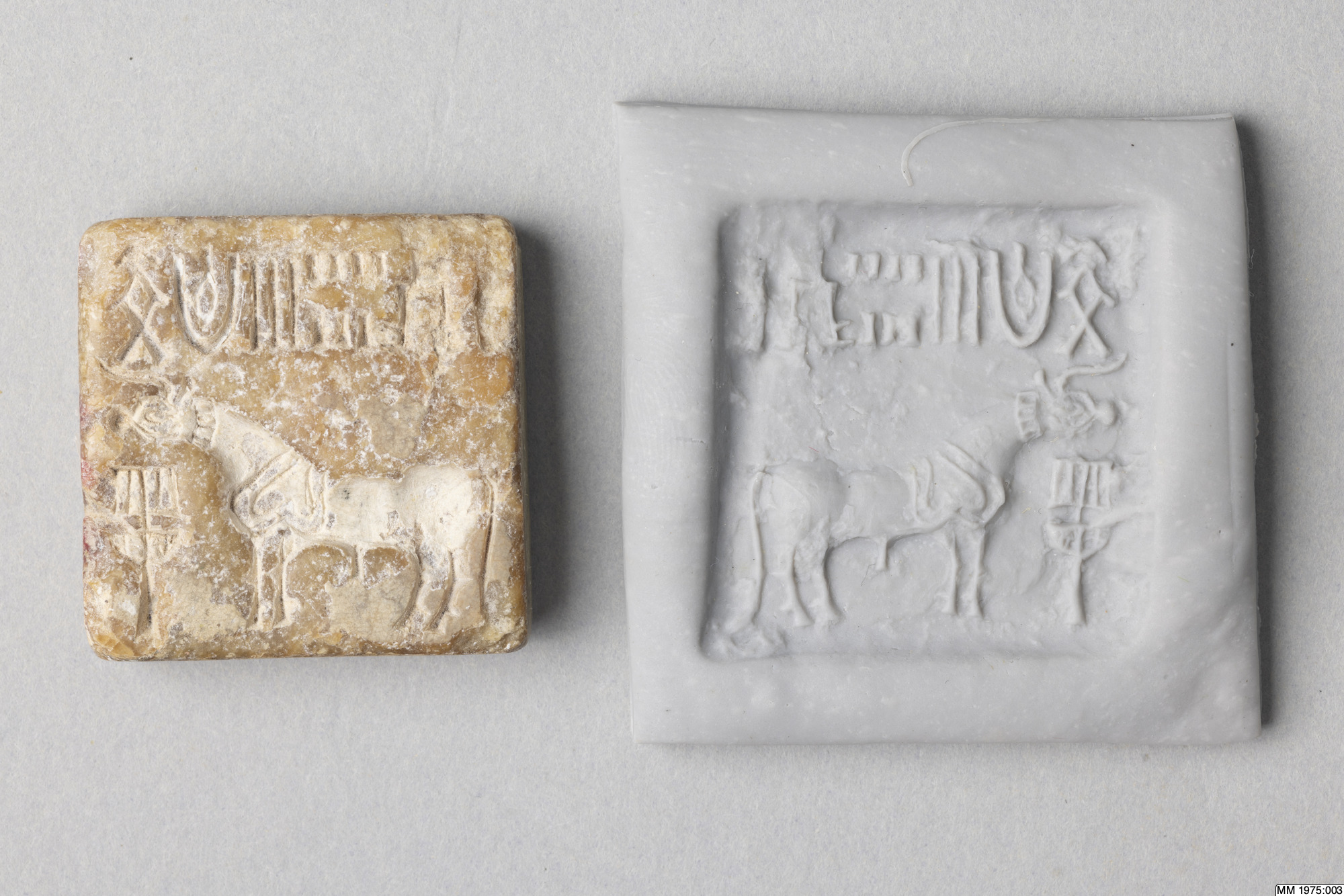
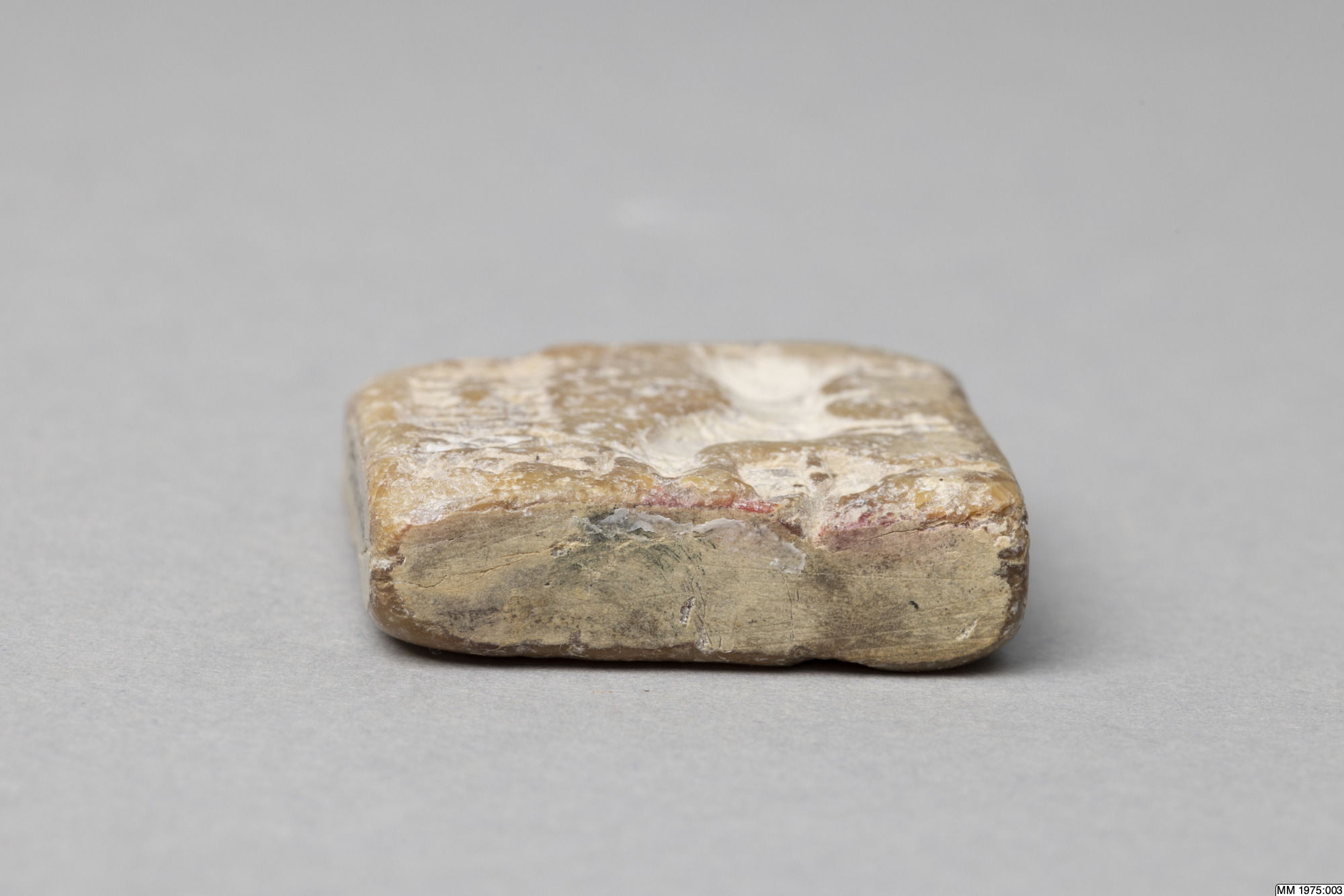
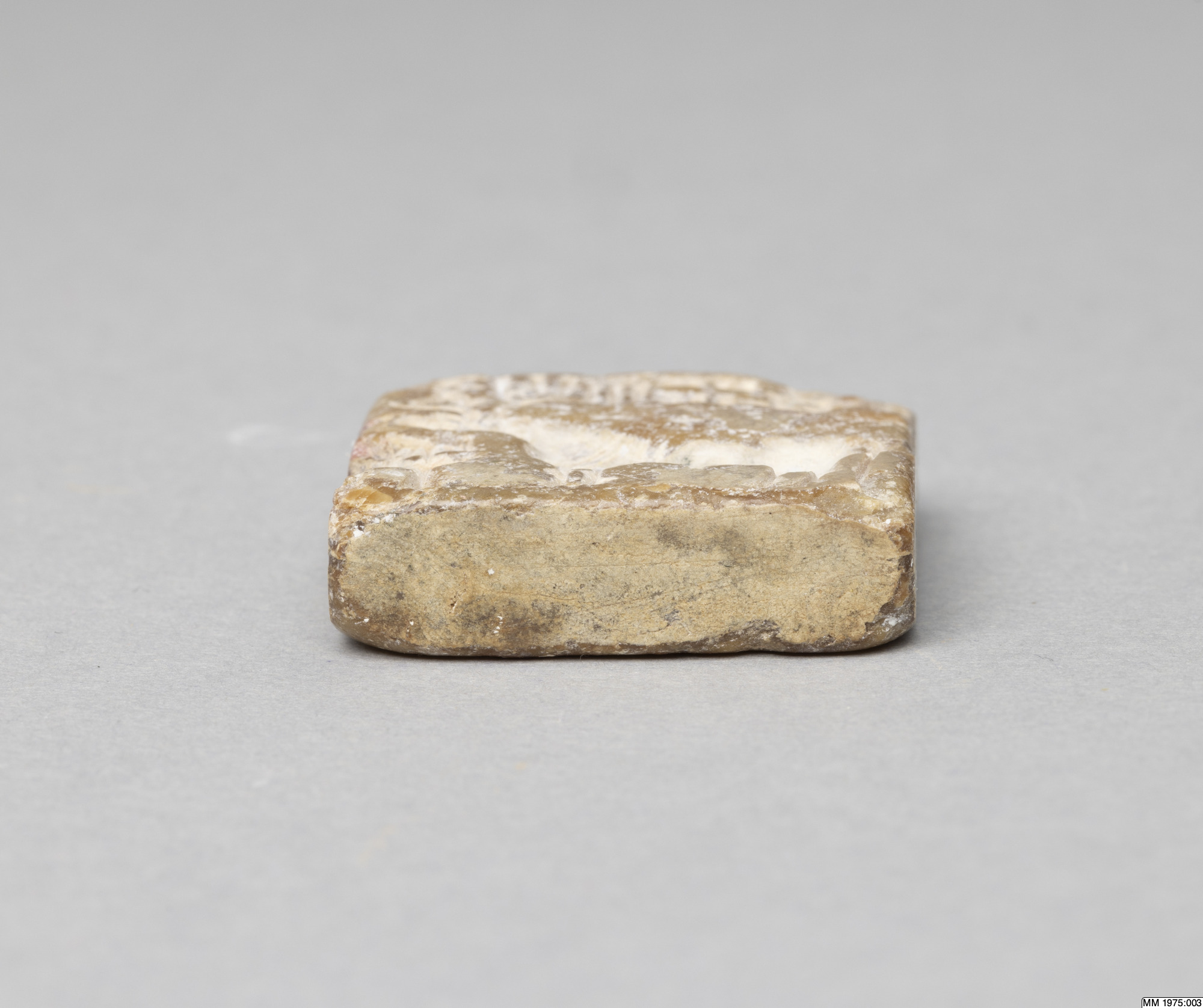
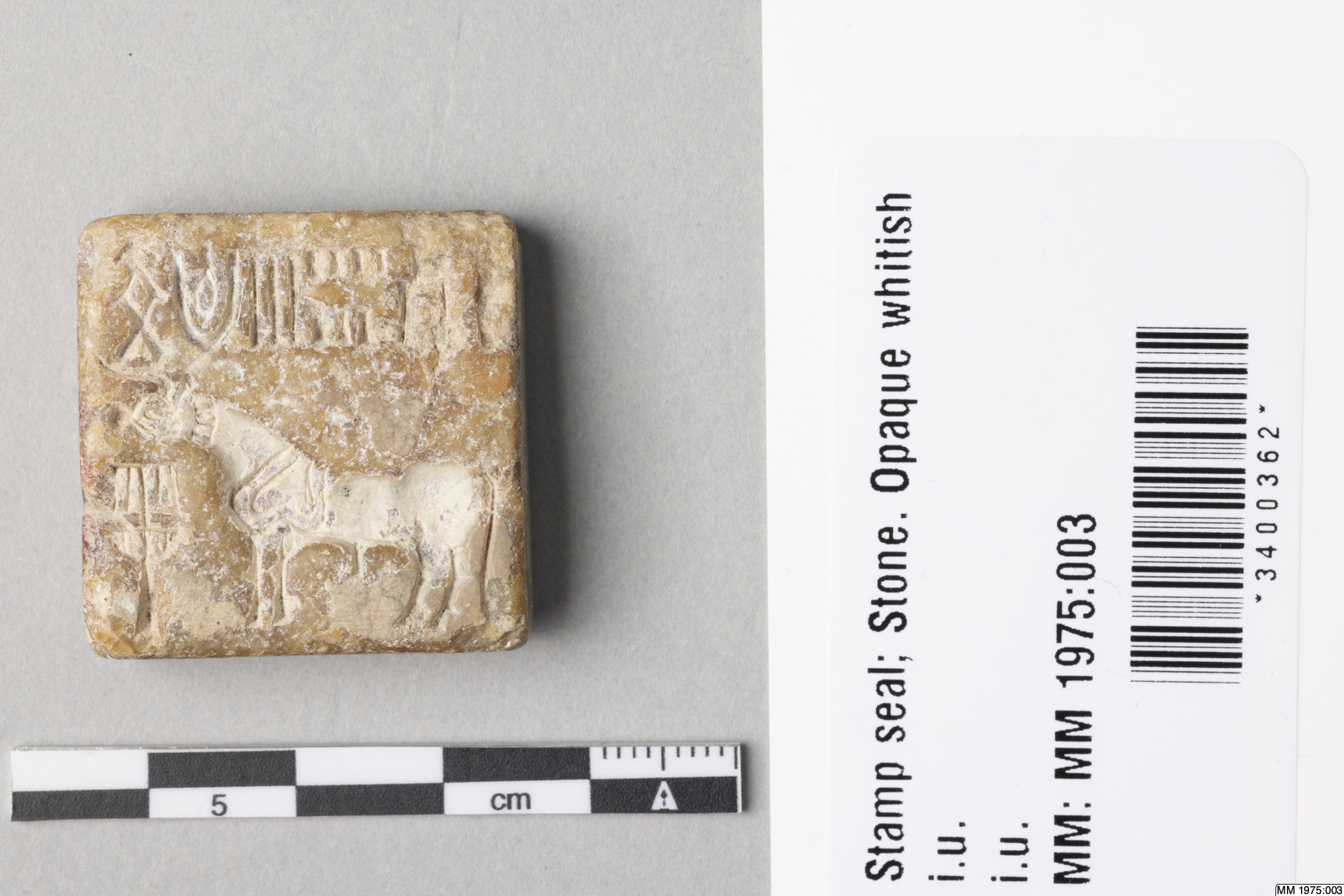
Indus Valley square stamp seal with the boss handle is missing, it seems to have been broken off leaving a deep ridge in the central area of the upper part of the seal. Bull-like animal with one horn faces right, it has a ‘ladder – like’ collar around upper neck and an ‘upside-down heart – shaped’ marking over its shoulder, the creature is described by Shah/Parpola 1991. P. XXX as ‘unicorn’ and th...
Visa hela
Indus Valley square stamp seal with the boss handle is missing, it seems to have been broken off leaving a deep ridge in the central area of the upper part of the seal. Bull-like animal with one horn faces right, it has a ‘ladder – like’ collar around upper neck and an ‘upside-down heart – shaped’ marking over its shoulder, the creature is described by Shah/Parpola 1991. P. XXX as ‘unicorn’ and the various types have been classified from ‘I-V’. A rectangular (?) flag or standard on a stand is placed beneath the animal’s head and one line of Indus Valley Helen Merrillees catalogue 1995.
Stäng
|
| Inventory number <itemDescription> |
|
| Acquisition <itemDescription> |
|
| Comments <itemDescription> |
-
(See Shah/Parpola 1991, p. XXXII for discussion of material of Indus Valley seals).
-three impressions
|
| Condition <itemDescription> |
|
| Dimensions <itemDescription> |
|
| Cf Publications <itemDescription> |
|
| Published text <itemDescription> |
-
Two green steatite stamp-seals from Mohenjo-daro. Both of them are rather worn. The smaller one [1975:002] has a pierced knob on its back. The larger piece[1975:003] has a groove on the same place. P...
Visa hela
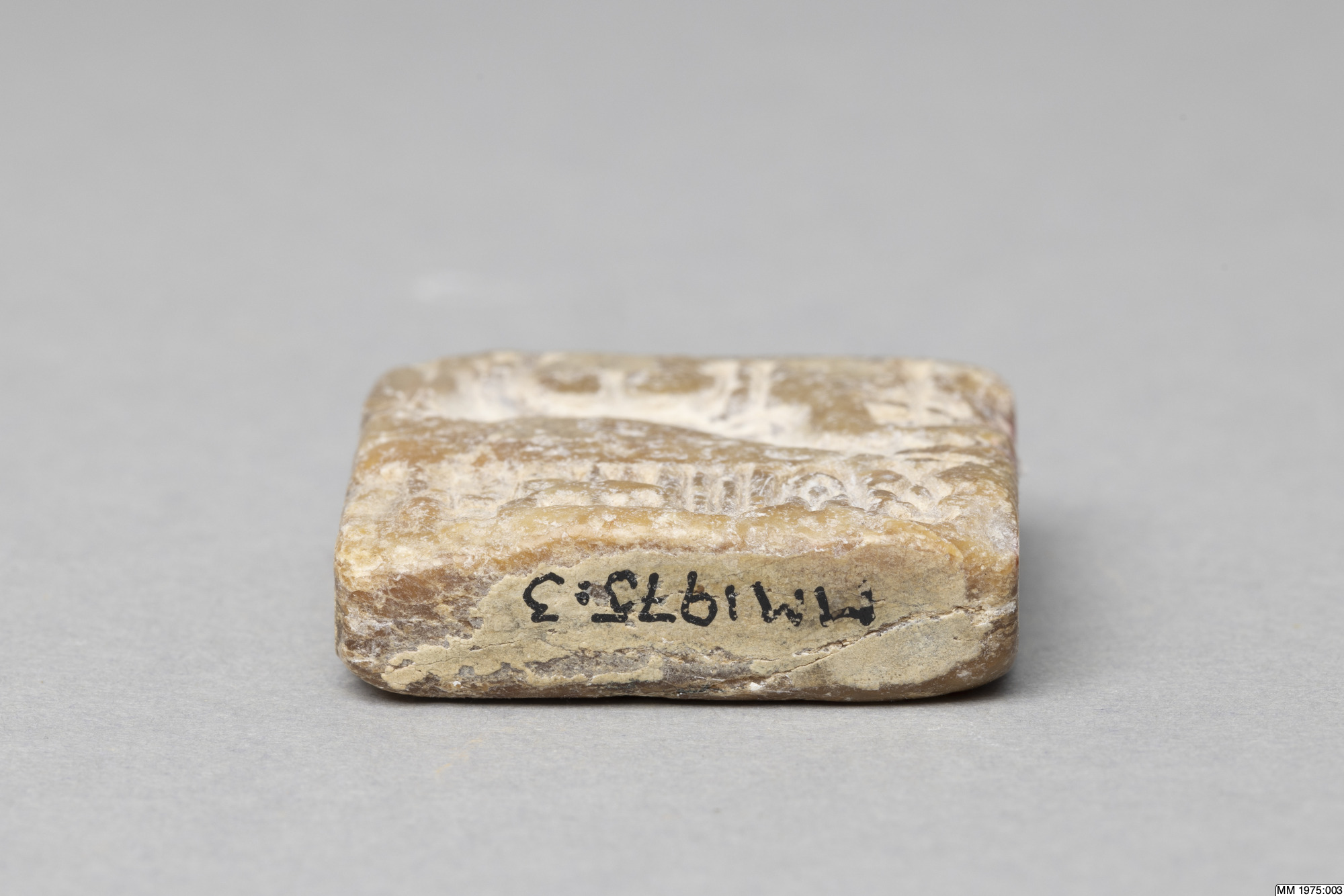
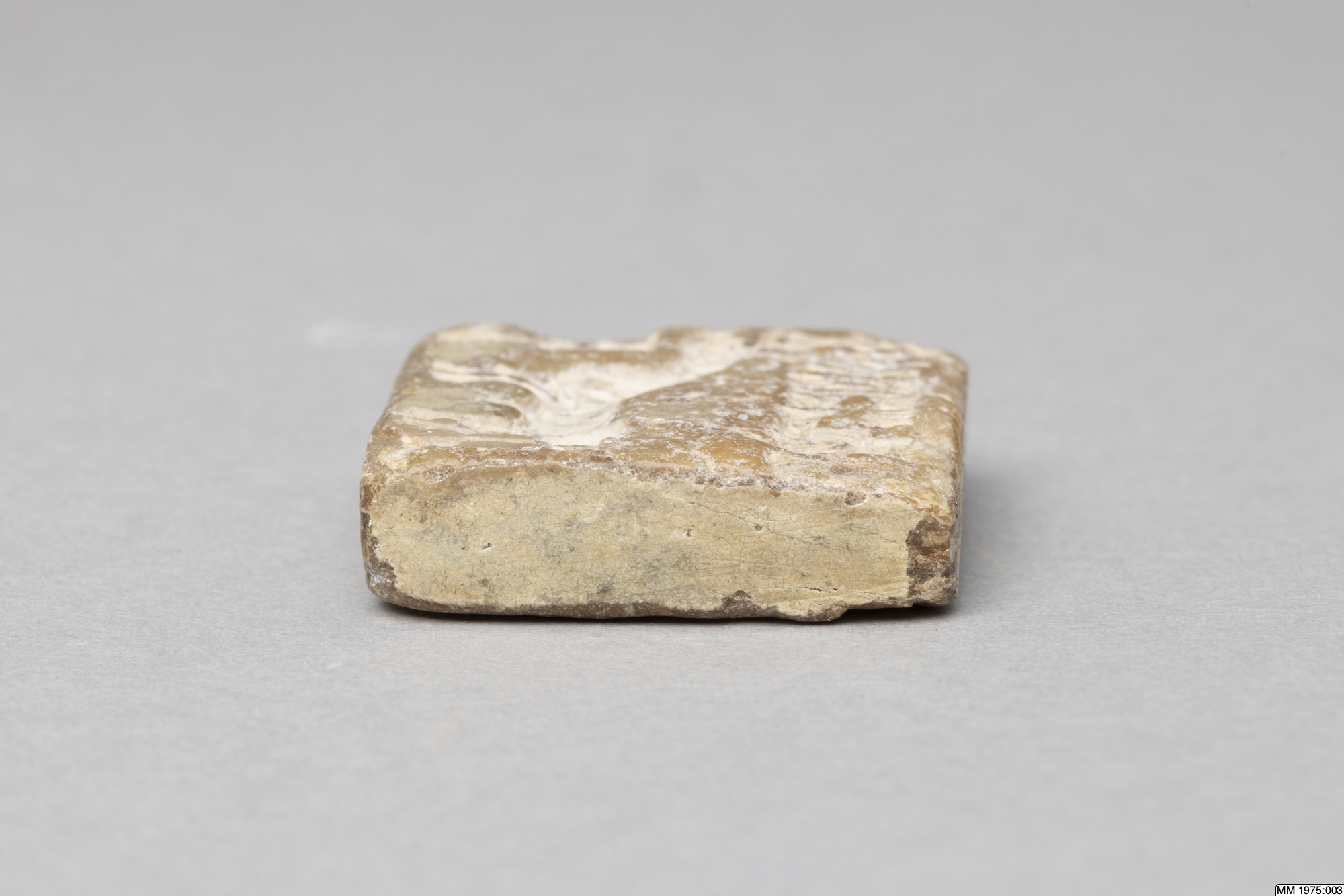
Two green steatite stamp-seals from Mohenjo-daro. Both of them are rather worn. The smaller one [1975:002] has a pierced knob on its back. The larger piece[1975:003] has a groove on the same place. Probably something had been attached to it. The smaller seal is evidently of a cruder execution, compared to the other with its carving of high craftmanship. On each seal is a representation of a unicorn, one of the fabulous creatures venerated at the site. In front of the animal is a kind of receptacle or, possibly, an altar. The cultic character of the object seems, however, sure because of its appearance only on seals. The scene is surmounted by a quaint script, which occurs on most of these types of seals and still remains undeciphered. The site of Mohenjo-daro was one of the most important sites of the pre-historic Indus Valley civilisation, which approximately correspond to West Pakistan of today. This cultural phase endured between 2500-1500 ca B.C. Characteristic of the arts and crafts of this period are the excellent carvings on steatite seals. The figures represented on them are e.g. demigods, animals and human beings, all objects of veneration. MM 1975:4 [should be 1975:2!]. 3x3 cm. Thickness: 0.9 cm. MM 1975:3 2.1 x 2.1 cm. Thickness: 0.6 cm. (Winbladh 1978:81)
Stäng
|
| Exhibition / Previously <itemDescription> |
|
| Country / Findspot <itemDescription> |
|
| Referens, publicerad i <itemDescription> |
|
| Händelse <context> |
-
Funnen i Indus Valley, Pakistan, Asien.
|
| Material, engelska<itemMaterial> |
- Stone. Opaque whitish steatite
|
| Mått <itemMeasurement> |
-
Height / Höjd: 0,9 cm.
-
Length / Längd: 3 cm.
-
Width / Bredd: 3 cm.
|
| Object<itemName> |
- stamp seal
|
| Ämne <subject> |
|
| Inventory number <itemNumber> |
|
| Rättigheter för metadata <itemLicense> |

|
| Källa <presOrganization> |
Statens museer för världskultur - Medelhavsmuseet |
|
Källa <url>
|
|

 ARTIKLAR I WIKIPEDIA
 ARTIKLAR I WIKIDATA
 BILDER I WIKIMEDIA COMMONS