| Typ <itemType> |
Objekt/föremål |
| Datering <presTimeLabel> |
Naqada II (3500-3150 BC), Predynastic Period |
| Plats <presPlaceLabel> |
Afrika, Egypten |
| Description <itemDescription> |
-
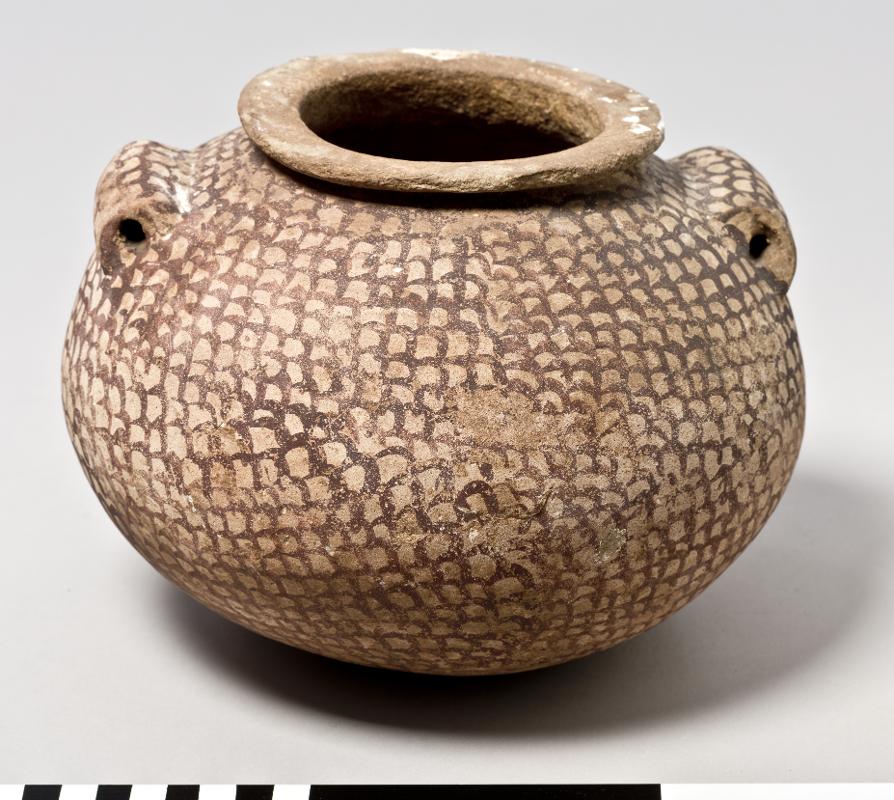
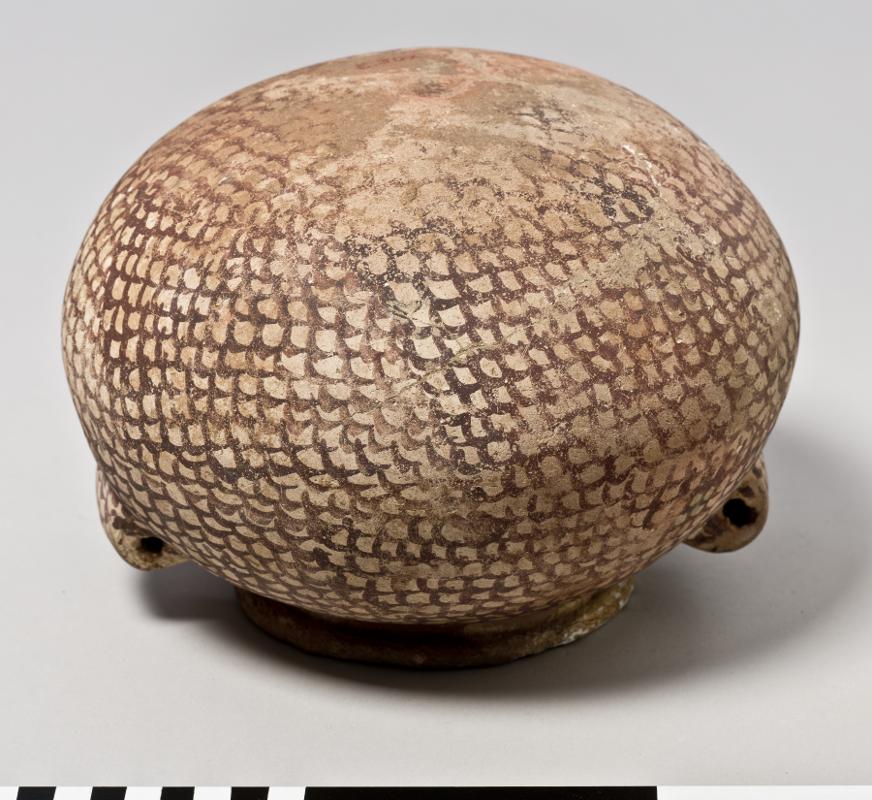
A large, short necked squat vessel with a round base, a ledge rim and two tubular string-hole handles. Buff surface with an exterior decoration in maroon. It features ¨scale¨motifs all over the body, thus imitating a stone vessel.
|
| Inventory number <itemDescription> |
|
| Acquisition <itemDescription> |
|
| Comments <itemDescription> |
|
| Condition <itemDescription> |
|
| Dimensions <itemDescription> |
|
| Cf Publications <itemDescription> |
-
Petrie, W.M.F., Corpus of prehistoric pottery and palettes, BSAE, (London 1921), 63 A (SD 48-63)
Scharff, A. Die Altertümer der Vor- und Frühzeit Ägyptens I, Berlin, 1931, no.360
Lucas, P. Ancient Egy...
Visa hela
Petrie, W.M.F., Corpus of prehistoric pottery and palettes, BSAE, (London 1921), 63 A (SD 48-63)
Scharff, A. Die Altertümer der Vor- und Frühzeit Ägyptens I, Berlin, 1931, no.360
Lucas, P. Ancient Egyptian Materials and Industries , London, 1962, 383 and additional references listed within.
Stäng
|
| Period, Swedish <itemDescription> |
|
| Publications <itemDescription> |
-
George, B. , Frühe Keramik aus Ägypten, MedMusB , no.10, (Stockholm, 1975), p. 32, no.37
|
| Utställning / ingår i <itemDescription> |
|
| Country / Findspot <itemDescription> |
|
| Exhibition, Part of / Current <itemDescription> |
|
| Description, Swedish <itemDescription> |
-
Ett stor, korthalsad och bulligt kärl med en rund botten, en hyllartad kant och två tubformade snörhålshandtag. Blekgul yta med yttre dekoration i mörkröd. Den framställer "fjäll" motiv över hela krop...
Visa hela
Ett stor, korthalsad och bulligt kärl med en rund botten, en hyllartad kant och två tubformade snörhålshandtag. Blekgul yta med yttre dekoration i mörkröd. Den framställer "fjäll" motiv över hela kroppen, därmed imiterandes ett stenkärl.
Stäng
|
| Acquisition, Swedish <itemDescription> |
|
| Referens, publicerad i <itemDescription> |
|
| Exhibition, showcase / Current <itemDescription> |
|
| Egyptenutställningen 2014, English / Label <itemDescription> |
-
During Naqada II (ca 3600–3250 BC), a lighter clay from the desert’s edge was introduced.
New shapes appeared, for example vessels with wavy handles. Another novelty was light coloured vessels with re...
Visa hela
During Naqada II (ca 3600–3250 BC), a lighter clay from the desert’s edge was introduced.
New shapes appeared, for example vessels with wavy handles. Another novelty was light coloured vessels with red decoration that sometimes imitated the surface of stone vessels. Complete narratives were sometimes painted in the same red colour, with boats, palm trees and mountains.
During this period, the long-distance trade with areas in Syria-Palestine and even farther away increases. Along the trade routes, the pottery
of Upper Egypt is spread north. At the end of the period the material culture is by and large the same for the whole of the Nile Valley and the Delta. The area is still politically divided between several minor kingdoms.
During Naqada III (ca 3250–3100 BC), the pottery became more uniform with fewer decorated vessels and simpler motifs.
During this time the first hieroglyphic writing appears in the form of simple notes on pottery.
At the end of the period, ca 3100 BC, the Nile Valley and Delta are united into one state under the same king.
Stäng
|
| Egyptenutställningen 2014, Swedish / Label <itemDescription> |
-
Under perioden Naqada II (ca 3600–3250 f Kr) introduceras en ljusare lera från ökenkanten.
Nya former dök upp, till exempel kärl med vågformade handtag. En annan nyhet var ljusa kärl med röd dekor, so...
Visa hela
Under perioden Naqada II (ca 3600–3250 f Kr) introduceras en ljusare lera från ökenkanten.
Nya former dök upp, till exempel kärl med vågformade handtag. En annan nyhet var ljusa kärl med röd dekor, som ibland imiterade ytan på stenkärl. I samma röda färg målades ibland hela berättelser, med båtar, palmer och berg.
Under den här perioden ökar långväga handel med områden i Syrien-Palestina och ännu längre bort. Längs handelsvägarna sprids keramiken
från Övre Egypten norrut. Vid periodens slut är den materiella kulturen densamma i så gott som hela Nildalen och Deltat. Politiskt är området fortfarande delat mellan flera mindre kungadömen. Under Naqada III (ca 3250–3100 f Kr) blev keramiken mer enhetlig med färre dekorerade
kärl och enklare motiv.
Vid den här tiden uppkommer den första hieroglyfskriften i form av enkla noteringar på keramik. Vid periodens slut, ca 3100 f Kr är Nildalen och Deltat enade till en stat under samma kung.
Stäng
|
| Händelse <context> |
-
Brukad Naqada II (3500-3150 BC), Predynastic Period.
-
Funnen i Egypten, Afrika.
|
| Material, engelska<itemMaterial> |
- Pottery
- Clay
|
| Material<itemMaterial> |
- Keramik
- Keramik
- Lera
|
| Nyckelord <itemKeyWord> |
-
E307
-
Naqada II (3500-3150 BC), Predynastic Period
-
New Egypt
-
ceramics
|
| Mått <itemMeasurement> |
-
Height / Höjd: 16,5 cm.
-
Diameter: 12,5 cm.
-
Diameter: 22,4 cm.
|
| Object, Swedish<itemName> |
- kärl
|
| Object<itemName> |
- jar
|
| Ämne <subject> |
|
| Inventory number <itemNumber> |
|
| Previous ID <itemNumber> |
|
| Egypt, Number in Exhibition <itemNumber> |
|
| Rättigheter för metadata <itemLicense> |

|
| Källa <presOrganization> |
Statens museer för världskultur - Medelhavsmuseet |
|
Källa <url>
|
|


 ARTIKLAR I WIKIPEDIA
 ARTIKLAR I WIKIDATA
 BILDER I WIKIMEDIA COMMONS




