| Typ <itemType> |
Objekt/föremål |
| Plats <presPlaceLabel> |
Oceanien, Australien, Tasmanien, Tasmania |
| Beskrivning <itemDescription> |
-
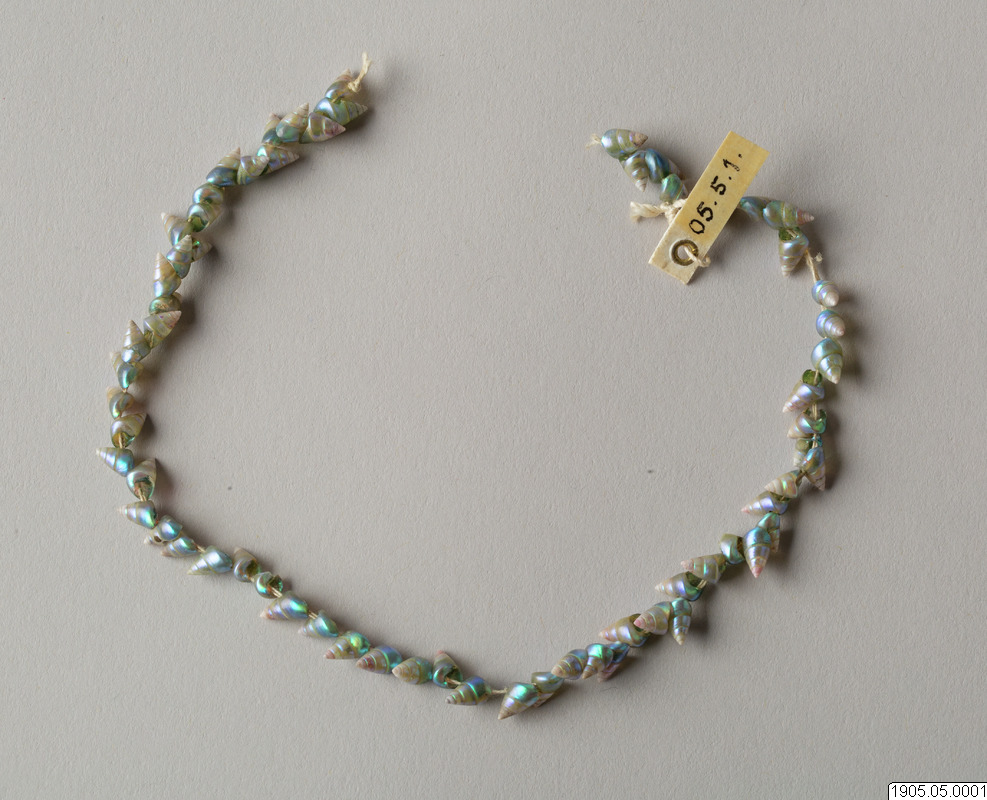
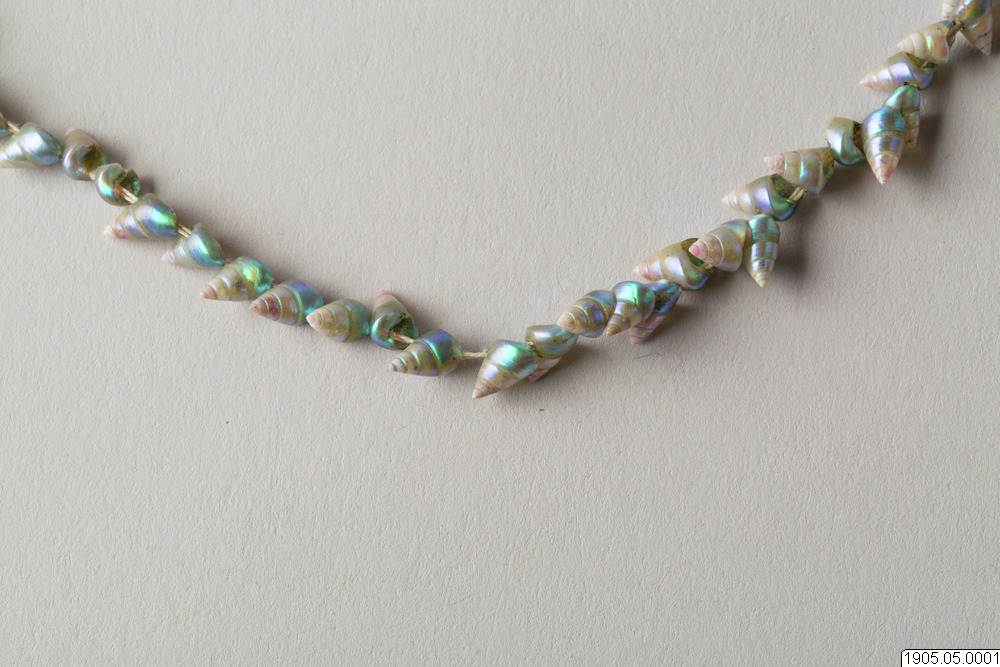
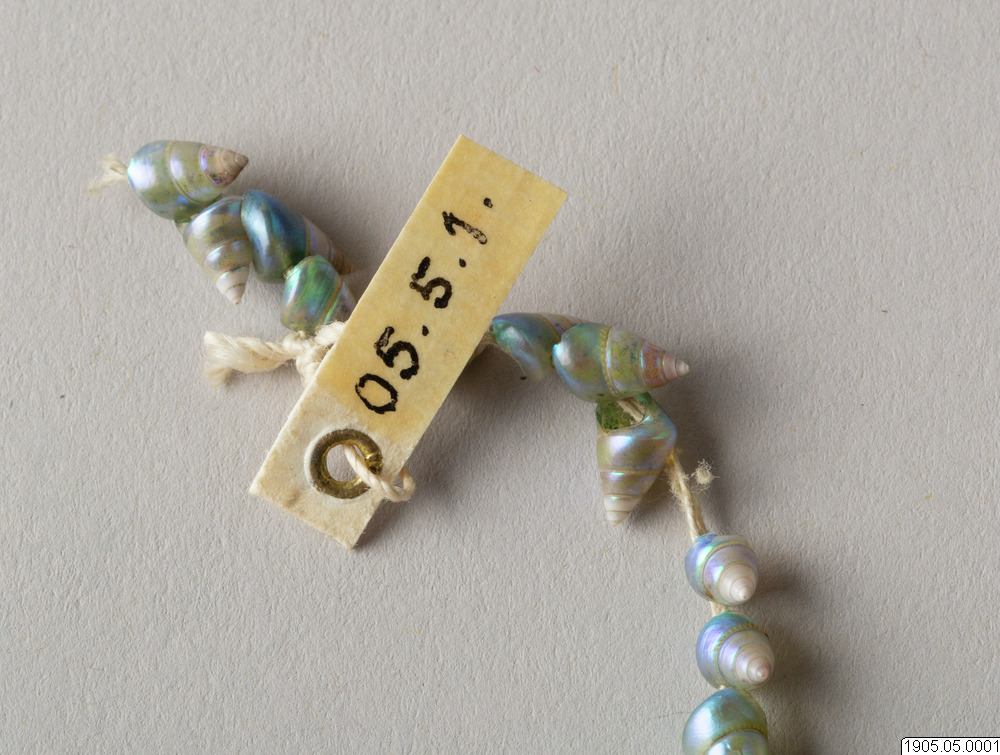
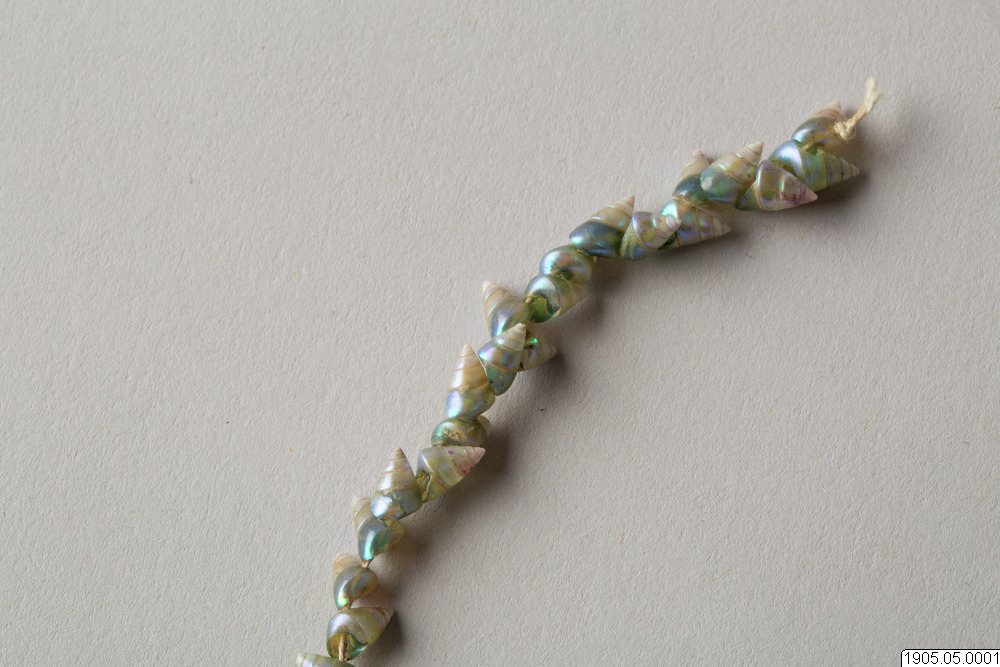
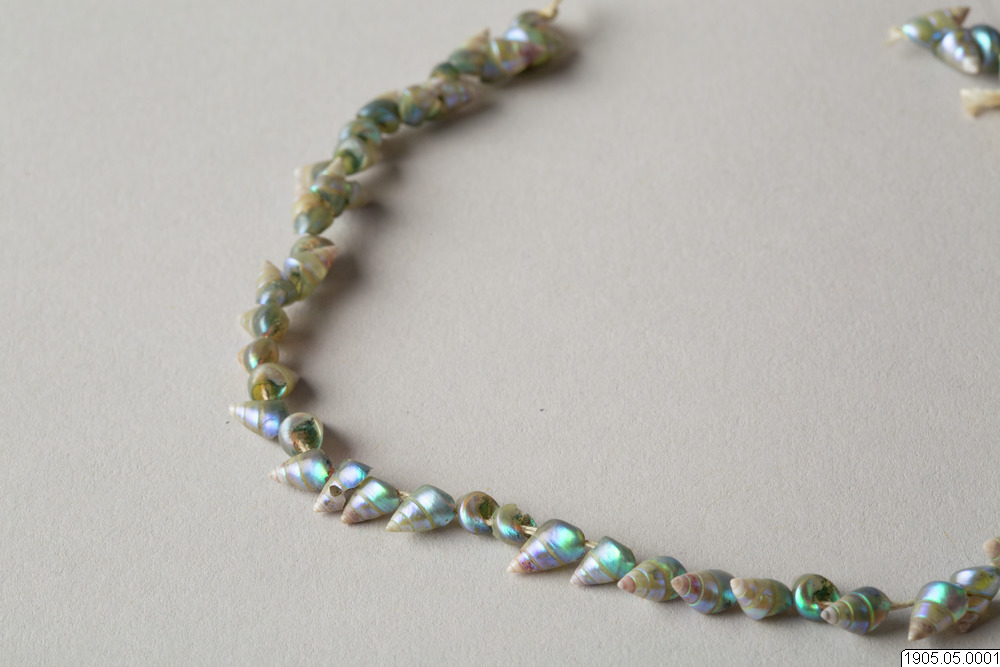
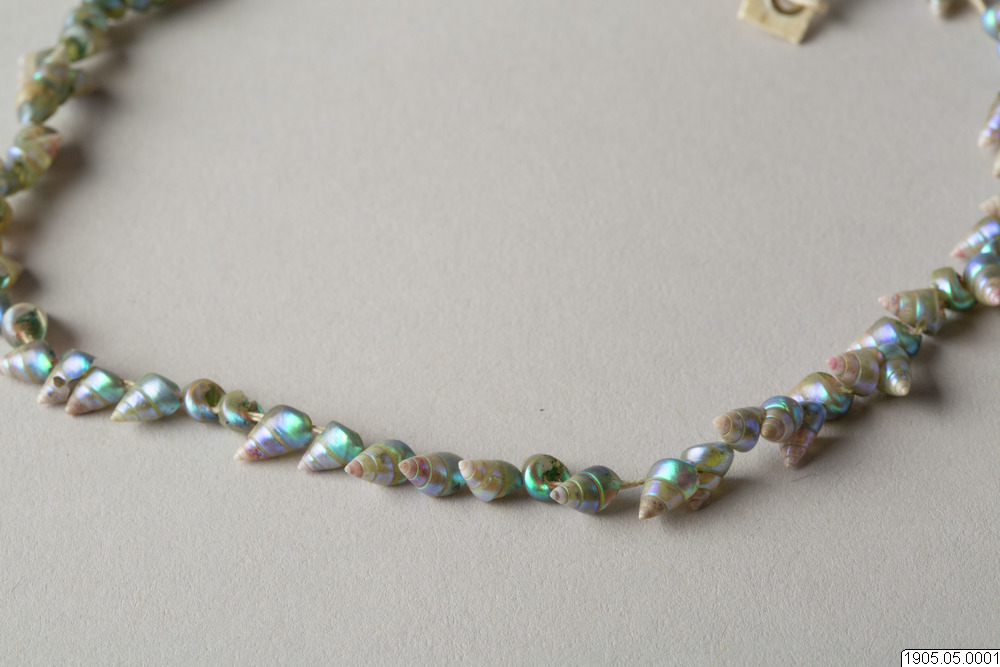
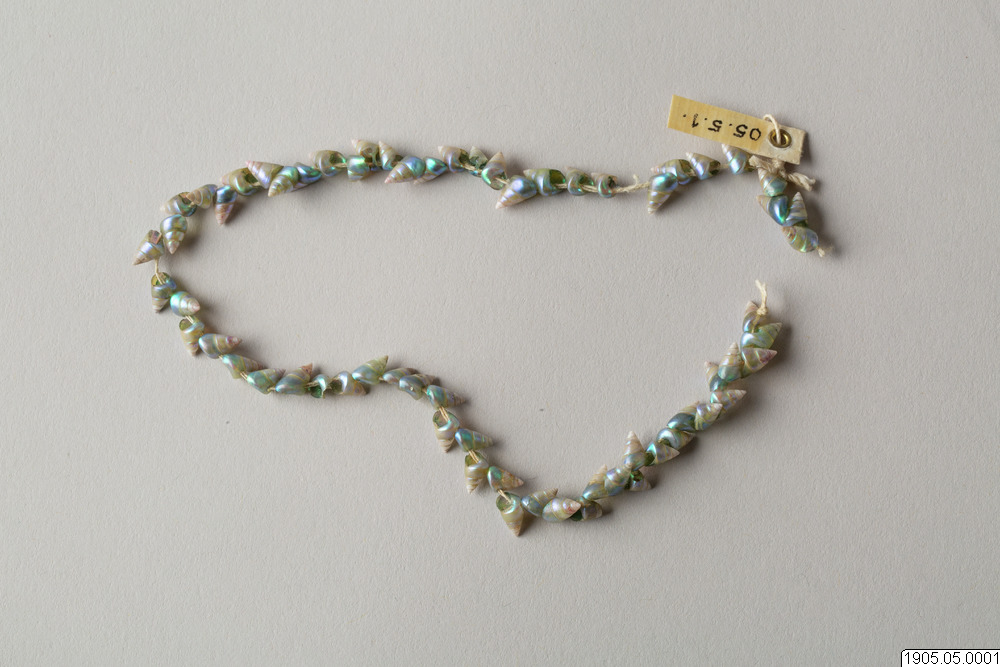
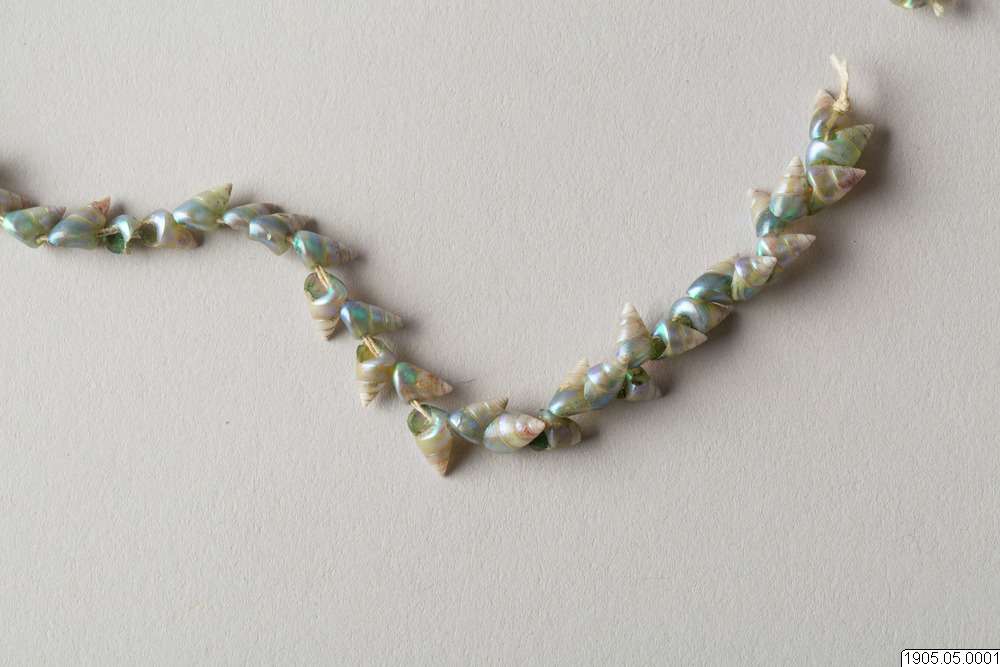
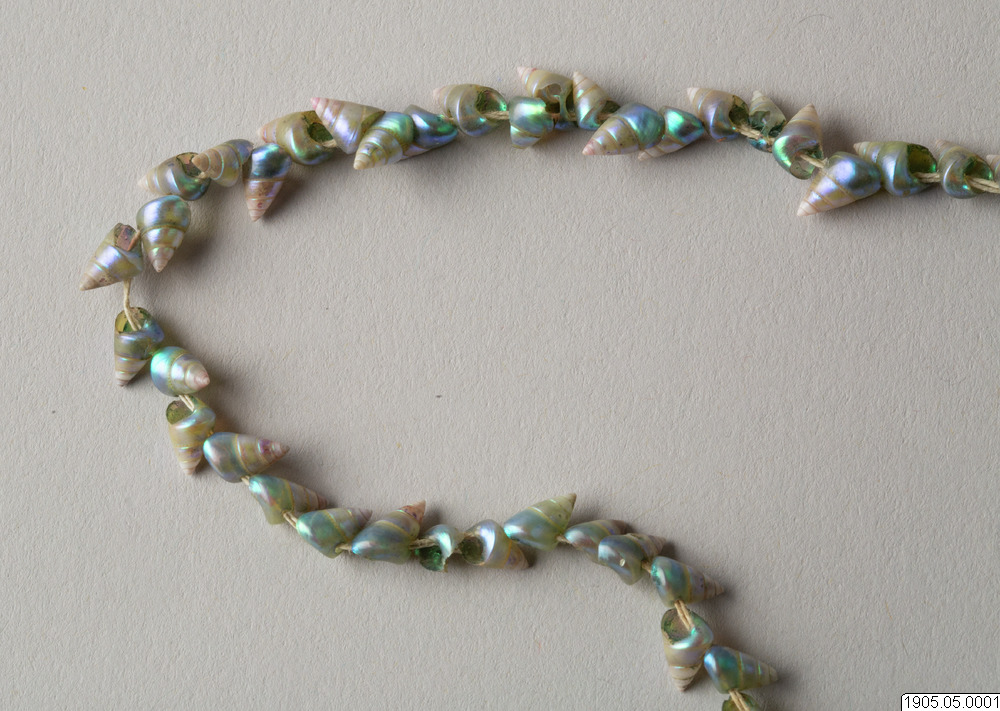
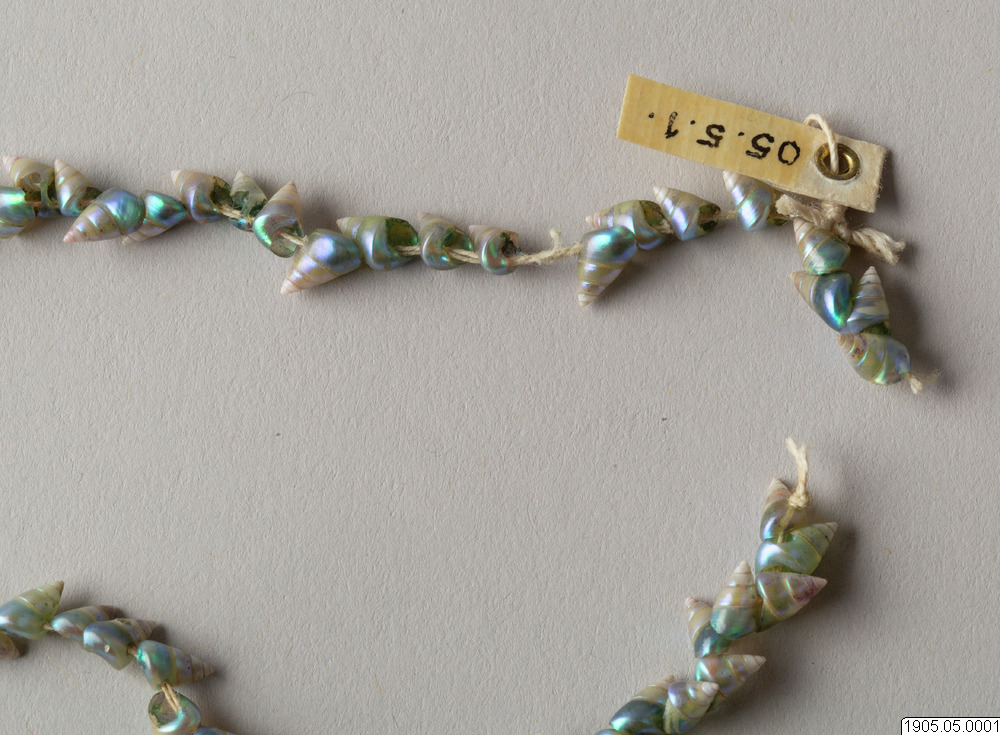
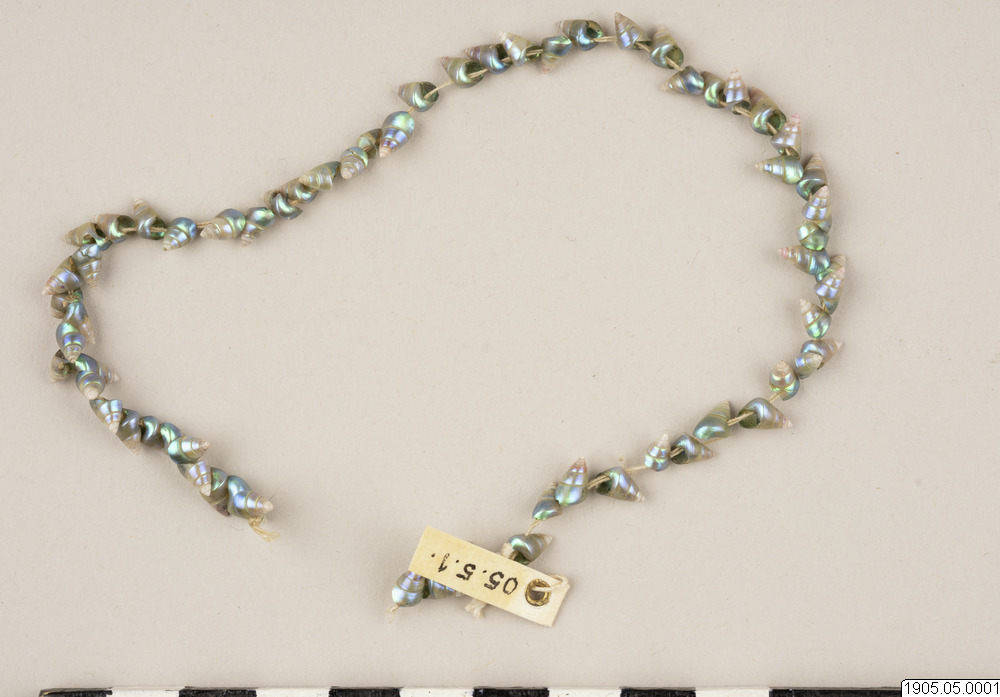
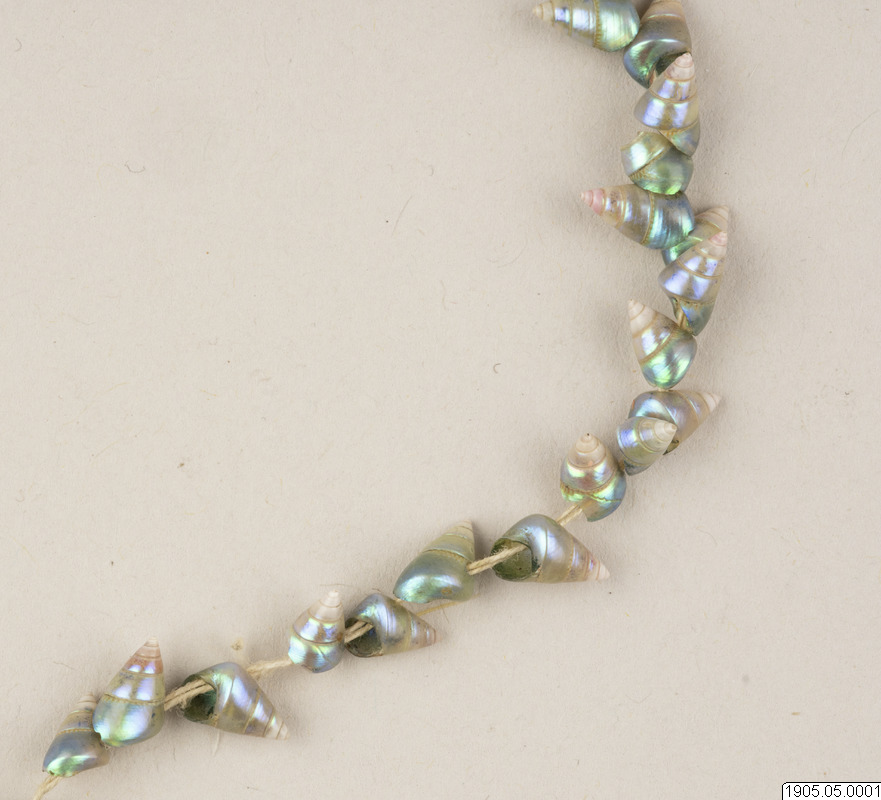
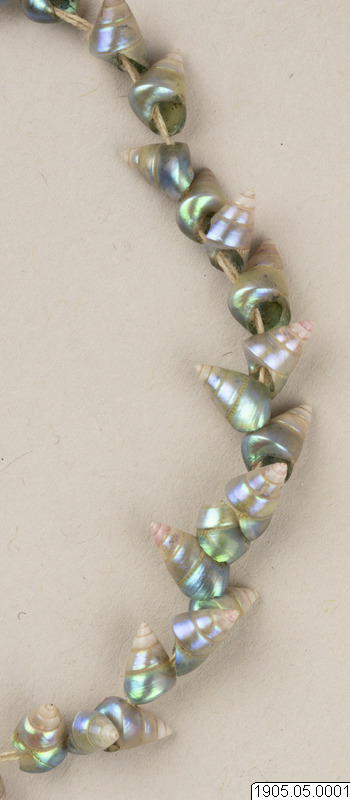
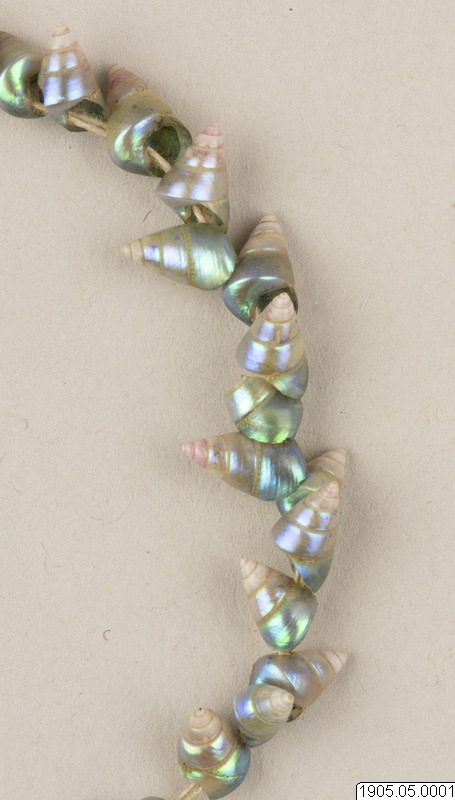
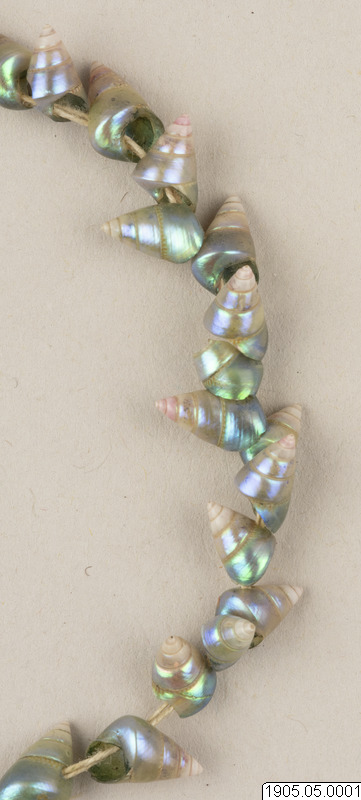
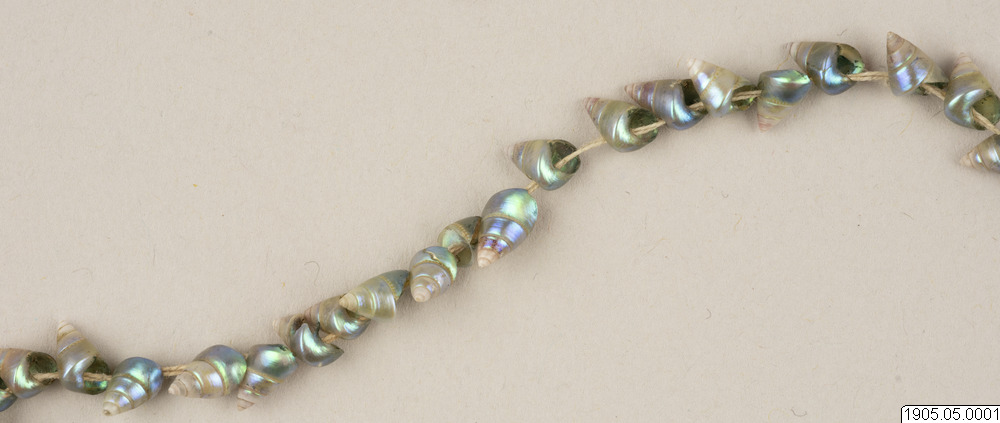
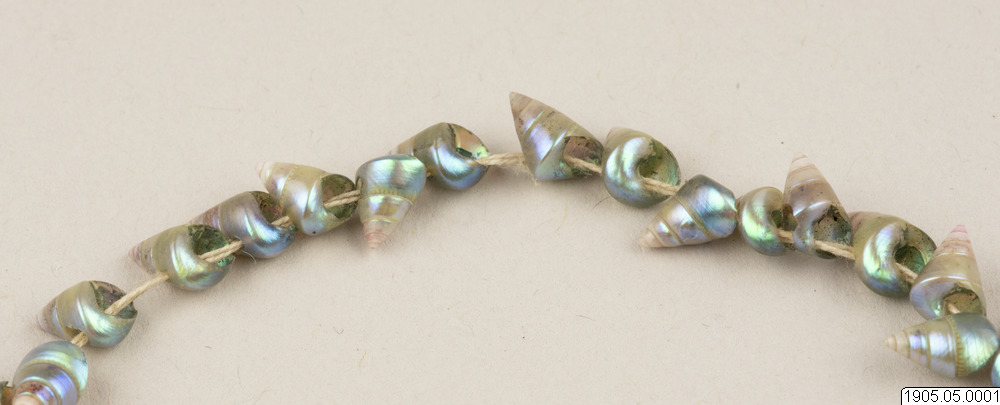
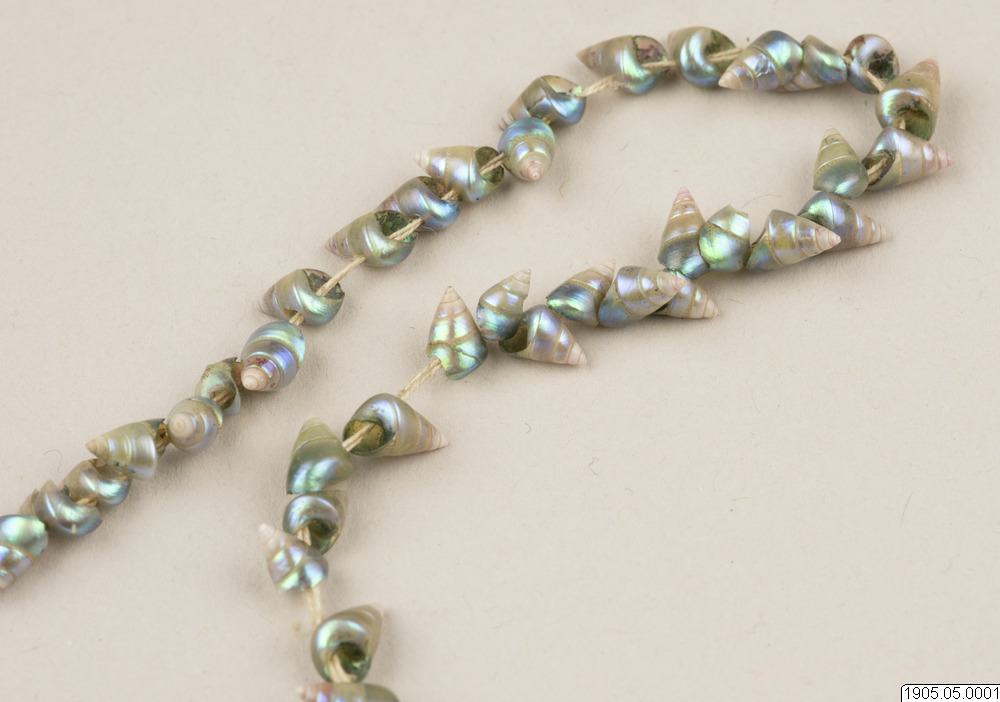
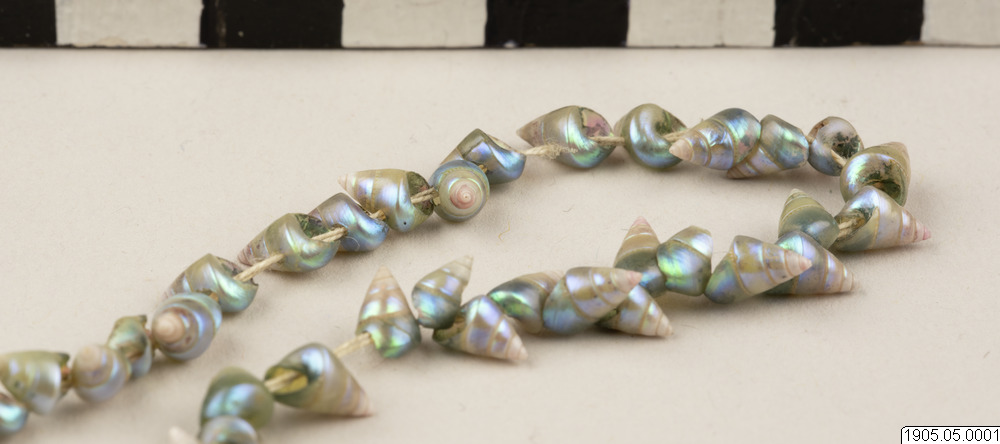
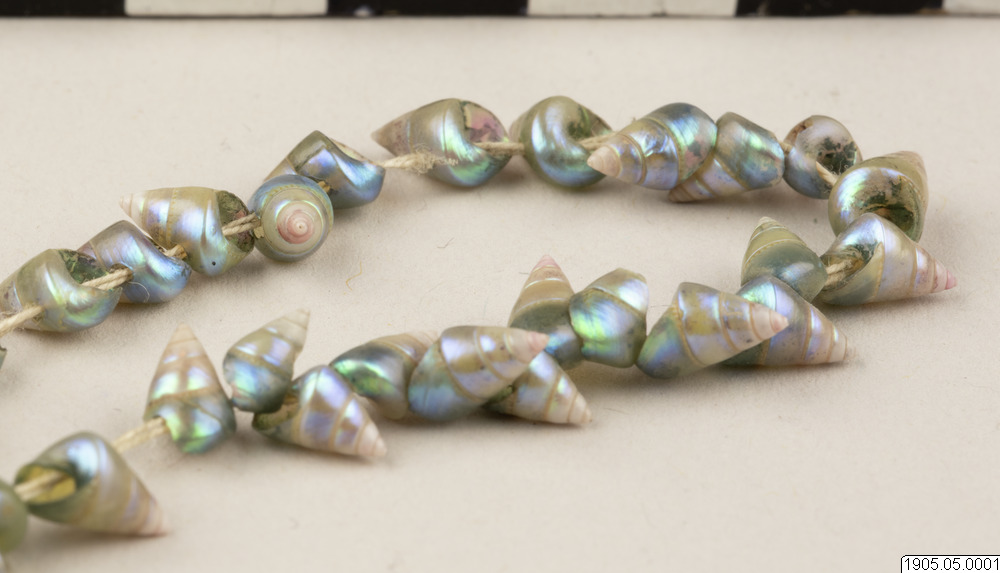
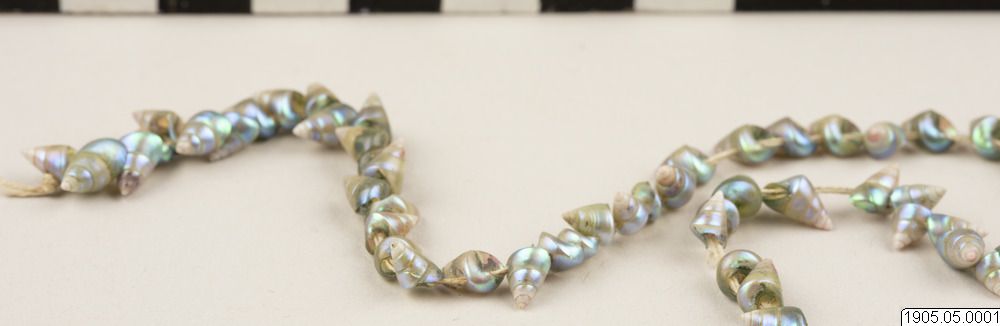
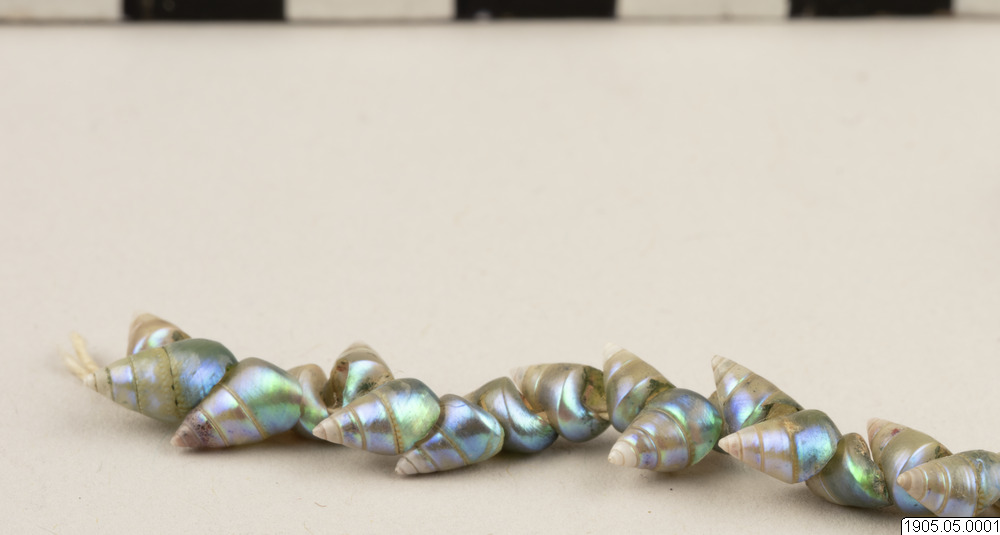
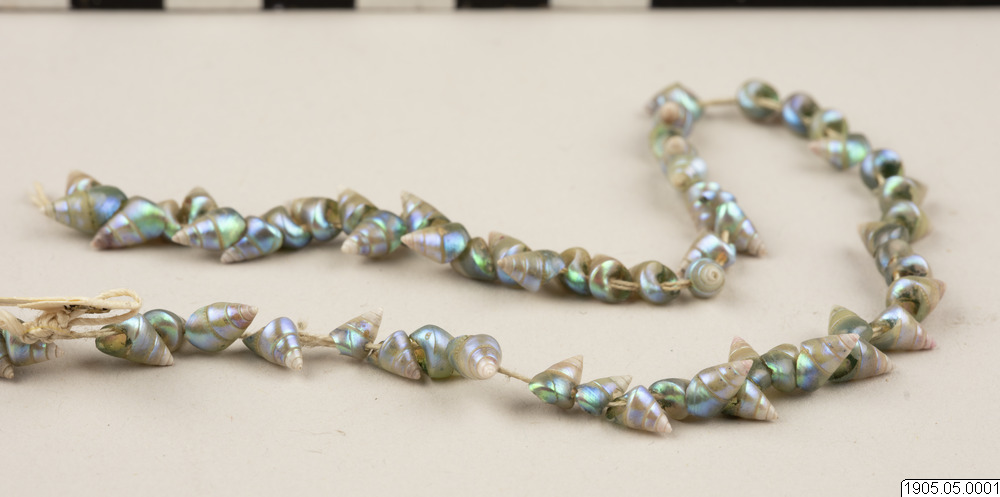
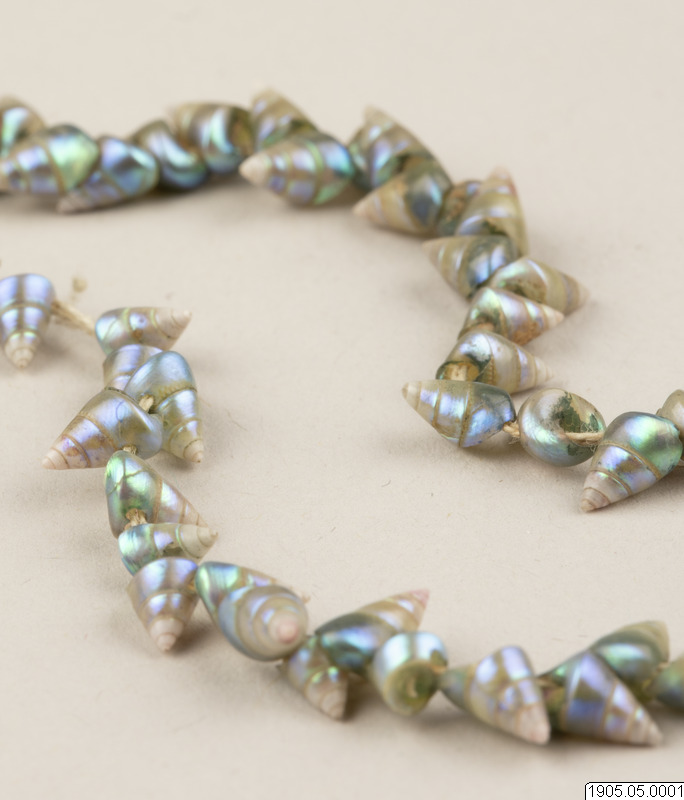
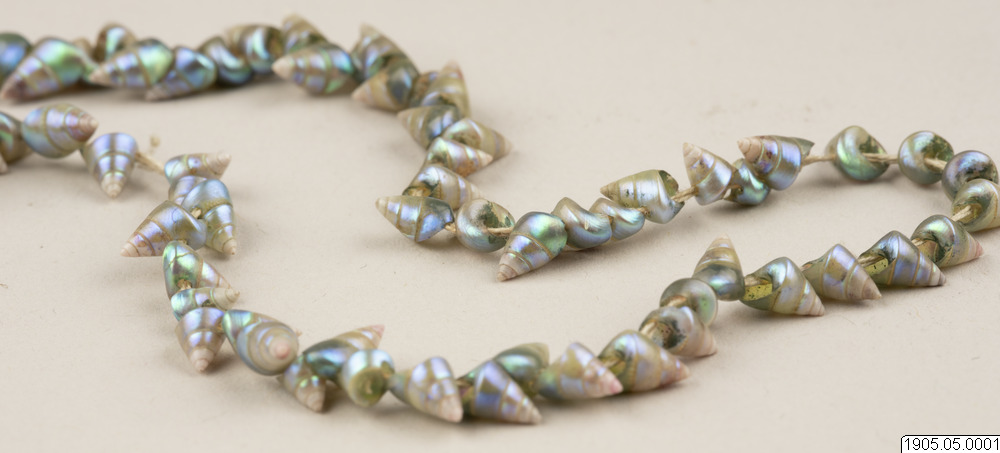
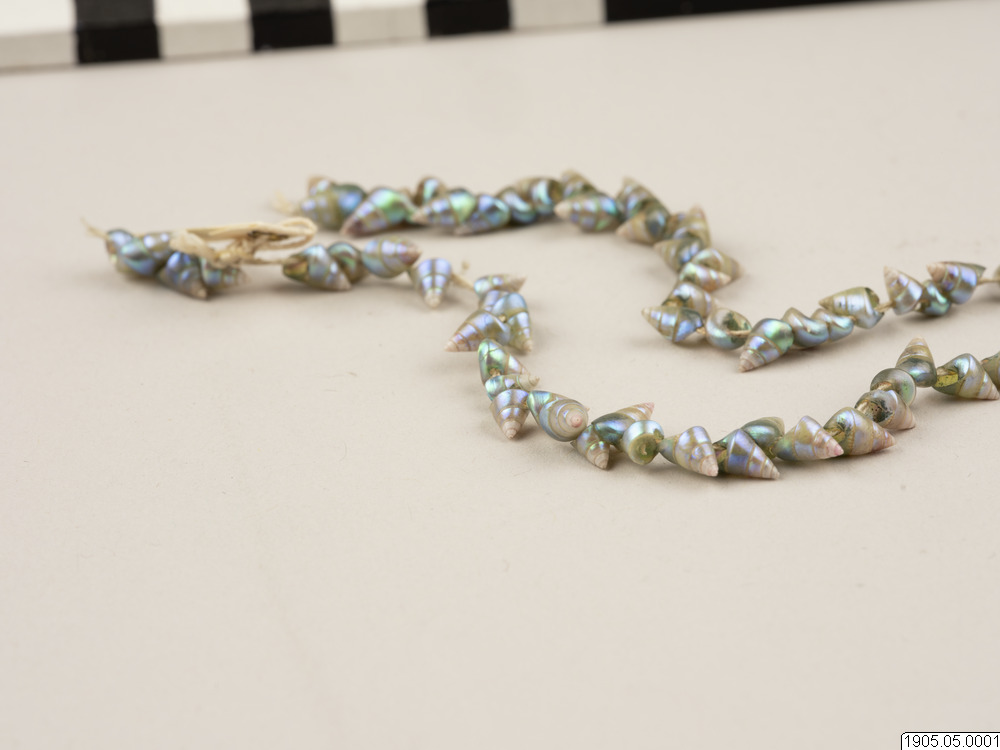
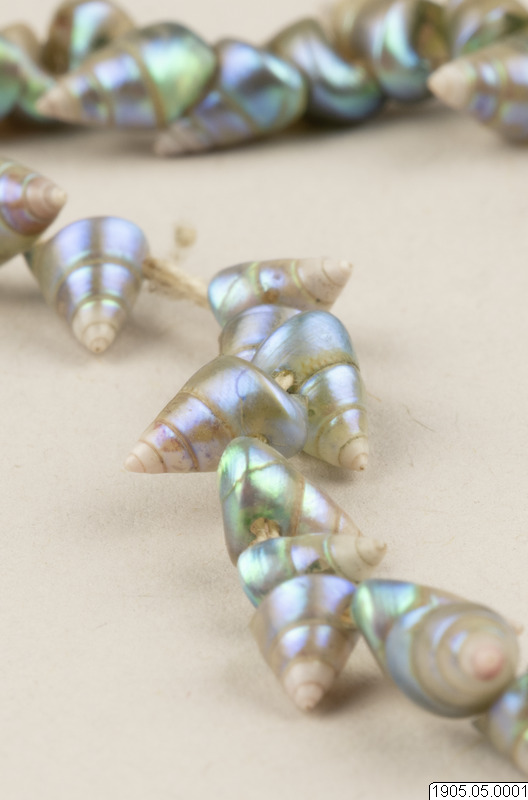
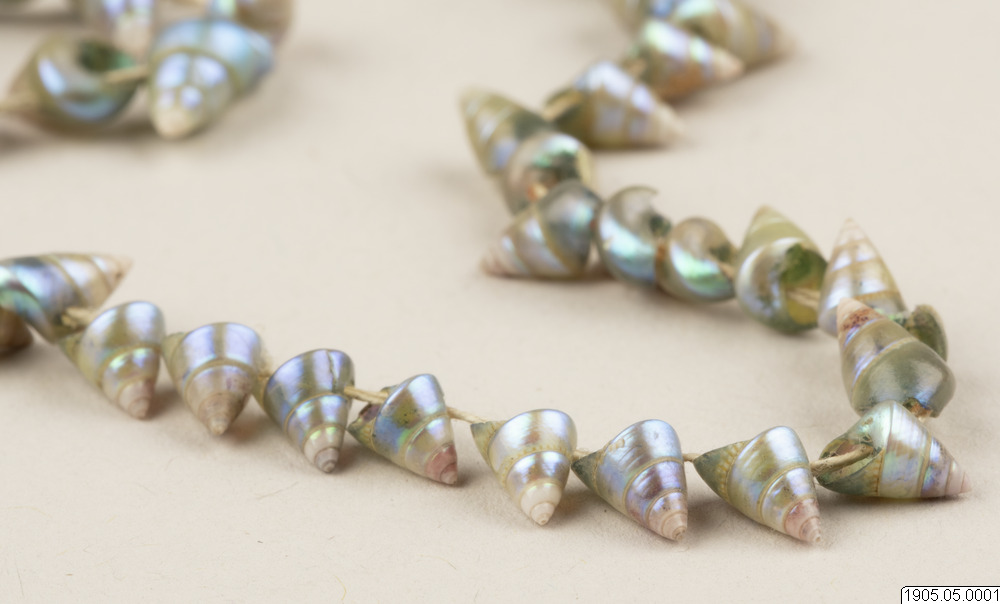
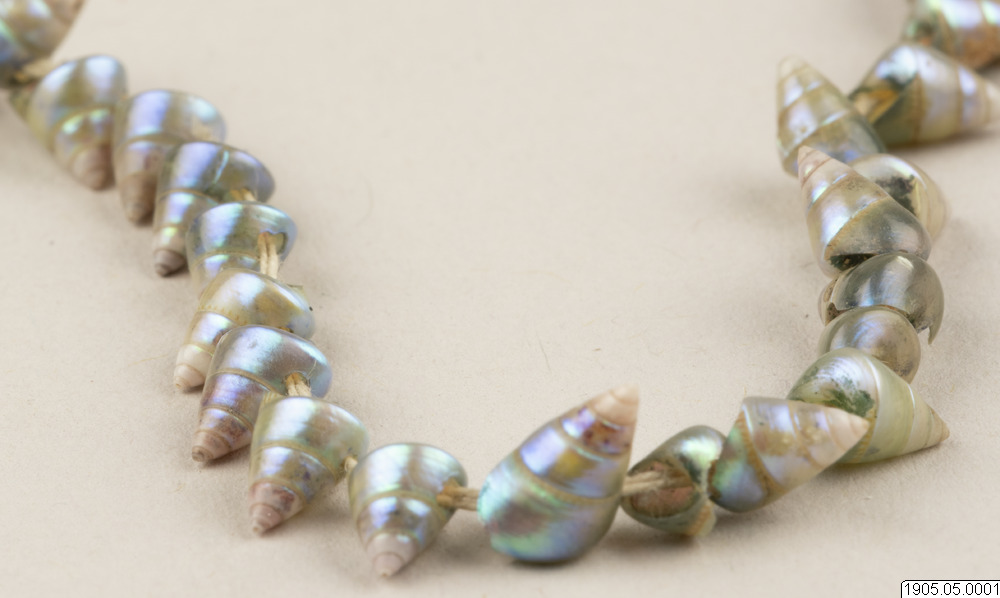
Halsband av snäckor. Information provided by Tasmanian Aboriginal women, Dr Mandy Quadrio and Dr Patsy Cameron AO, 17.01.2024: This early 19th century string of iridescent blue maireener shells comes from a long-time cultural tradition that spans hundreds of generations and is unique to Tasmanian Aboriginal people from the island of Tasmania, Australia. The practice of stringing maireener shells...
Visa hela
Halsband av snäckor. Information provided by Tasmanian Aboriginal women, Dr Mandy Quadrio and Dr Patsy Cameron AO, 17.01.2024: This early 19th century string of iridescent blue maireener shells comes from a long-time cultural tradition that spans hundreds of generations and is unique to Tasmanian Aboriginal people from the island of Tasmania, Australia. The practice of stringing maireener shells has been historically and contemporaneously carried out by Tasmanian Aboriginal women. In early Australian colonial times, strings of maireener shells were often stolen, or created to become items for barter. This barter became a form of currency for Aboriginal people and was used in exchange for goods such as food and clothing.
One of the main growing habitats of the maireener shell is in Tasmanian coastal areas where bull kelp and various seaweeds proliferate. The maireener shells are specific to particular areas and can vary in shape, colour and size. Smaller shells can be as tiny as 1/4 centimetre in length, with the so-called queen and king maireener shells growing up to 5 centimetres long. The shells can be found in a range of colours and tones from iridescent blues, purples, greens, pinks through to pearly whites.
Knowledge of locations of shell sites and processes of gathering, harvesting, cleaning, treating and stringing of the shells continues to be held and shared closely by Tasmanian Aboriginal women.
Maireener shells are a highly valued Tasmanian Aboriginal cultural resource and continue to be used in ceremony, in cultural activities and in gift giving. In current times of global warming, increasing water temperatures around coastal zones of Tasmania is leading to a significant diminishment of bull kelp and seaweed beds. There are grave concerns for the survival of these precious, culturally important shells.
Stäng
|
| Anmärkning <itemDescription> |
-
Föremålet ingår i projektet: Objects of Culture and Science, Dr Mandy Quadrio & Dr Christine Hansen. At the centre of this project is a 120 year old Tasmanian Aboriginal shell necklace unearthed in a...
Visa hela
Föremålet ingår i projektet: Objects of Culture and Science, Dr Mandy Quadrio & Dr Christine Hansen. At the centre of this project is a 120 year old Tasmanian Aboriginal shell necklace unearthed in a Museum of Ethnography in Europe. My aim is to centre this necklace in an investigation that opens new narratives at the confluence of Indigenous knowledges, environmental science and contemporary art. Since the shells entered the collection, the sea Country around Loetriwitter / Trouwunna / Tasmania has warmed, slowed and acidified, threatening the fragile life-worlds from which the shells emerged, concerns largely irrelevant to European ethnography. As a collaboration between myself, Trawlwoolway artist Dr Mandy Quadrio, curator Dr Christine Hansen, National Museums of World Culture, Sweden and Gothenburg University, the project aims to bring environmental concerns to ethnographic collections by way of cross-cultural research. https://www.mandyquadrio.com.au/objects-of-culture-and-science/
Stäng
|
| Geografiskt namn / annat <itemDescription> |
|
| Land / engelska <itemDescription> |
|
| Händelse / var närvarande vid <itemDescription> |
|
| Händelse / var närvarande vid <itemDescription> |
|
| Händelse / var närvarande vid <itemDescription> |
|
| Händelse / var närvarande vid <itemDescription> |
|
| Händelse / var närvarande vid <itemDescription> |
|
| Händelse <context> |
-
Ursprung i Tasmania, Australien, Oceanien.
-
Förvärvad 1905 av Segerlind, Hjalmar.
|
| Material, engelska<itemMaterial> |
- maireener shell
- cotton string
- shell
|
| Materialkategori<itemMaterial> |
- animaliskt material
|
| Material<itemMaterial> |
- snäckskal
- garn
|
| Nyckelord <itemKeyWord> |
|
| Mått <itemMeasurement> |
-
Längd: 26,5 cm.
-
Höjd: 0,5 cm.
-
Höjd: 0,7 cm.
|
| Sakord, engelska<itemName> |
- shell strand
- necklace
|
| Sakord<itemName> |
- halsband
|
| Ämne <subject> |
|
| Inventarienummer <itemNumber> |
|
| Rättigheter för metadata <itemLicense> |

|
| Källa <presOrganization> |
Statens museer för världskultur - Etnografiska museet |
|
Källa <url>
|
|

 ARTIKLAR I WIKIPEDIA
 ARTIKLAR I WIKIDATA
 BILDER I WIKIMEDIA COMMONS