| Typ <itemType> |
Objekt/föremål |
| Plats <presPlaceLabel> |
Asien, Kina, Xinjiang, Kashgar |
| Beskrivning <itemDescription> |
-
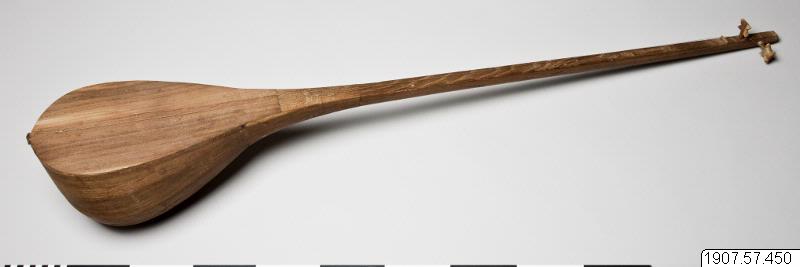
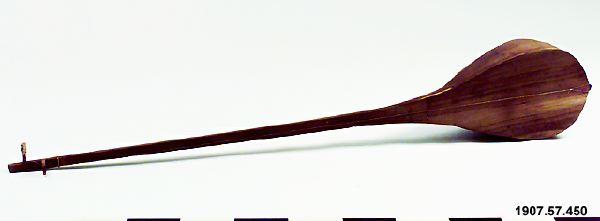
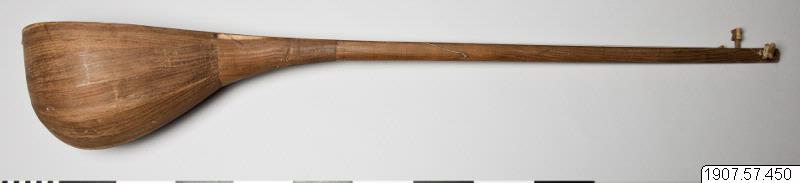
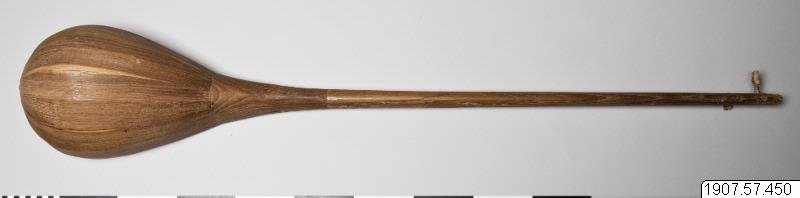
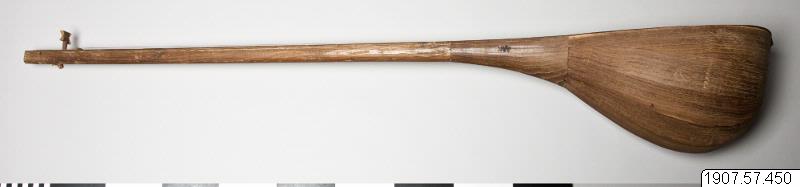
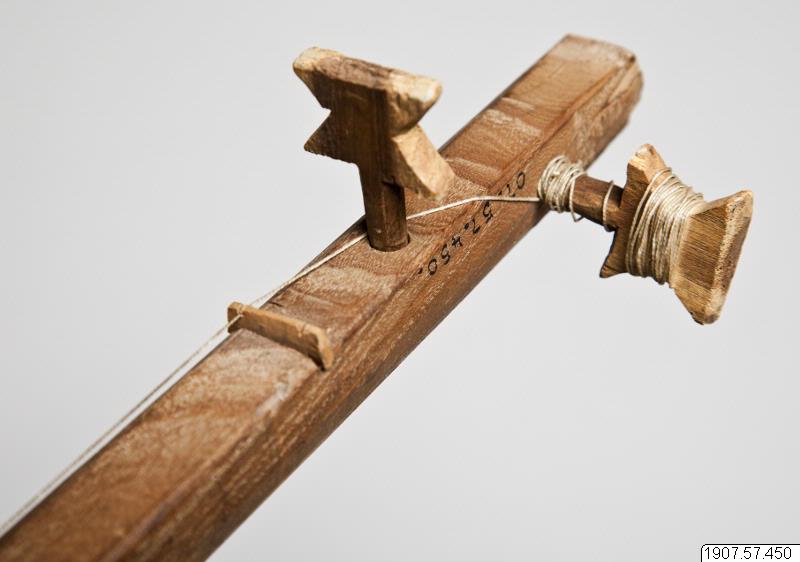
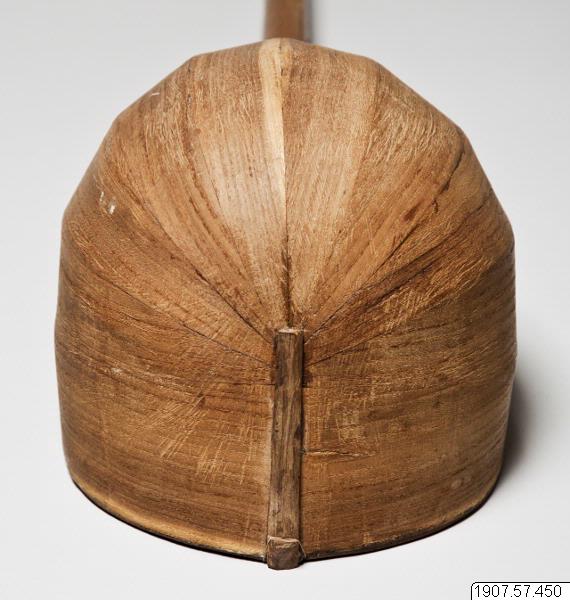
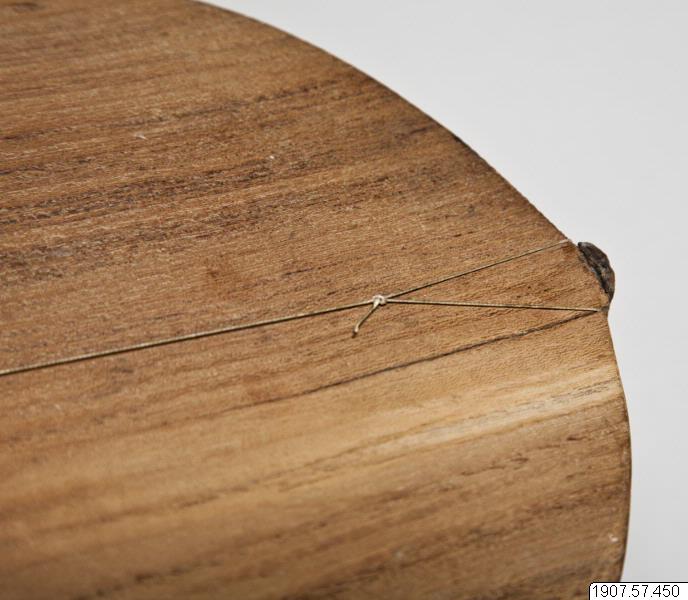
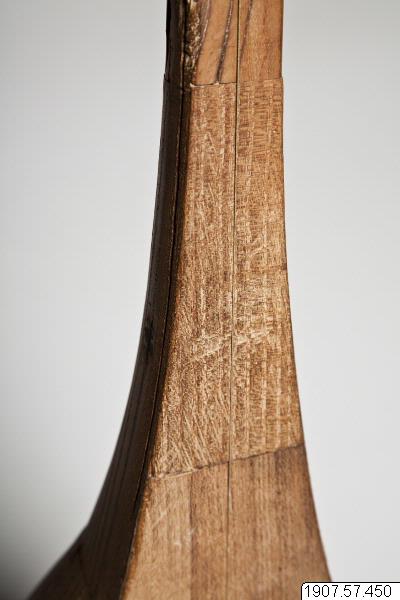
Tvåsträngad dutar.
"The name for various rypes of long-necked fretted lute of the Middle East and Central Asia, in Iran, the term dotar is used. The name means two strings but some kinds of dutar have more. The various types are thought to derive from the ancient Tanbur of Khorasan and are known after the ethnic group with which they are associated (Turkmen or Uzbek) or the region where they are ...
Visa hela
Tvåsträngad dutar.
"The name for various rypes of long-necked fretted lute of the Middle East and Central Asia, in Iran, the term dotar is used. The name means two strings but some kinds of dutar have more. The various types are thought to derive from the ancient Tanbur of Khorasan and are known after the ethnic group with which they are associated (Turkmen or Uzbek) or the region where they are found (Khorasan or Herat). Traditionally the dutar had silk or gut strings but these have been replaced by steel ones. On some kinds of dutar only the first string is stopped, the second acting as a drone; on the Uzbek and Turkmen dutar, the second is also stopped, usualy with the thumb.
cit.
The New Grove Dictionary of Musical Instruments, part 3, pp. 638. Dutâr, pers. Zweisaiter, ein turkest. Tanbur zur Gesangsbeleitung mit einer dünnen, symmetrisch durchlöcherten Holtzdecke, 15 Darmsaitenbünden und zwei seidenen oder metallenen Saiten, die von dem ausgestochenen Wirbelkasten über einen trapezförmigen Steg zum Saitenhalter an der Stelle unseres Sattelknopfes laufen. Der Hals ist etwas kürzer, der Körper etwas ausladender als beim Zitâr. Gesamtlänge 1,05 - 1,14 m.
cit.
Curt Sachs Real-Lexikon der Museikinstrumnete, Berlin 1913.
s. 124
Stäng
|
| Källor <itemDescription> |
-
The New Grove Dictionary of Musical Instruments, part 3, pp. 638.
Curt Sachs Real-Lexikon der Museikinstrumnete, Berlin 1913.
s. 124.
|
| Utställning / ingår i <itemDescription> |
|
| Utställning, del av / ingår i <itemDescription> |
|
| Utställning, monterdel / ingår i <itemDescription> |
|
| Land / engelska <itemDescription> |
|
| Geografiskt namn / annat <itemDescription> |
|
| Geografiskt namn / annat <itemDescription> |
|
| Händelse <context> |
-
Brukad av Uigurer.
-
Ursprung i Kashgar, Kina, Asien.
-
Insamlad 1906 .
-
Förvärvad 1907 av Högberg, Lars Erik.
-
Utställd 2012-10-26 - i Etnografiska museet, Stockholm av D07, Magasinet - D, Magasinet - En etnografisk skattkammare.
|
| Material, engelska<itemMaterial> |
- wood
|
| Materialkategori<itemMaterial> |
- trä
|
| Material<itemMaterial> |
- trä
|
| Teknik <itemTechnique> |
|
| Nyckelord <itemKeyWord> |
-
1907.57.0450
-
440
-
Konst (530)
-
Musikinstrument (534)
-
Samling 1907.57
-
Uigurer
-
Uigurs
-
Weiwuer
-
musikinstrument
-
östturkar
|
| Mått <itemMeasurement> |
-
Längd: 129 cm.
-
Bredd: 21 cm.
|
| Sakord<itemName> |
- dutar
- stränginstrument
- kordofon
|
| Ämne <subject> |
|
| Inventarienummer <itemNumber> |
|
| Tidigare identitet <itemNumber> |
|
| Rättigheter för metadata <itemLicense> |

|
| Källa <presOrganization> |
Statens museer för världskultur - Etnografiska museet |
|
Källa <url>
|
|

 ARTIKLAR I WIKIPEDIA
 ARTIKLAR I WIKIDATA
 BILDER I WIKIMEDIA COMMONS