| Typ <itemType> |
Objekt/föremål |
| Datering <presTimeLabel> |
1090, 1150 |
| Plats <presPlaceLabel> |
Sydkorea, Nordkorea |
| Land, engelska / ursprung <itemDescription> |
|
| Land, engelska / ursprung <itemDescription> |
|
| Beskrivning, engelska <itemDescription> |
-
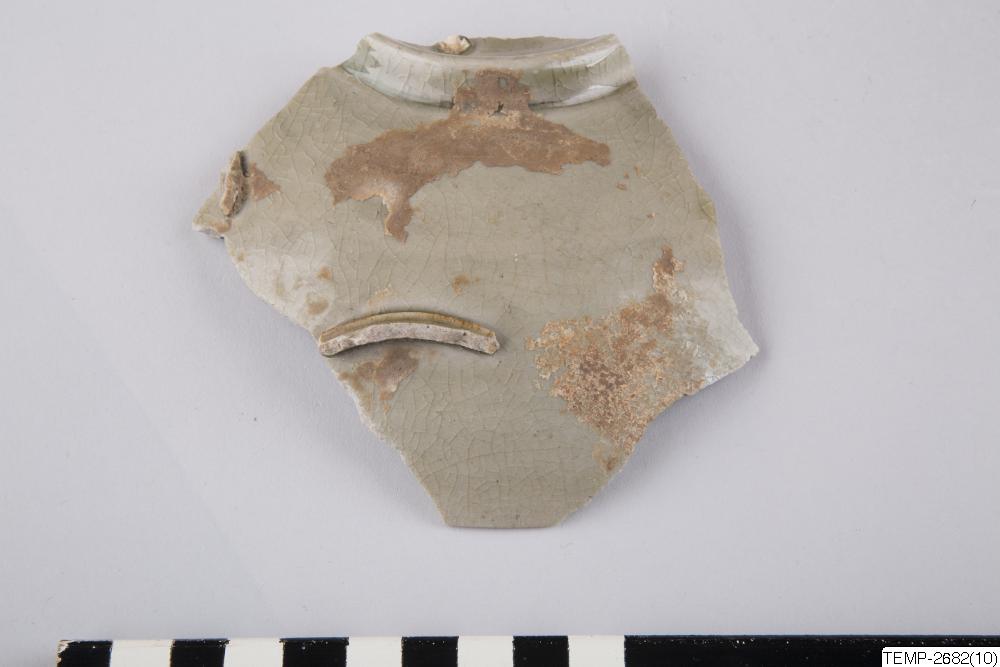
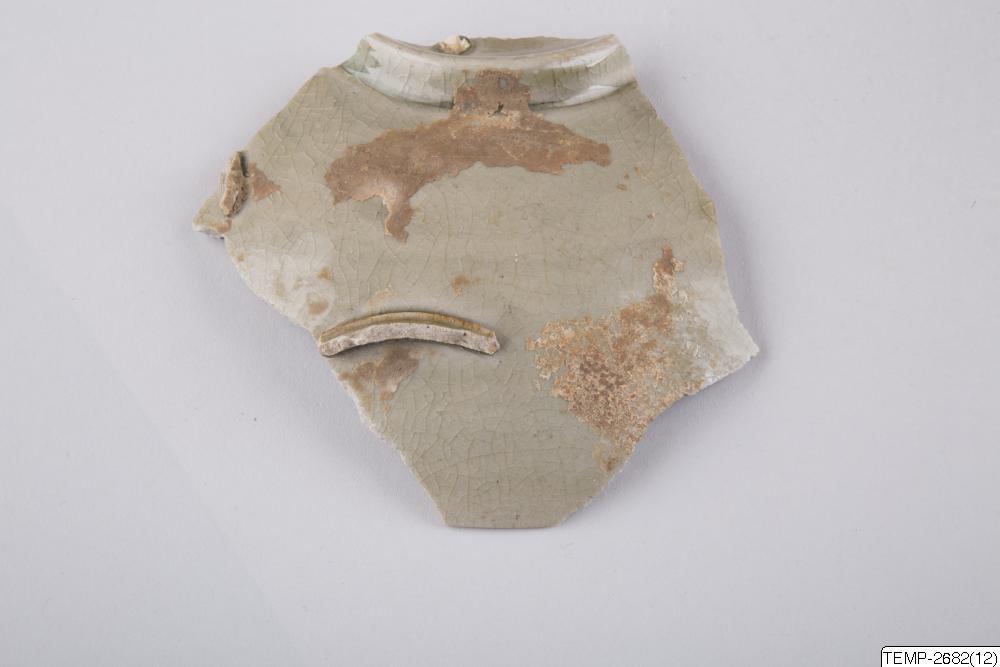
This shard from a Goryeo celadon bowl includes a section of a glazed foot with a rectangular scar from a silica chip. Broken off parts from one or more glazed ceramic objects have fused to the surface...
Visa hela
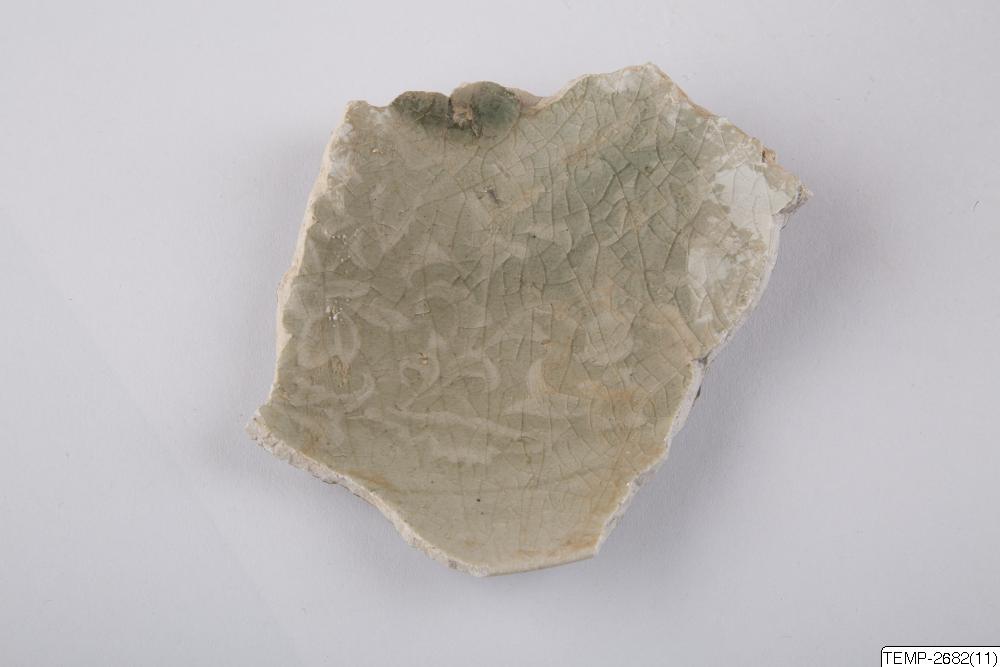
This shard from a Goryeo celadon bowl includes a section of a glazed foot with a rectangular scar from a silica chip. Broken off parts from one or more glazed ceramic objects have fused to the surface of the outer, undecorated wall. A press-moulded floral decoration is visible on what was supposed to be the inner wall of the bowl. The shard is coated with a crackled, greenish-tinged (celadon) glaze with an olive hue. On the areas of breakage, the difference in thickness of the glaze on the walls and, for instance, the well where the glaze pooled, can be clearly seen.
Stäng
|
| Beskrivning, engelska <itemDescription> |
-
Celadon sherd with mold-impressed decoration under a crackled, greenish-tinged (celadon) glaze with an olive hue. On the areas of breakage, the difference in thickness of the glaze can be clearly seen...
Visa hela
Celadon sherd with mold-impressed decoration under a crackled, greenish-tinged (celadon) glaze with an olive hue. On the areas of breakage, the difference in thickness of the glaze can be clearly seen. Broken off parts from one or more other glazed ceramic objects have fused to the surface. This sherd includes a section of a rim and a part of a glazed foot with a rectangular scar from a silica chip. It was probably once part of a food bowl. This sherd is probably a kiln waster - a piece of ceramic that did not fire successfully. Sherds of this kind, which are usually found at kiln sites and the surrounding areas, are valuable for art historical and archaeological research. Sherds do not only reveal information about the production process, techniques and materials used and the types of ceramics produced at specific kiln sites, but they also serve as important indicators for tracing back ceramic objects to their sites of production. Hence, sherds help to date and to understand the historical, social and cultural contexts of ceramic objects.
Stäng
|
| Sakord, korea <itemDescription> |
|
| Beskrivning, Korea <itemDescription> |
-
압출양각 기법으로 연꽃 넝쿨 무늬를 찍어내고 옅은 황색이 비낀 녹색의 유약을 입힌 청자의 파편이다. 이 파편의 단면을 통해 유면의 두께에 차이가 있음이 드러난다. 기면 한쪽에 다른 도자기의 일부가 붙어 있다. 파편에는 구연의 일부와 규석을 받쳐 구운 자국이 남아 있는 굽의 일부가 보인다. 이 파편은 청자 대접의 일부였을 것으로 짐작된다. 이 파편은 폐기...
Visa hela
압출양각 기법으로 연꽃 넝쿨 무늬를 찍어내고 옅은 황색이 비낀 녹색의 유약을 입힌 청자의 파편이다. 이 파편의 단면을 통해 유면의 두께에 차이가 있음이 드러난다. 기면 한쪽에 다른 도자기의 일부가 붙어 있다. 파편에는 구연의 일부와 규석을 받쳐 구운 자국이 남아 있는 굽의 일부가 보인다. 이 파편은 청자 대접의 일부였을 것으로 짐작된다. 이 파편은 폐기된 불량품 도자기의 일부로 추정된다. 이러한 종류의 파편은 주로 가마터나 그 주변부에서 발견되며 미술사적, 고고학적 연구를 위한 자료로써 중요한 의미를 지닌다. 파편을 통해 특정 가마에서 사용한 제작 기법과 재료, 생산한 도자기 종류를 알 수 있을 뿐 아니라 그를 바탕으로 유물의 산지(産地)를 추적할 수 있다. 더 나아가 제작연대를 추정하고 그 도자 유물이 사용된 역사적, 사회문화적 배경을 이해하는 것이 가능하다.
Stäng
|
| Period, engelska <itemDescription> |
|
| Period, koreanska <itemDescription> |
|
| Titel, engelska <itemDescription> |
|
| Titel, koreanska <itemDescription> |
|
| Datering, engelska <itemDescription> |
|
| Händelse <context> |
-
Ursprung i Sydkorea, Nordkorea.
-
Tillverkad 1090 e.Kr. - 1150 e.Kr. .
|
| Material, engelska<itemMaterial> |
- ceramics
- stoneware
|
| Materialkategori<itemMaterial> |
- keramik
|
| Material, korea<itemMaterial> |
- 도자기 陶磁器
- 청자 靑磁
|
| Material<itemMaterial> |
- stengods
|
| Nyckelord <itemKeyWord> |
-
stoneware
-
Korea
-
TEMP-2682
-
ceramics
-
Östasien
-
도자기 陶磁器
-
석기
|
| Mått <itemMeasurement> |
-
Bredd: 10 cm.
-
Längd: 11 cm.
-
Höjd: 1,5 cm.
|
| Sakord, engelska<itemName> |
- sherd
- shard
|
| Sakord<itemName> |
- skärva
|
| Ämne <subject> |
|
| Accessionsnummer <itemNumber> |
|
| Rättigheter för metadata <itemLicense> |

|
| Källa <presOrganization> |
Statens museer för världskultur - Östasiatiska museet |
|
Källa <url>
|
|

 ARTIKLAR I WIKIPEDIA
 ARTIKLAR I WIKIDATA
 BILDER I WIKIMEDIA COMMONS



