| Typ <itemType> |
Dokument |
| Datering <presTimeLabel> |
1937 |
| Text i dokument <itemDescription> |
-
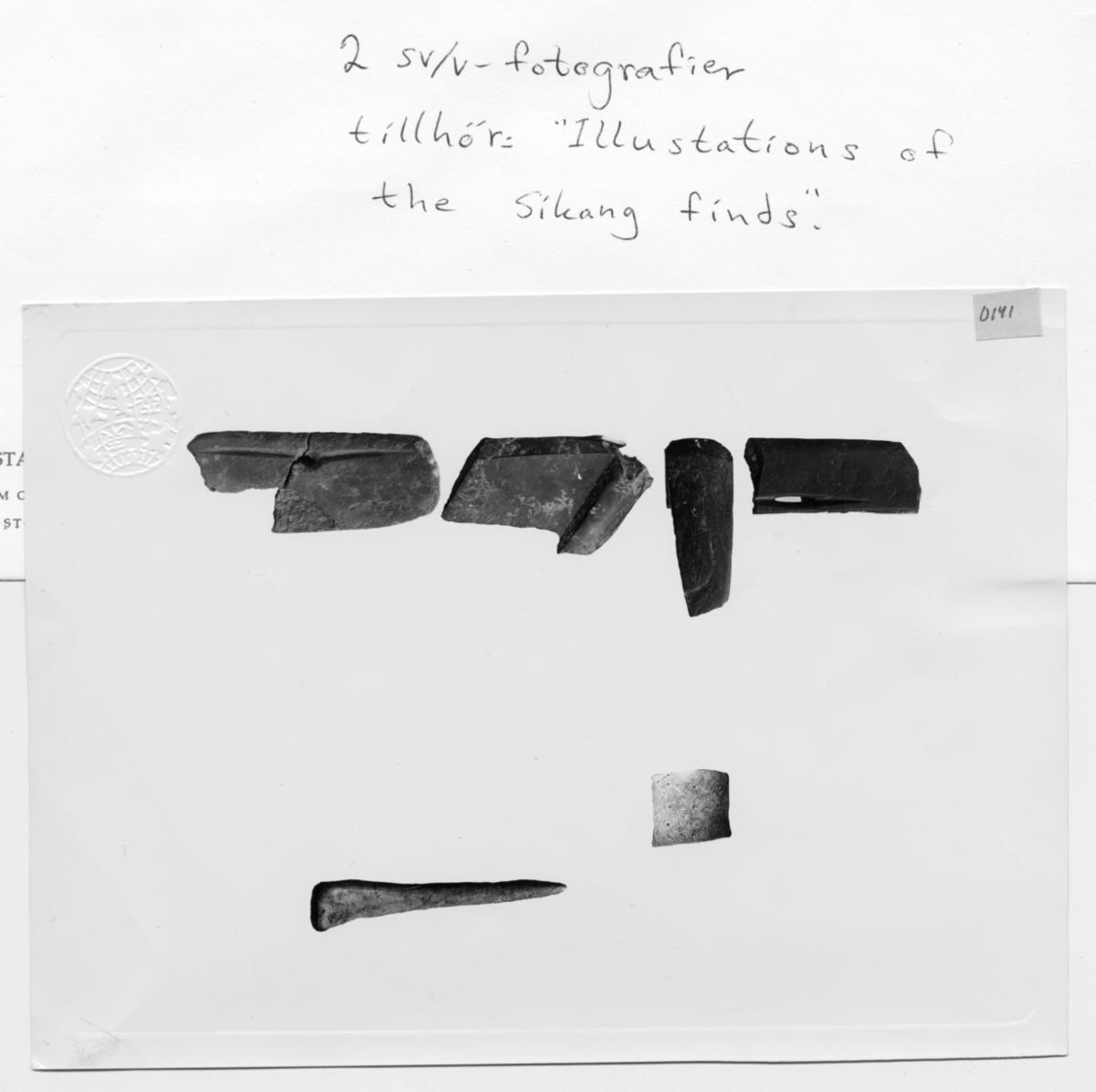
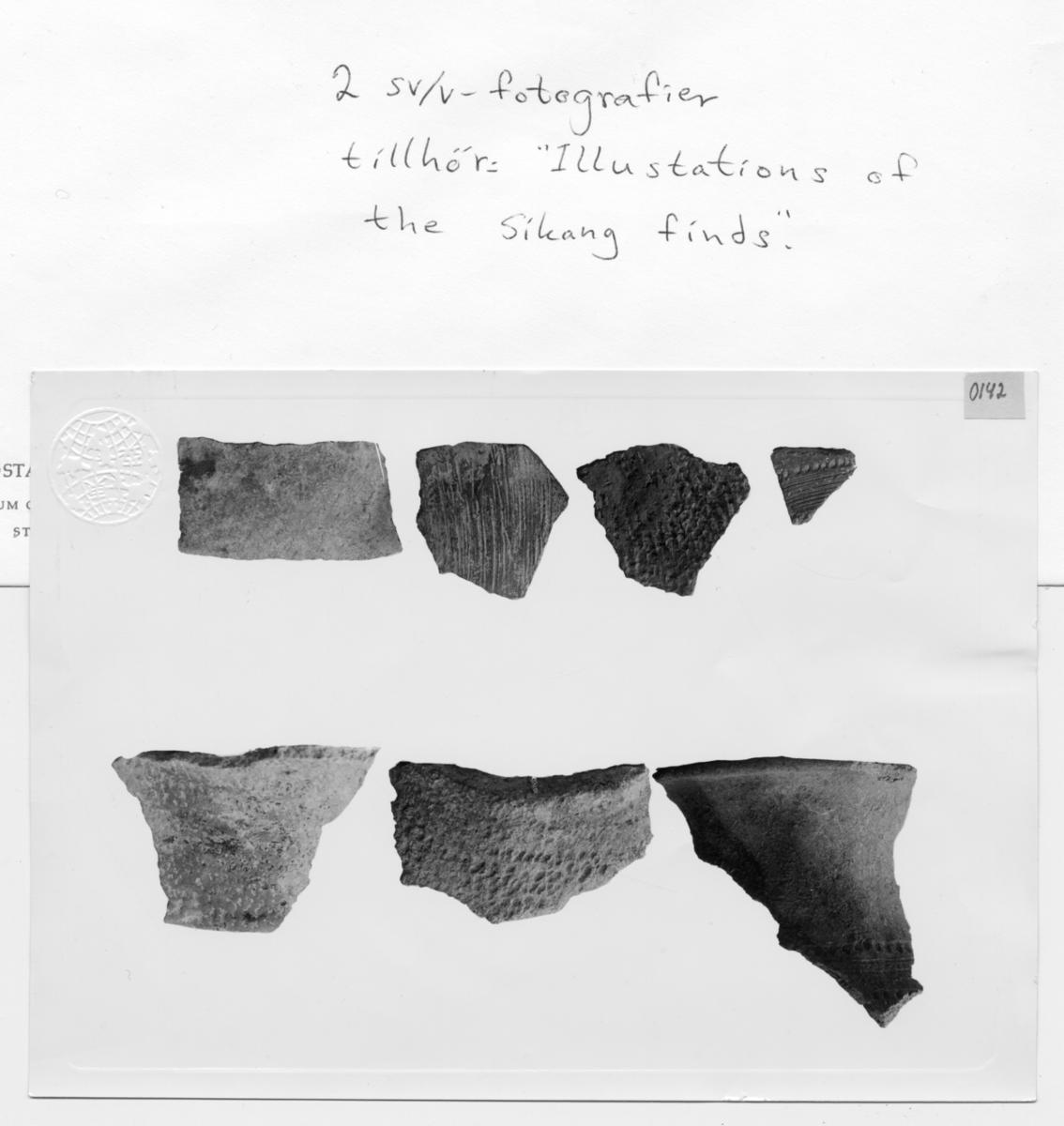
037 Page Four. Plate B gives some of the few ceramic fragments which were un- packed when the photographs were taken. It should be emphasized that théss fragments give no idea about the value of these cera- wics which, when the material is reconstruected, will give the shapes of several complete vessels and a great number of large parts of vessels. Ba, is a big fragment of the red pottery which I ...
Visa hela
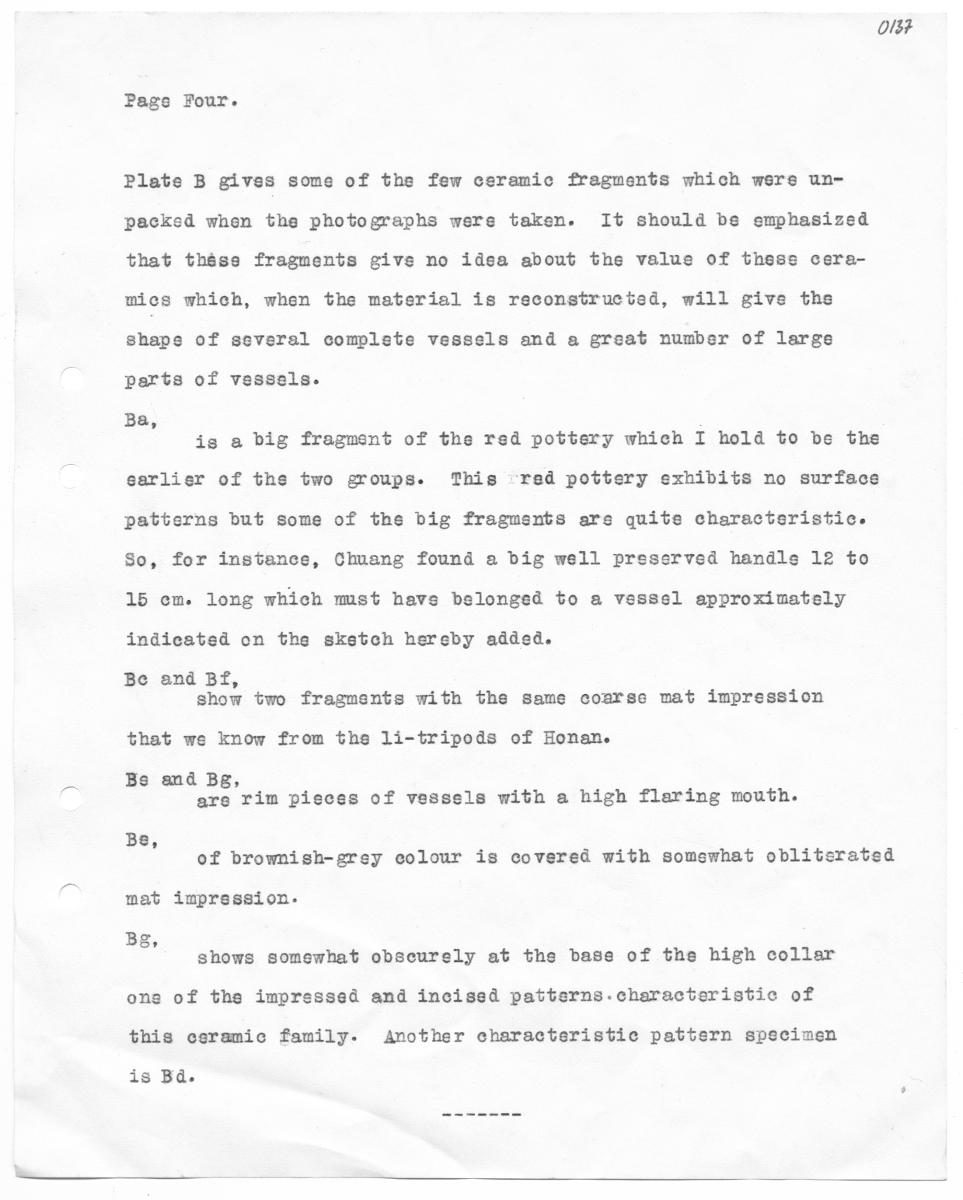
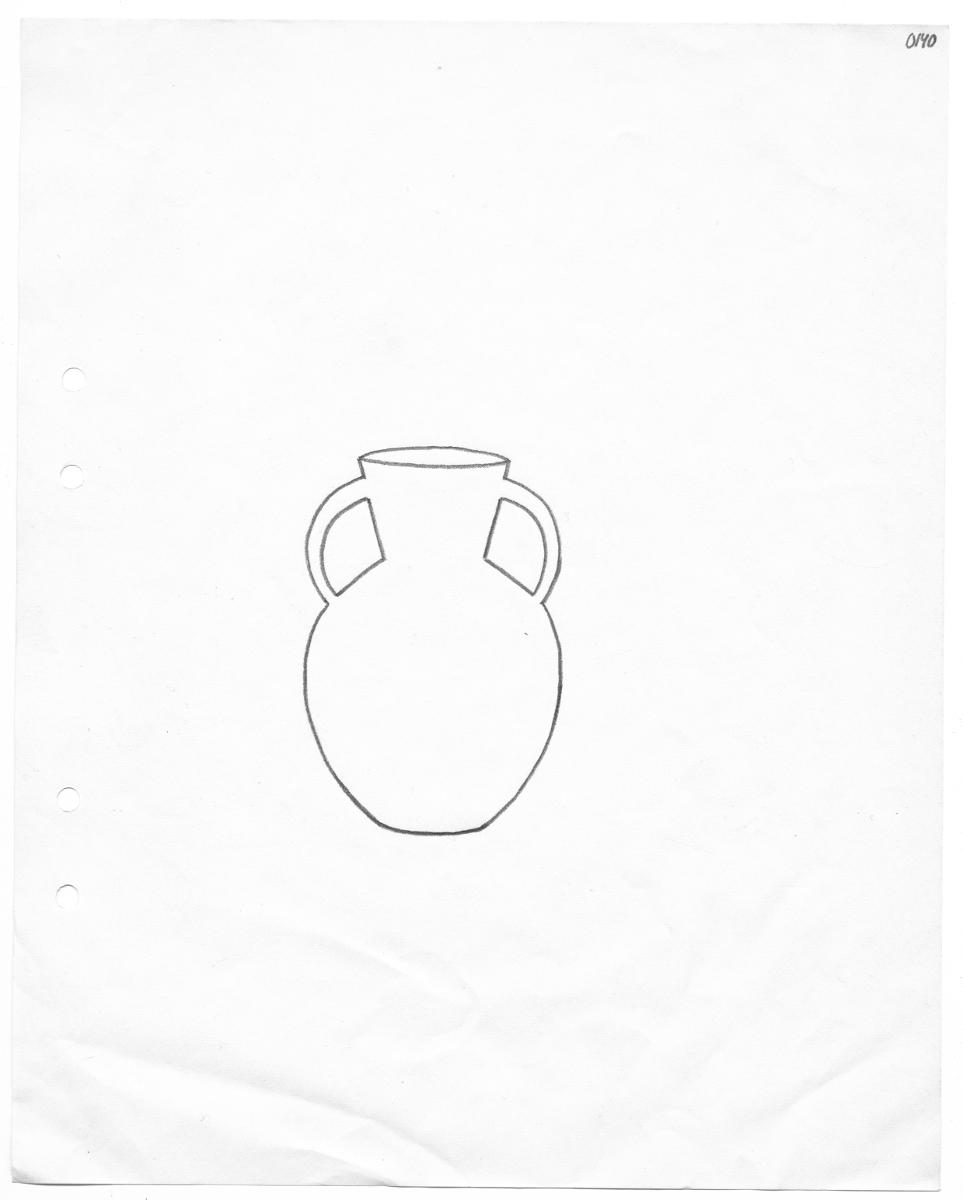
037 Page Four. Plate B gives some of the few ceramic fragments which were un- packed when the photographs were taken. It should be emphasized that théss fragments give no idea about the value of these cera- wics which, when the material is reconstruected, will give the shapes of several complete vessels and a great number of large parts of vessels. Ba, is a big fragment of the red pottery which I hold to be the earlier of the two groups. This red pottery exhibits no surface patterns but some of the big fragments are quite characteristic. So, for instance, Chuang found a big well preserved handle 12 to 15 em. long which mst have belonged to a vessel approximately inäieated on the sketch hereby added. Be and Bf, show two fragments with the same coarse mat impression that we know from the li-tripods of Honan. Bs and Bg, are rim pieces of vessels with a high flaring mouth. Be j of brownish-grey colour is covered with somewhat obliterated mat impression. Be, shows somewhat obscurely at the base of the high collar one of the impressed and inecised patterns.characteristic of this ceramic family. Another characteristic pattern specimen is Bå.
Stäng
|
| Text i dokument <itemDescription> |
-
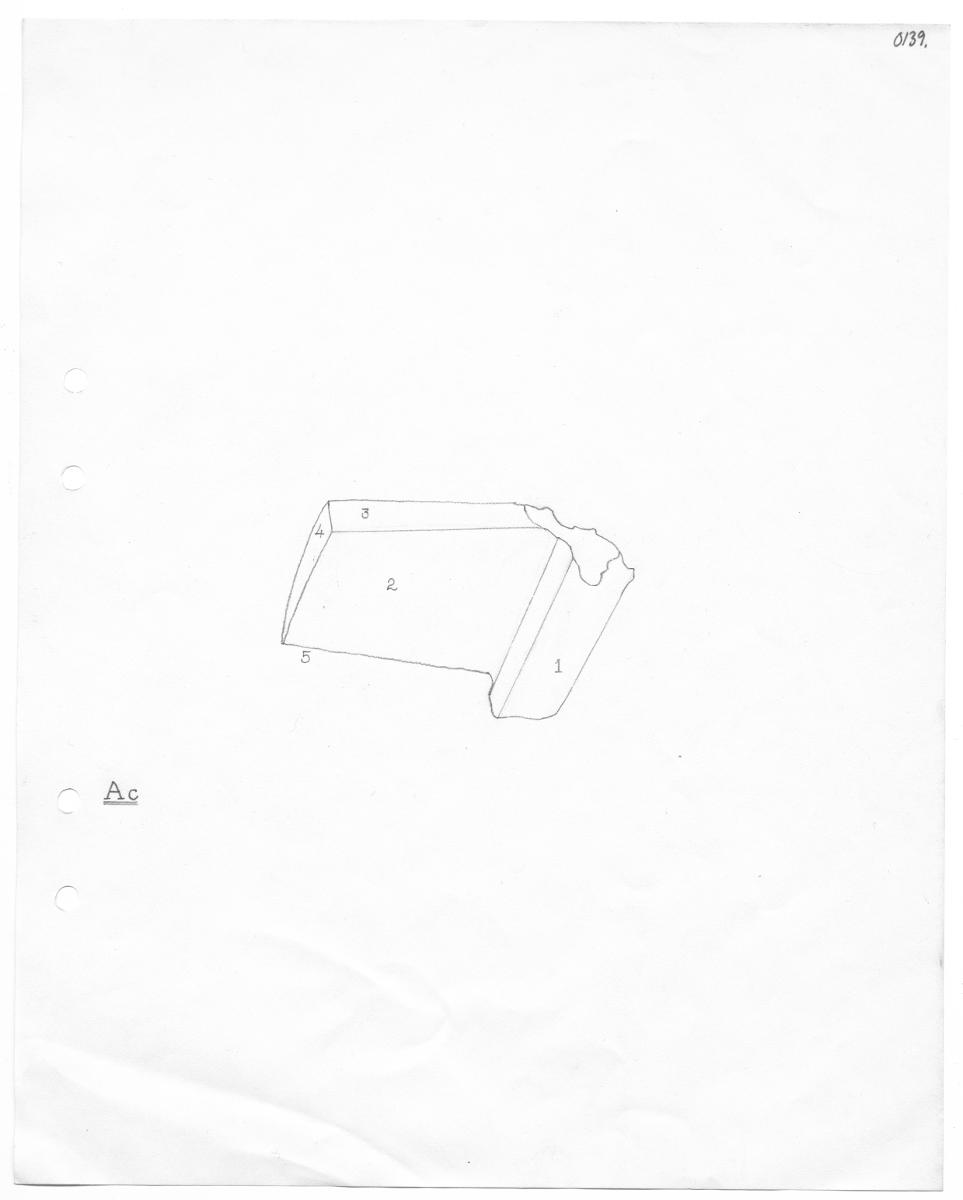
0136 Page Three. (1) Is the rounded handle-like part, most unfortunately broken in both ends. (2) I8 the largest level surface terminated by the cutting eåge (5). Towarås the top this big plane is bor...
Visa hela
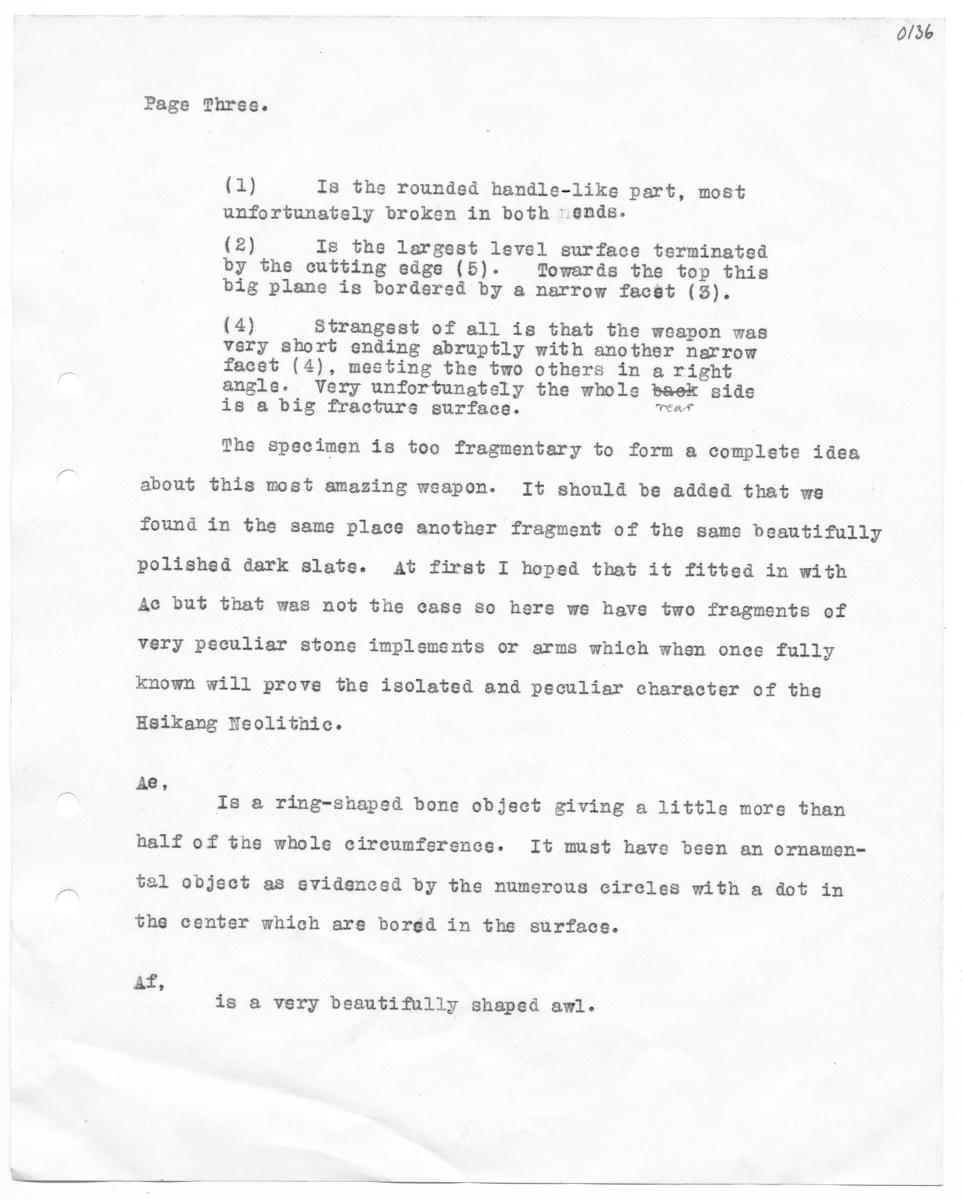
0136 Page Three. (1) Is the rounded handle-like part, most unfortunately broken in both ends. (2) I8 the largest level surface terminated by the cutting eåge (5). Towarås the top this big plane is bordered by a narrow facét (3). (4) Strangest of all is that the weapon was very short ending abruptly with another narrow facet (4), mesting the two others in a right angle. Very unfortunately the whole baek side is a big fracturs surface. Tear The specimen is too fragmentary to form a complete idea about this most amazing weapon. It should be added that we found in the same place another fragment of the same beautifolly polished dark slate. At first I hoped that it fitted in with Ac but that was not the case so here we have two fragments of very peculiar stone implements or arms which when once fully known will prove the isolated and peculiar character of the Hsikang Neolitnhic. Ae, Is a ring-shaped bone object giving a little more than half of the whole cirecumference. It must have been an ornamen- tal object as svidenced by the numerous cireles with a dot in the center which are borgd in the surface. Af, is a very beautifully shaped awl.
Stäng
|
| Text i dokument <itemDescription> |
|
| Text i dokument <itemDescription> |
-
085. Page Two. AB, ie the fragmentary knife found by Miss Dorf and being the first specimen of a new type of the rectangular knifsyjit differs from the previously known types in not having one or two ...
Visa hela
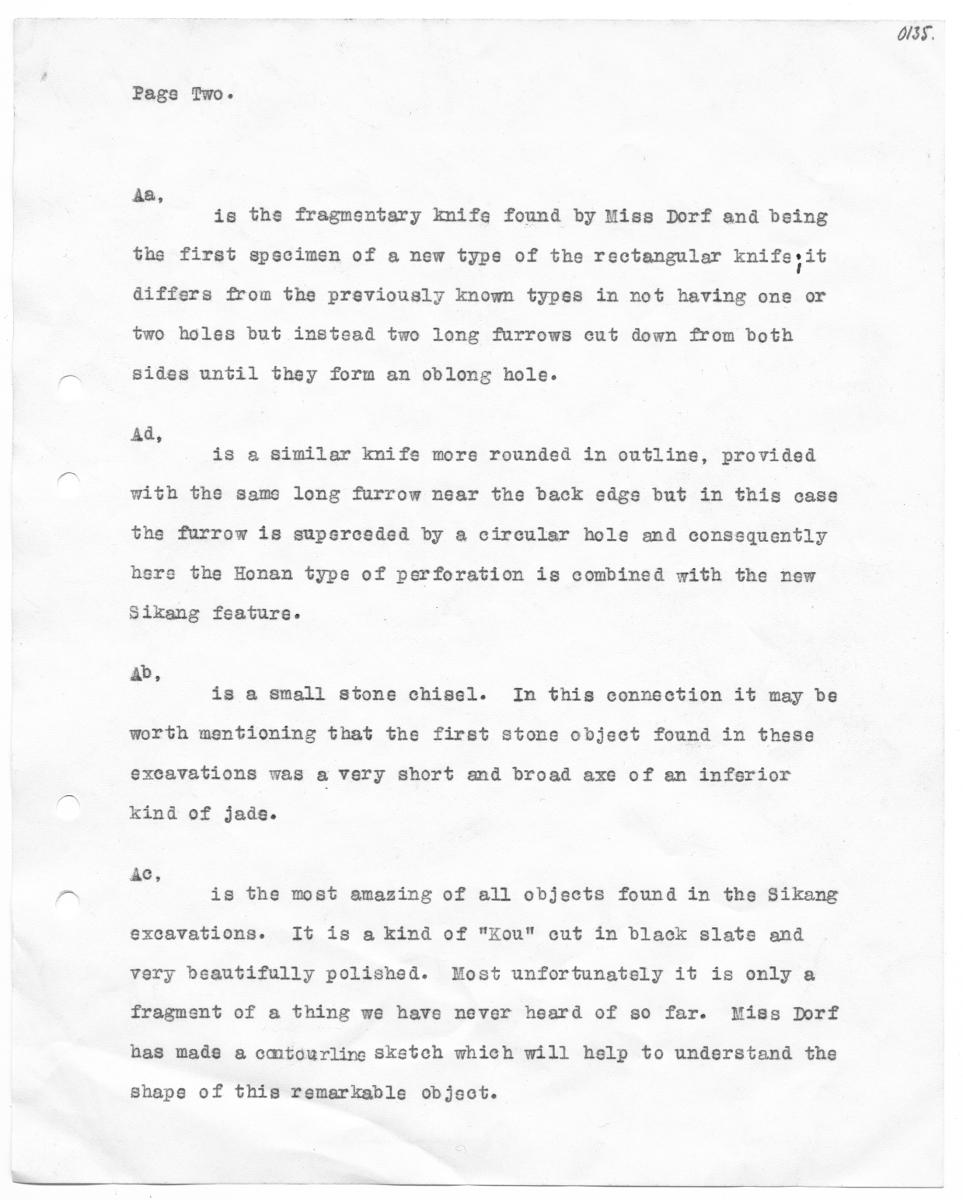
085. Page Two. AB, ie the fragmentary knife found by Miss Dorf and being the first specimen of a new type of the rectangular knifsyjit differs from the previously known types in not having one or two holes but instead two long furrows cut down from both sides until they form an oblong hole. Ad, is a similar knife more rounded in outline, provided with the same long furrow near the back edges but in this case the furrow is superceded by a circular hole and consequently bere the Honan type of perforation is combined with the new Sikang feature. ab, is a small stone chisel. In this connection it may be worth mentioning that the first stone object found in these excavations was a very short and broad axe of an inferior kind of jade. Ac, is the most amazing of all objeets found in the Sikang excavations. It is a kind of "Kou" cut in black slate and very beautifully polished. Most unfortunately it is only a fragment of a thing we have never heard of so far. Miss Dorf has made a camtourline sketch whieh will help to understand the shape of this remarkable objsot.
Stäng
|
| Text i dokument <itemDescription> |
|
| Text i dokument <itemDescription> |
|
| Text i dokument <itemDescription> |
-
ae 084 IBEIUSTRATIONS OF THE SIKANG FINDS Before we arrived in Chengtu we planned during the homeward journey to stay some weeks and work up the Neolithic material collected in Taofuhsien but as state...
Visa hela
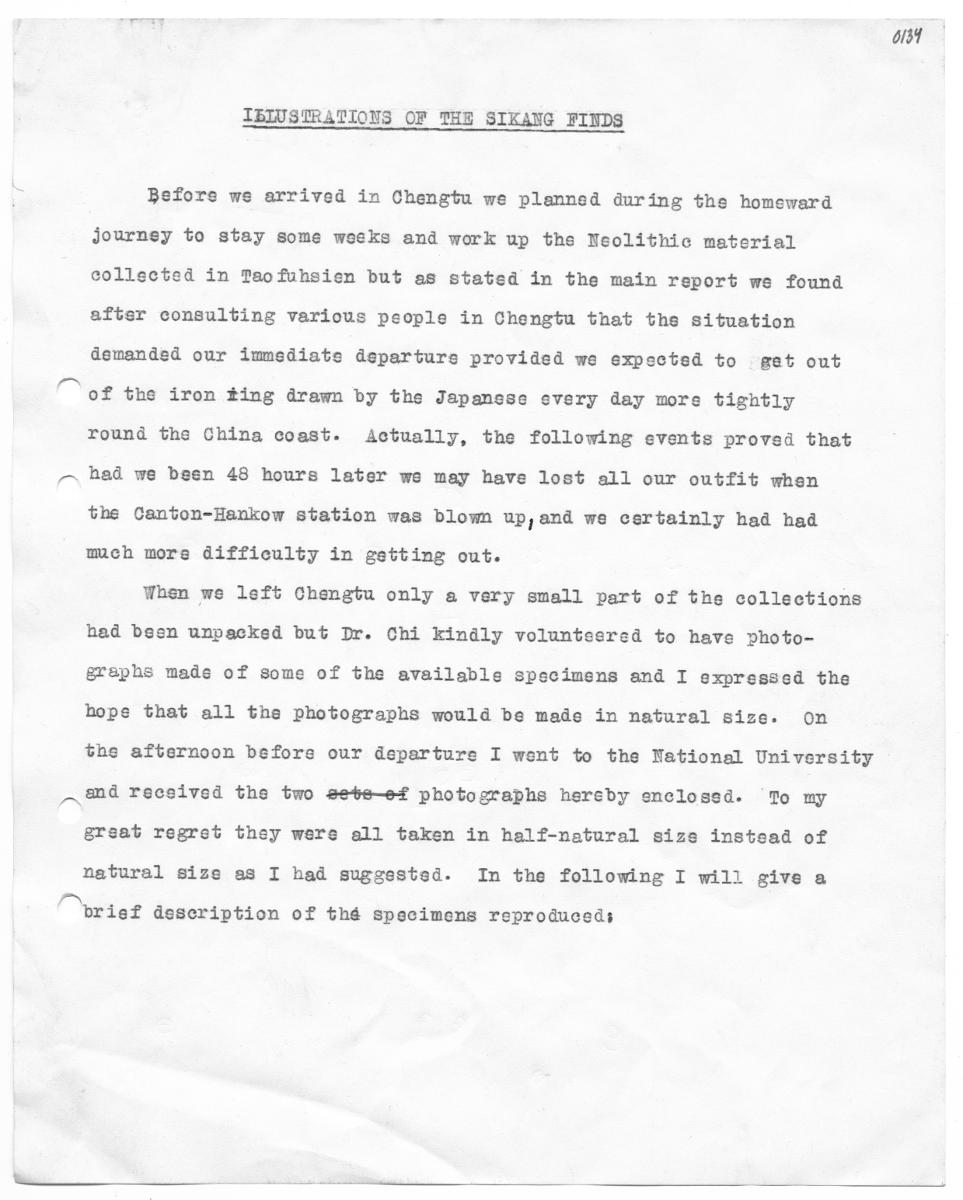
ae 084 IBEIUSTRATIONS OF THE SIKANG FINDS Before we arrived in Chengtu we planned during the homeward journey to stay some weeks and work up the Neolithic material collected in Taofuhsien but as stated in the main report we found after consulting various people in Chengtu that the situation demanded our immediate departures provided we expected to get out of the iron Ting drawn by the Japanese every day more tightly round the China coast. Actually, the following events proved that — had we been 48 hours later we may have lost all our outfit when the Canton-Hankow station was blown upyjand we certainly had had mach more difficulty in getting out. When we left Chengtu only a very small part of the collections had been unpacked but Dr. Chi kindly voluntsered to have photo- graphs made of some of the available specimens and I expressed the hope that all the photographs would be made in natural size. On the afternoon before our departure I went to the National University end received the two seteef photographs hereby enclosed. To ny great regret they were all taken in half-natural size instead of natural size as I had suggested. In the following I will give a Oprief description of thé specimens reproduced;
Stäng
|
| Text i dokument <itemDescription> |
|
| Händelse <context> |
|
| Nyckelord <itemKeyWord> |
-
E1A-15_0134
-
E1A-15_0134-0142
-
E1A-15_0135
-
E1A-15_0136
-
E1A-15_0137
-
E1A-15_0138
-
E1A-15_0139
-
E1A-15_0140
-
E1A-15_0141
-
E1A-15_0142
|
| Typ av dokument<itemName> |
- brev
|
| Ämne <subject> |
|
| Arkivdokument-ID <itemNumber> |
|
| Tidigare identitet <itemNumber> |
|
| Tidigare identitet <itemNumber> |
|
| Tidigare identitet <itemNumber> |
|
| Tidigare identitet <itemNumber> |
|
| Tidigare identitet <itemNumber> |
|
| Tidigare identitet <itemNumber> |
|
| Tidigare identitet <itemNumber> |
|
| Tidigare identitet <itemNumber> |
|
| Tidigare identitet <itemNumber> |
|
| Rättigheter för metadata <itemLicense> |

|
| Källa <presOrganization> |
Statens museer för världskultur - Östasiatiska museet |
|
Källa <url>
|
|

 ARTIKLAR I WIKIPEDIA
 ARTIKLAR I WIKIDATA
 BILDER I WIKIMEDIA COMMONS