| Typ <itemType> |
Objekt/föremål |
| Plats <presPlaceLabel> |
Afrika, Zambia, Broken Hill, Kabwe |
| Beskrivning <itemDescription> |
-
Enligt generalkatalogen: Karimba. "(kafferpiano, sansa"). Ur NE, sökord mbira:
mbi´ra (shona), mbila, dimba, kalimba, likembe, chisanji, nsansi, sansa, populärt kallat tumpiano, afrikanskt knäppinstrument, bestående av ett antal lameller (tungor) av bambu eller metall monterade på en träplatta, eller en ihålig trälåda, över ett stall. Antalet lameller kan variera från ett fåtal till ca 60, ofta ...
Visa hela
Enligt generalkatalogen: Karimba. "(kafferpiano, sansa"). Ur NE, sökord mbira:
mbi´ra (shona), mbila, dimba, kalimba, likembe, chisanji, nsansi, sansa, populärt kallat tumpiano, afrikanskt knäppinstrument, bestående av ett antal lameller (tungor) av bambu eller metall monterade på en träplatta, eller en ihålig trälåda, över ett stall. Antalet lameller kan variera från ett fåtal till ca 60, ofta monterade i solfjädersform och på varandra liggande rader (manualer). En mängd skilda typer, storlekar och tonaliteter förekommer med olika benämningar på den afrikanska kontinenten. Mbira används både som soloinstrument och i ensembler för såväl religiösa som underhållande syften.
Stäng
|
| Publicerad text, engelska <itemDescription> |
-
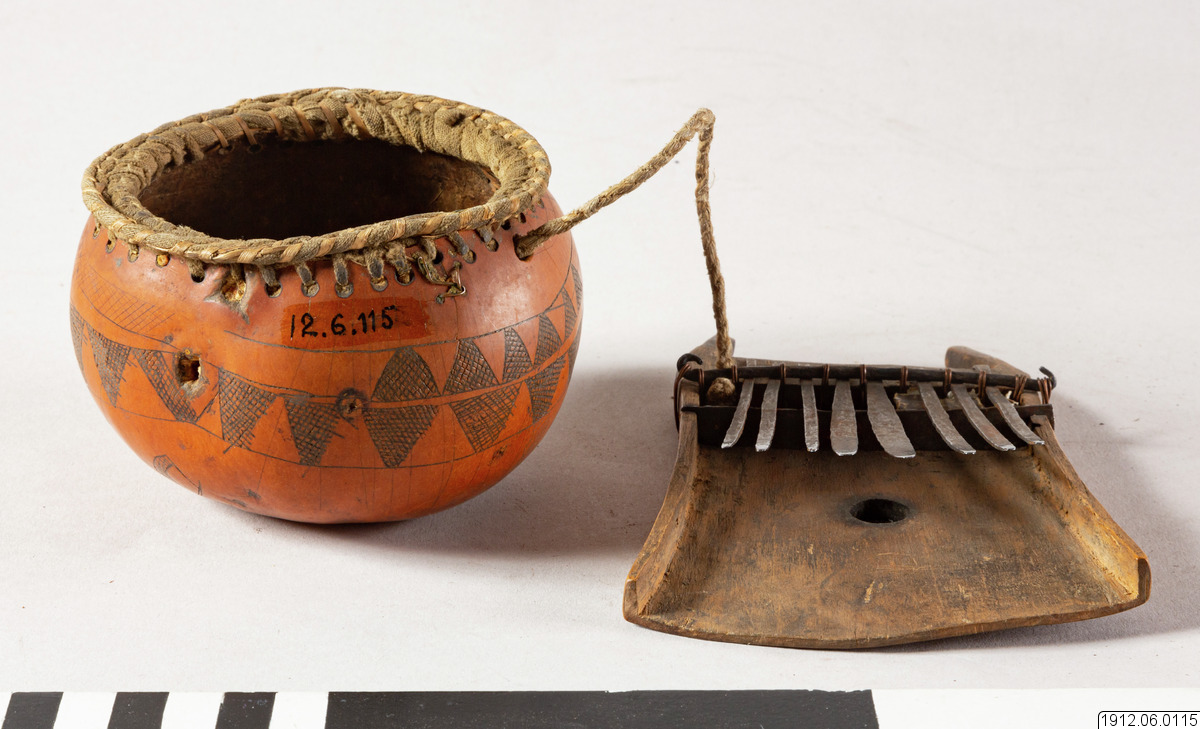
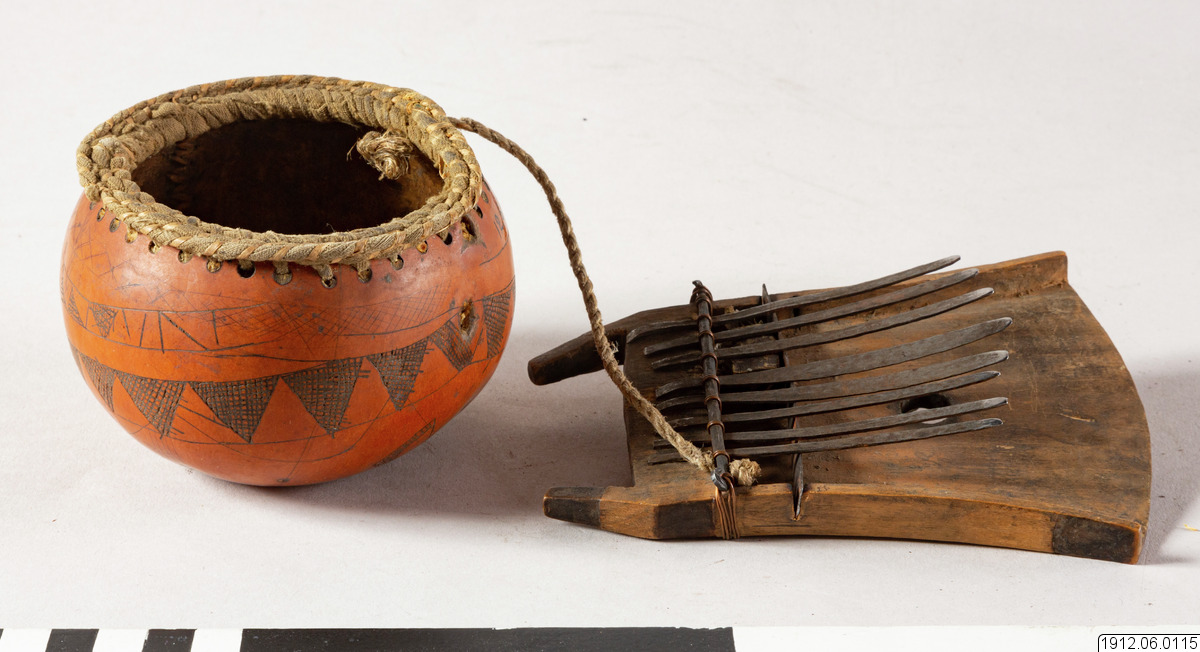
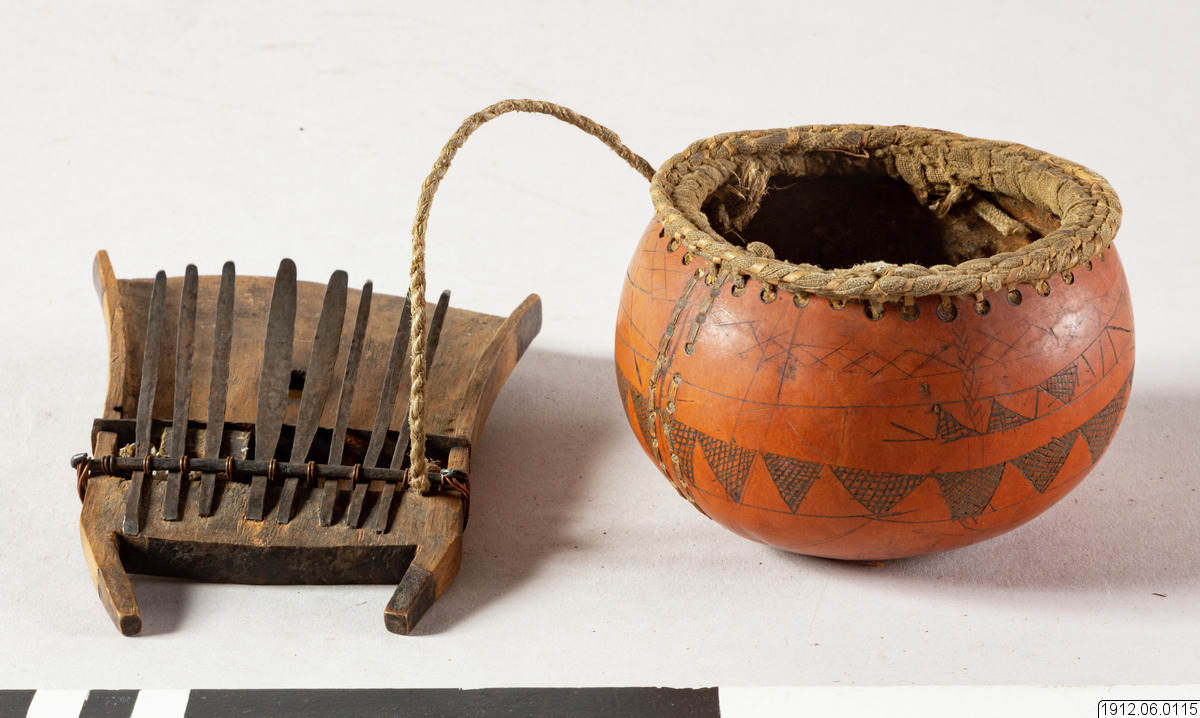
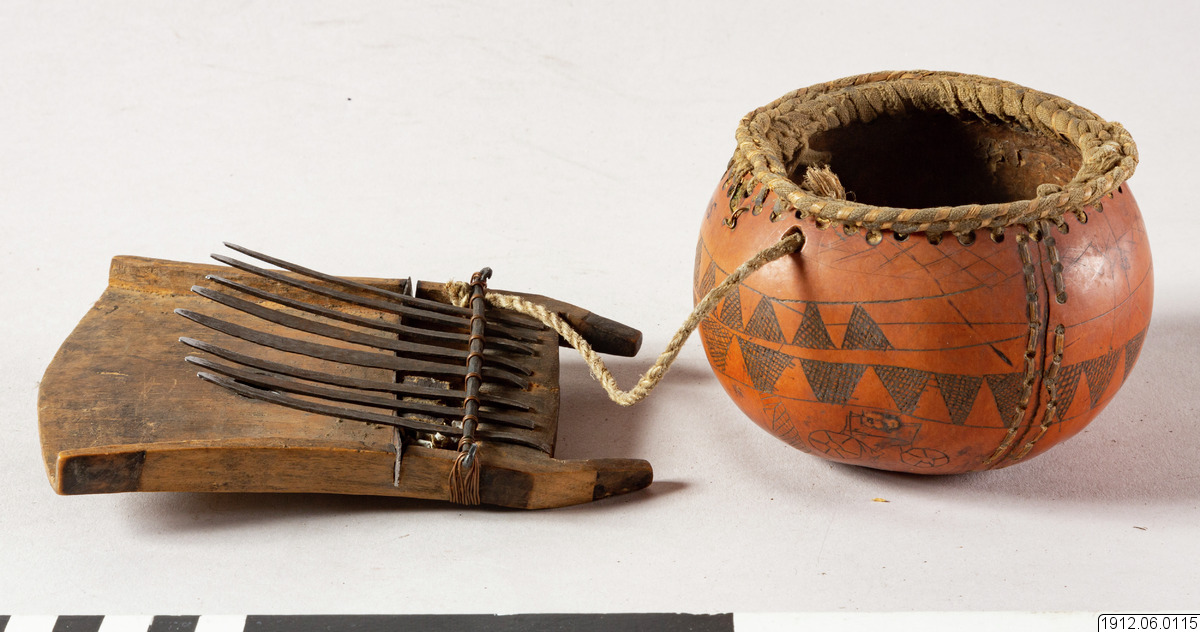
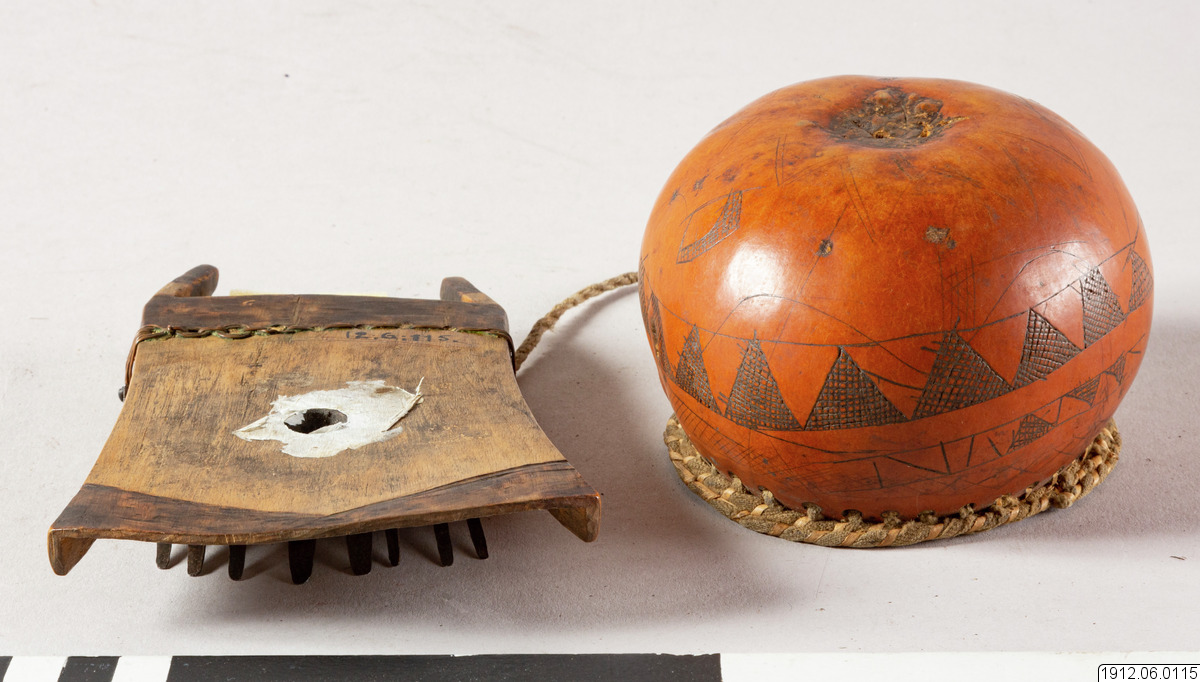
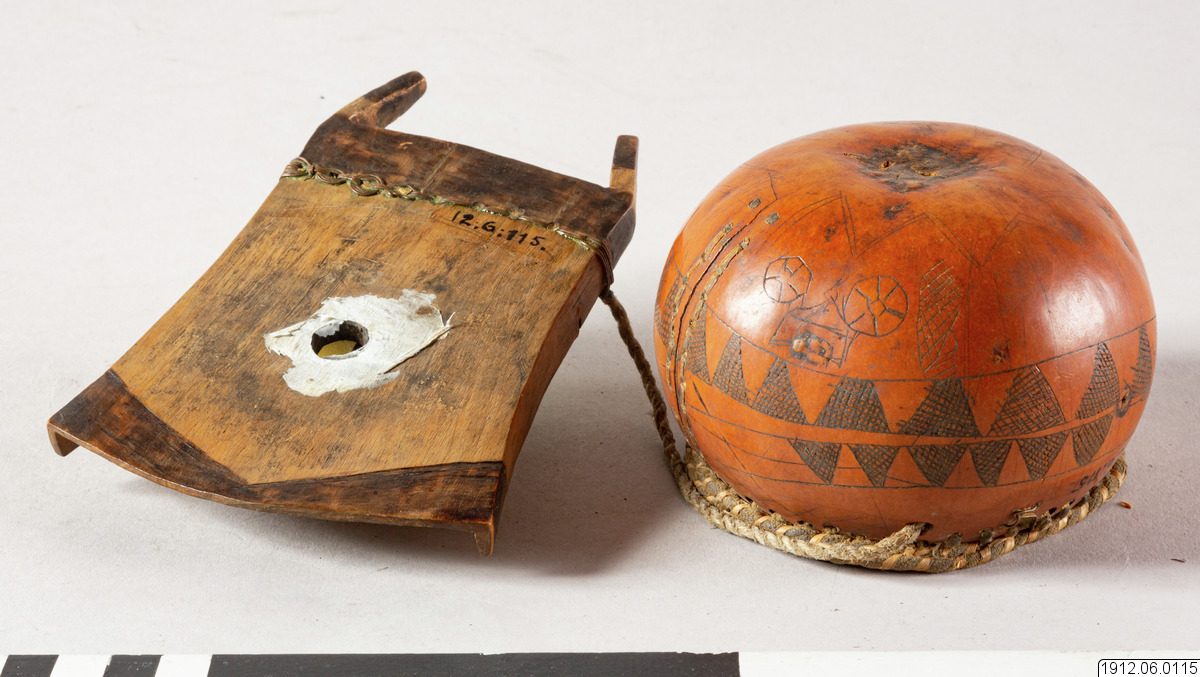
"The sense depicted in Fig. 342 is an interesting and beautiful variant of this instrument. The wooden board, to which the 8 iron pegs (tone rods) are attached, is paddle-shaped and provided with two ...
Visa hela
"The sense depicted in Fig. 342 is an interesting and beautiful variant of this instrument. The wooden board, to which the 8 iron pegs (tone rods) are attached, is paddle-shaped and provided with two pins or projections, cut in the same piece as the board. In the middle of the disc is a round sound opening, covered with fine, tissue-like bark. I have information that in some parts of Rhodesia it is common to stick a spider web over the sound openings of the drums to improve the tone, thus a similar device as on the balenge people's sensory instruments, although of different materials. The bar bars are attached to the wooden board by means of two iron pegs in the manner shown in the picture. An almost globular gourd serves as the resonant bottom, on which about a quarter of the shell has been cut away. The gourd is around the mouth provided with a braid of fabric and bast to prevent the wooden board from slamming against the hard edge of the gourd, when the senses are played. The wickerwork is attached to the resonant bottom with the help of a string, which is pulled through a series of holes around the mouth of the gourd. The resonant bottom is attached to the sansa itself with a string so long that the sansa can be lifted off the gourd and placed next to it. The sense is adorned with two feathers and the gourd is provided with engraved ornaments, which consist of triangles and an attempt to depict a velocipede. Sansa is called by babisa for kirimba, by balenge for karimba." (pp. 417-419, von Rosen, 1916, translated from Swedish).
Stäng
|
| Beskrivning / engelska <itemDescription> |
-
According to the general catalog: Karimba. (kafferpiano, sansa). From NE, keywords mbira: mbi´ra (shona), mbila, dimba, kalimba, likembe, chisanji, nsansi, sansa, popularly called tumpiano, African ...
Visa hela
According to the general catalog: Karimba. (kafferpiano, sansa). From NE, keywords mbira: mbi´ra (shona), mbila, dimba, kalimba, likembe, chisanji, nsansi, sansa, popularly called tumpiano, African snap instrument, consisting of a number of slats (tongues) of bamboo or metal mounted on a wooden board, or a hollow wooden box, over a stable. The number of slats can vary from a few to about 60, often mounted in fan form and superimposed rows (manuals). A variety of different types, sizes and tonalities occur with different names on the African continent. Mbira is used both as a solo instrument and in ensembles for both religious and entertaining purposes.
Stäng
|
| Anmärkning <itemDescription> |
|
| Utställning / tidigare <itemDescription> |
|
| Referens, publicerad i <itemDescription> |
|
| Geografiskt namn / annat <itemDescription> |
|
| Geografiskt namn / annat <itemDescription> |
|
| Land / engelska <itemDescription> |
|
| Geografiskt namn / annat <itemDescription> |
|
| Geografiskt namn / annat <itemDescription> |
|
| Geografiskt namn / annat <itemDescription> |
|
| Händelse / var närvarande vid <itemDescription> |
|
| Händelse <context> |
-
Insamlad av Rosen, Eric von.
-
Brukad av Lenje.
-
Ursprung i Broken Hill, Zambia, Afrika.
-
Förvärvad 1912 .
-
Utställd 1913-02-04 - i Konstakademien, Stockholm av Rhodesia-Kongo-Expeditionens utställning.
|
| Nyckelord <itemKeyWord> |
-
1912.06.0115
-
Balenge
-
Balenje
-
Benimukuni
-
Eric von Rosen
-
Kap till Kairo
-
Kap-Kairo-expeditionen
-
Konst (530)
-
Lenge
-
Lengi
-
Musikinstrument (534)
-
WHMZ
-
bene mukuni
-
ciina mukuna
-
kalimba
-
likembe
-
mbira
-
sansa
-
von Rosen, Eric
|
| Lokalt namn<itemName> |
- karimba
|
| Sakord, engelska<itemName> |
- thumb piano
- musical instrument
|
| Sakord<itemName> |
- tumpiano
- musikinstrument
- karimba
|
| Ämne <subject> |
|
| Inventarienummer <itemNumber> |
|
| Rättigheter för metadata <itemLicense> |

|
| Källa <presOrganization> |
Statens museer för världskultur - Etnografiska museet |
|
Källa <url>
|
|

 ARTIKLAR I WIKIPEDIA
 ARTIKLAR I WIKIDATA
 BILDER I WIKIMEDIA COMMONS




