| Typ <itemType> |
Objekt/föremål |
| Plats <presPlaceLabel> |
Oceanien, Wallis- och Futunaöarna |
| Beskrivning <itemDescription> |
|
| Beskrivning <itemDescription> |
-
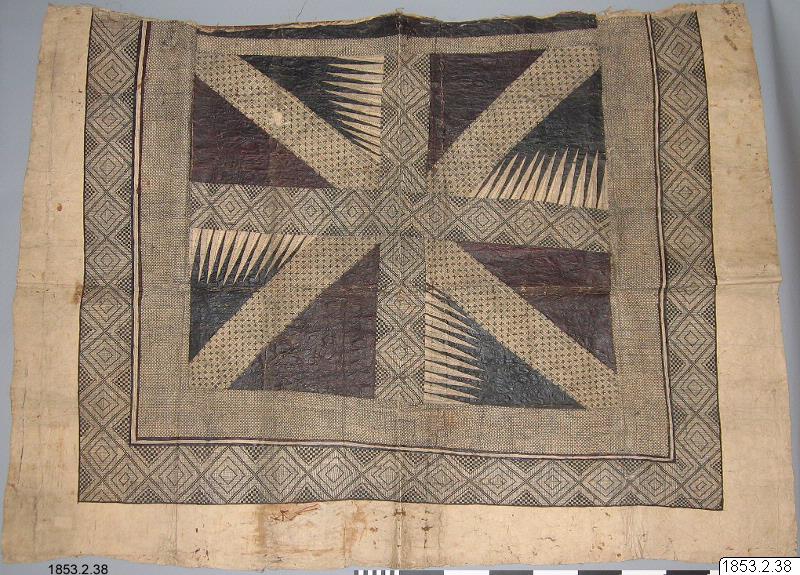
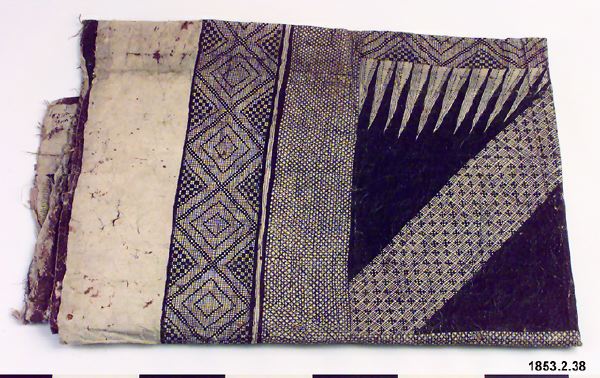
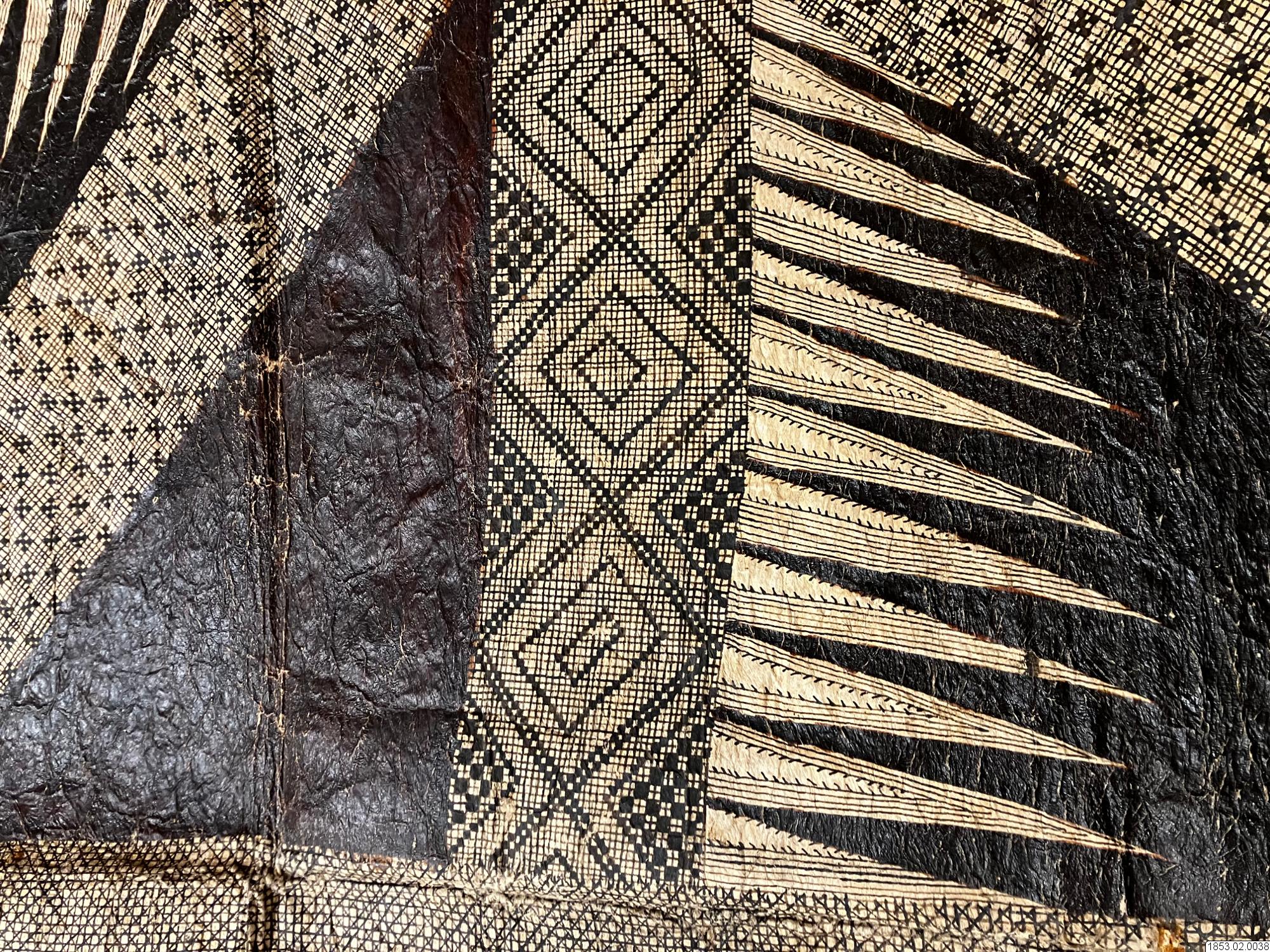
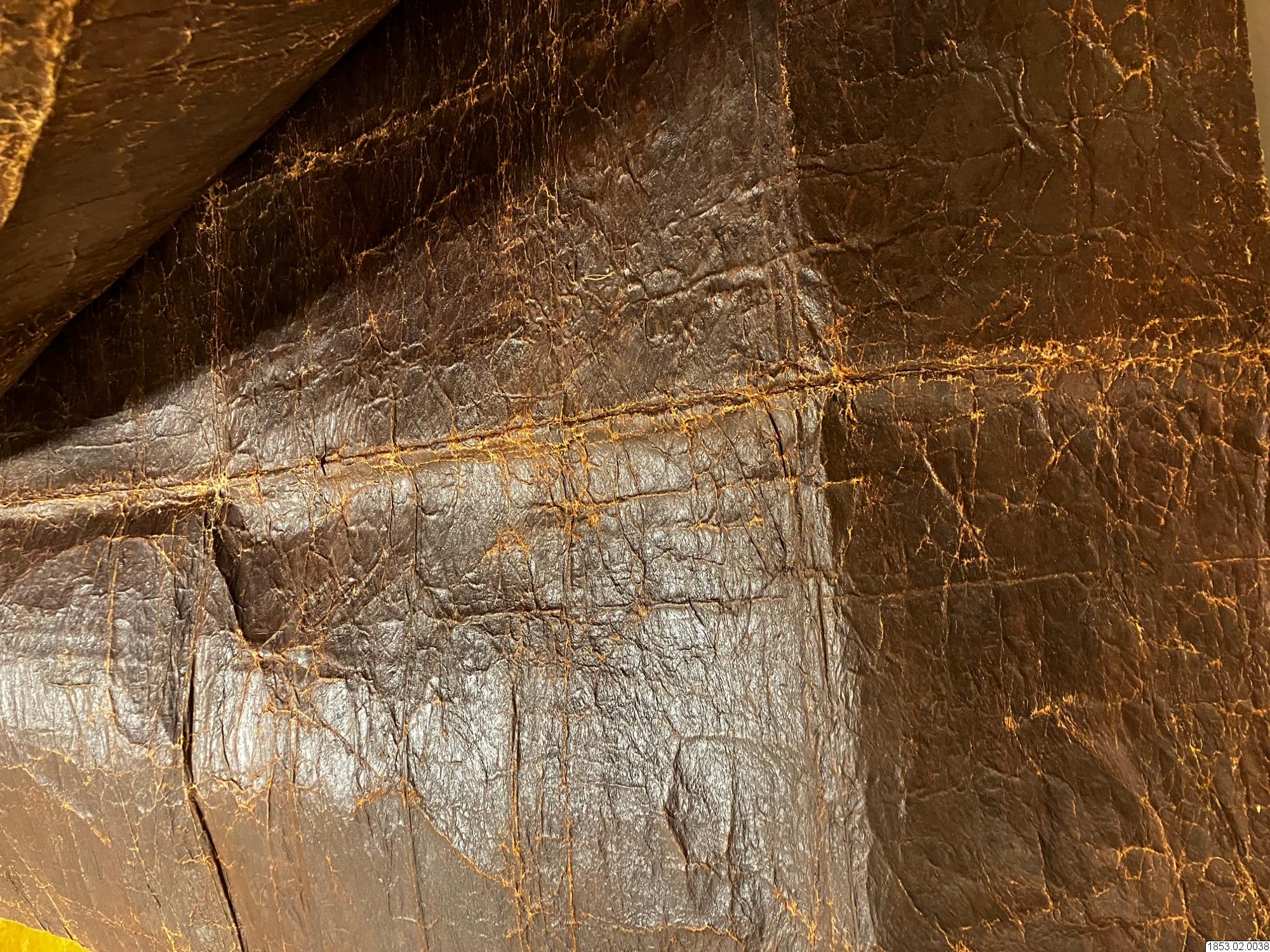
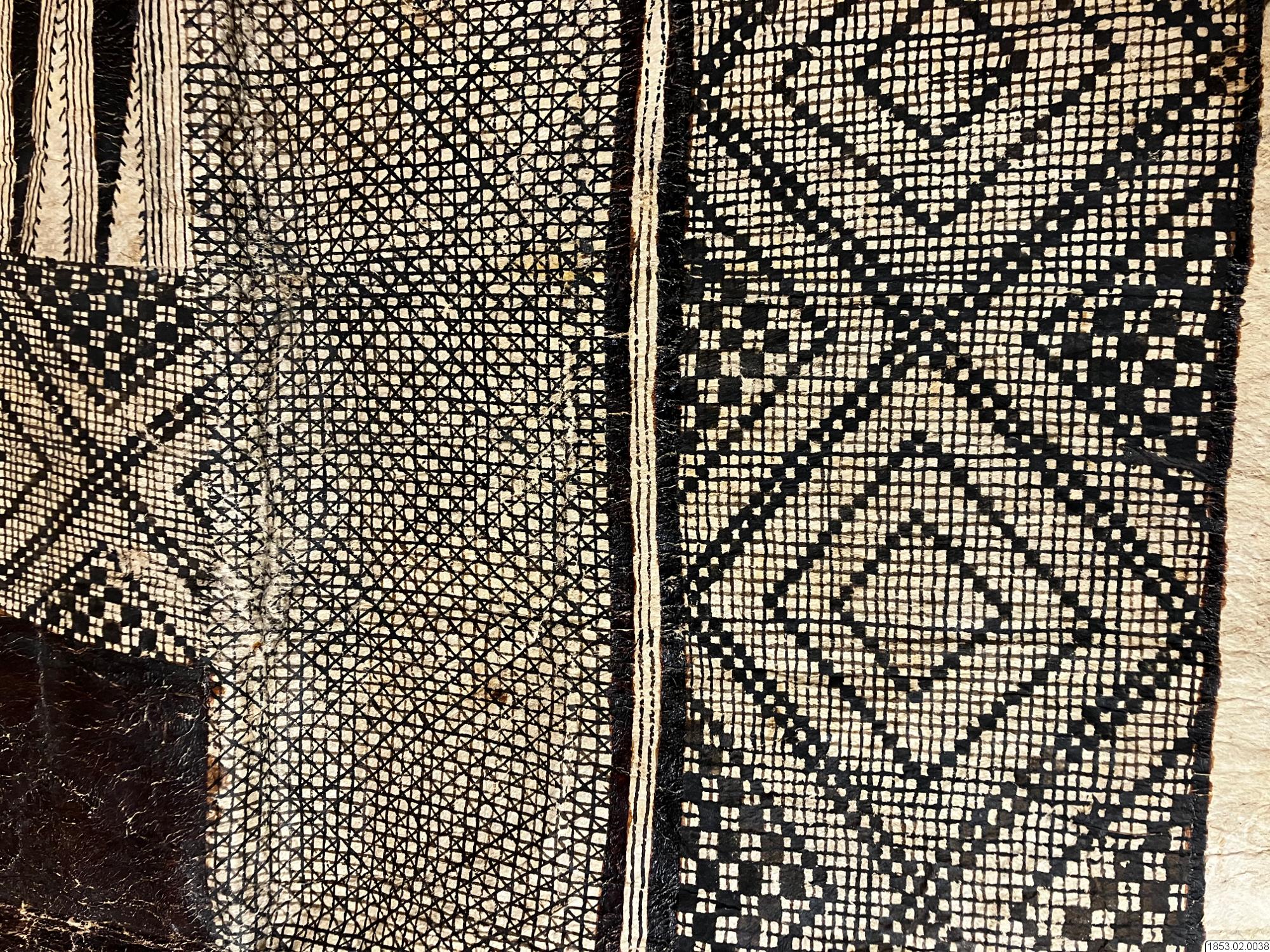
Mycket detaljerad tapa av salatasi-stil. Målad med smal penna tillverkad av kokosbladets mittribba. Svarta rutmönster och svartbruna trianglar. Används som höftskynke. Målad brun på baksidan. [[Etno]...
Visa hela
Mycket detaljerad tapa av salatasi-stil. Målad med smal penna tillverkad av kokosbladets mittribba. Svarta rutmönster och svartbruna trianglar. Används som höftskynke. Målad brun på baksidan. [[Etno]]
Stäng
|
| Anmärkning <itemDescription> |
-
Provenance: Collected during the circumnavigation voyage of the Swedish frigate Eugenie (1851–1853). Although the Eugenie did not anchor at Futuna, it visited Tonga and Fiji in early October 1852. Pr...
Visa hela
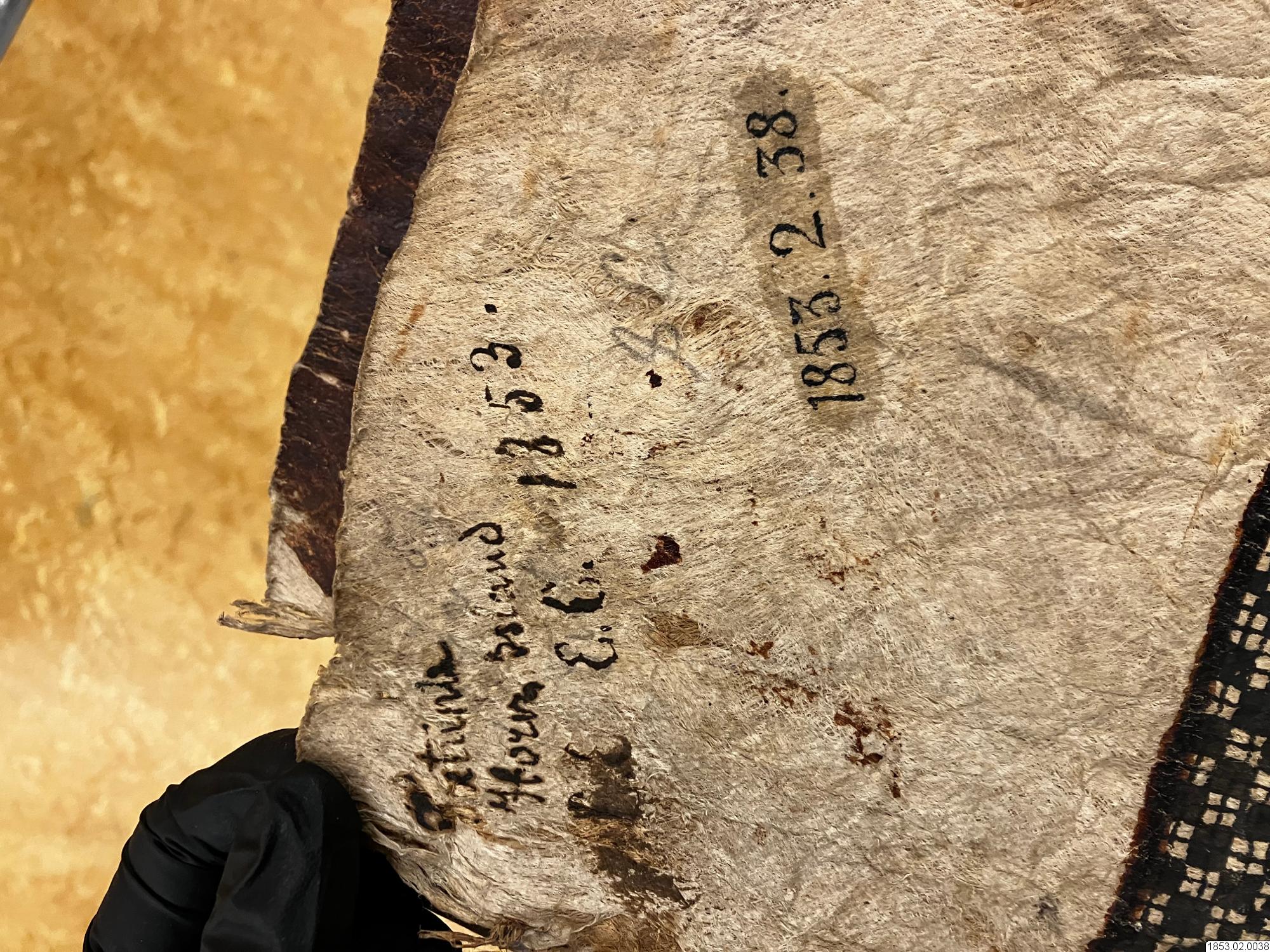
Provenance: Collected during the circumnavigation voyage of the Swedish frigate Eugenie (1851–1853). Although the Eugenie did not anchor at Futuna, it visited Tonga and Fiji in early October 1852. Prior to European contact, an exchange network existed among the islands of western Polynesia, through which barkcloth actively circulated between Tonga, Samoa, Fiji, ‘Uvea (Wallis), Futuna, and other neighboring islands. According to Premier-Lieutenant Carl Skogman’s official account (Fregatten Eugenies resa omkring jorden åren 1851–1853, published in 1854), tapa and other artefacts were acquired in Tonga, when the Eugenie was anchored off the island of Ha'ano, in the Ha'apai group, near the channel between Foa and Lifuka (p.31). Given the regional circulation of barkcloth, this tapa, though attributed to Futuna, may well have been obtained during this stop in Tonga. Donated to the museum in 1853 by Nils Ehrenfrid (Ehrenfried) Ekströmer (1826–1859), assistant surgeon aboard the frigate Eugenie. (Héloise Dazard 2025).
Stäng
|
| Anmärkning <itemDescription> |
-
Like in many islands of Polynesia, the making of barkcloth — known as tapa — in Wallis (locally called ‘Uvea) and Futuna has traditionally been the domain of women. Tapa is a paper-like textile crafte...
Visa hela
Like in many islands of Polynesia, the making of barkcloth — known as tapa — in Wallis (locally called ‘Uvea) and Futuna has traditionally been the domain of women. Tapa is a paper-like textile crafted from the soft inner bark, or bast, of certain trees. Before the widespread introduction of European textiles, it was produced throughout the Pacific for both everyday and ceremonial use. In Wallis and Futuna, women make tapa from the bast of the paper mulberry tree (fu‘u tutu in the local language, Broussonetia papyrifera in Latin).
After the strips of bast are removed from the tree, they are laid on a wooden anvil (tutua) and beaten with a mallet (ike), usually made of dense ironwood (toa), until they form thin, flexible sheets. These sheets can then be joined together, either by overlapping and beating them so the natural sap binds them, or by using a starch-based glue. Traditionally, this adhesive was made from arrowroot (māhoa‘a), while today manioc or commercial laundry starch is often used.
Tapa was produced in many forms and sizes. The piece shown here comes specifically from Futuna and belongs to a category known as sala, a type of garment which was traditionally worn as a wrap around the waist. Depending on how many times it encircled the body, it was called salatasi (once), salalua (twice), salatolu (three times), or salafa (four times). This example, measuring 135 × 185 cm, could have functioned as either a salatasi or salalua.
These garments are typically made from several layered sheets of tapa and decorated in a distinctive style: black-on-white linear and geometric designs arranged in symmetrical and repetitive patterns. The motifs were painted freehand using tools made from the midribs of coconut palm leaflets, the tips of coconut leaf stalks, or brushes fashioned from pandanus fruits. The black pigment is derived from the tuitui or candlenut tree (Aleurites moluccana), using soot from burnt nuts or extracts from the bark. Each design reflected the creativity of the woman who painted it and was regarded as the intellectual property of her family. The knowledge of these patterns was usually held by an older woman, who would pass it down to a chosen relative—most often a daughter. The motifs were hereditary within kin groups, with each lineage having its own distinctive designs. The propeller-like pattern traces its origin to the ancient Lapita culture, from the Austronesian navigators who reached and settled in Wallis & Futuna during the first millennium BCE. A parallel can also be drawn between the grid-like pattern found on this type of tapa and wickerwork, particularly in the woven mats that are characteristic of this region of the Pacific. (Héloise Dazard 2025).
Stäng
|
| Källor <itemDescription> |
|
| Källor <itemDescription> |
-
Veys, Fanny Wonu. Unwrapping Tongan Barkcloth: Encounters, Creativity and Female Agency. London: Bloomsbury Academic, 2017.
|
| Källor <itemDescription> |
|
| Källor <itemDescription> |
-
Guiot, Hélène. “Barkcloth from the Islands of Wallis (‘Uvea) and Futuna” in Lennard, Frances & Mills, Andy (ed.), Material Approaches to Polynesian Barkcloth, Leiden, Sidestone press, 2020, p.179-184.
|
| Källor <itemDescription> |
-
Taylor, Donna. "The relation of matplaiting to barkcloth decoration on Polynesia", The Journal of the Polynesian Society, vol. 69, n° 1, 1960, p. 43-53.
|
| Land / engelska <itemDescription> |
|
| Geografiskt namn / annat <itemDescription> |
|
| Geografiskt namn / annat <itemDescription> |
|
| Geografiskt namn / annat <itemDescription> |
|
| Geografiskt namn / annat <itemDescription> |
|
| Händelse / var närvarande vid <itemDescription> |
|
| Händelse / var närvarande vid <itemDescription> |
|
| Händelse <context> |
-
Ursprung i Wallis- och Futunaöarna, Oceanien.
-
Förvärvad 1853 av Ekströmer, Nils Ehrenfrid [[Etno]].
|
| Material, engelska<itemMaterial> |
- plant fiber
|
| Materialkategori<itemMaterial> |
- textil
- växtmaterial
|
| Material<itemMaterial> |
- växtfiber
- bark
|
| Teknik <itemTechnique> |
-
bemålat [[Textil]]
-
bultat
-
målat [[Etno]]
|
| Nyckelord <itemKeyWord> |
-
1853.02.0038
-
Textil, Skinn och Fibrer (280)
-
Tyg av ospunnet material (287)
|
| Mått <itemMeasurement> |
-
Längd: 185 cm.
-
Höjd: 185 cm.
-
Bredd: 135 cm.
|
| Lokalt namn<itemName> |
- salalua
- salatasi
|
| Sakord, engelska<itemName> |
- bark cloth [[Etno]]
- barkcloth
|
| Sakord<itemName> |
- siapo
- barktyg
- tapa
|
| Ämne <subject> |
|
| Inventarienummer <itemNumber> |
|
| Rättigheter för metadata <itemLicense> |

|
| Källa <presOrganization> |
Statens museer för världskultur - Etnografiska museet |
|
Källa <url>
|
|

 ARTIKLAR I WIKIPEDIA
 ARTIKLAR I WIKIDATA
 BILDER I WIKIMEDIA COMMONS





