
| Typ <itemType> |
Objekt/föremål |
| Plats <presPlaceLabel> |
Nordamerika, Costa Rica, Bikisde |
| Beskrivning <itemDescription> |
-
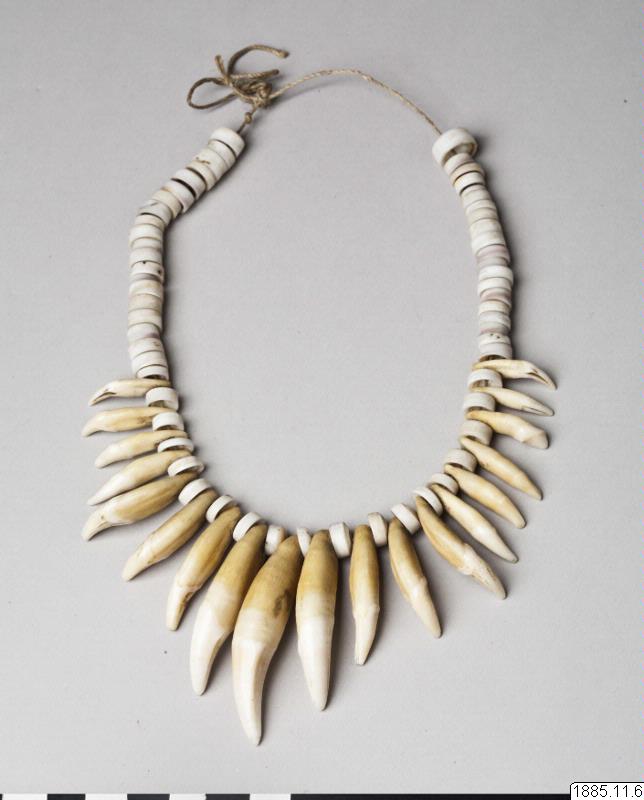
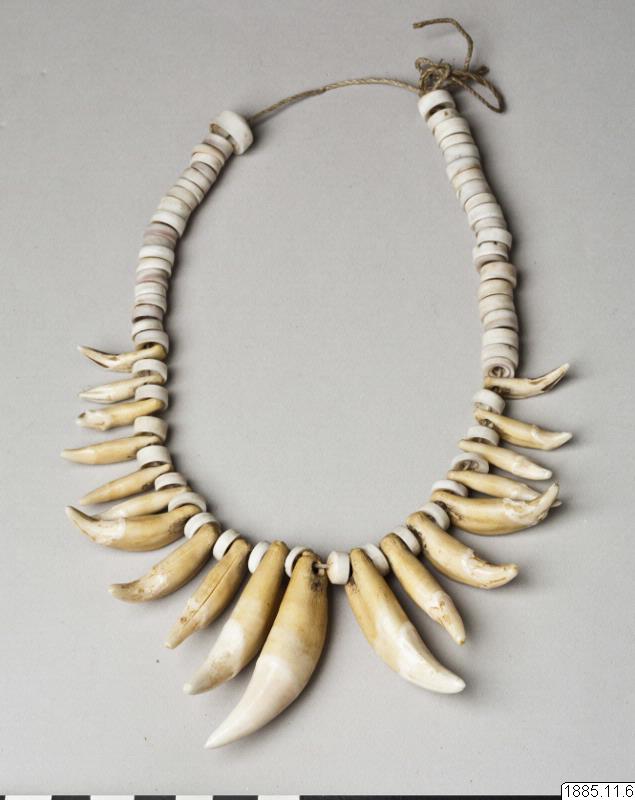
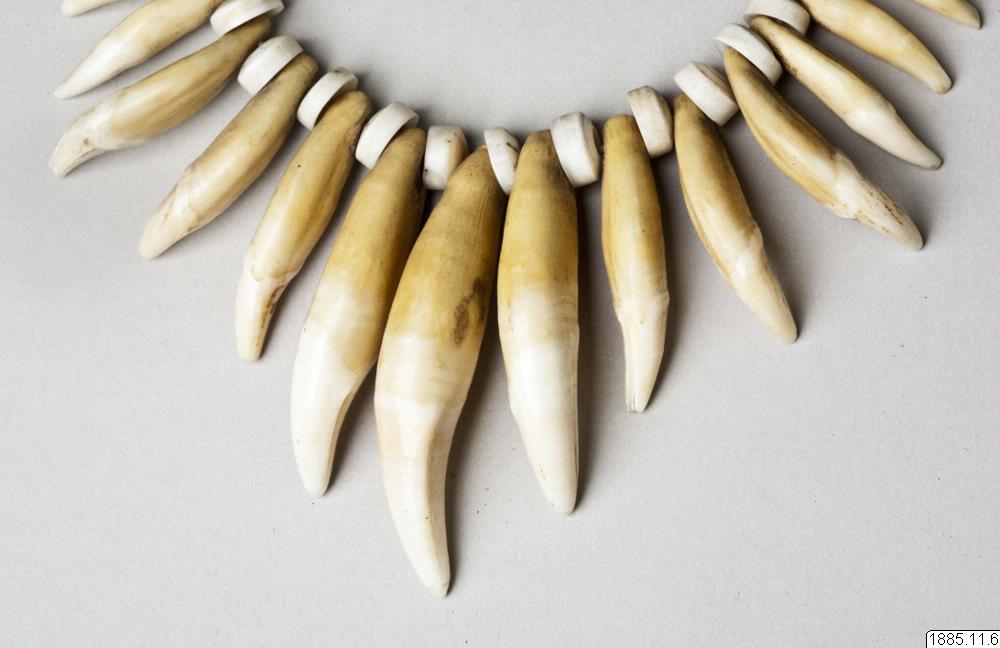
Halsband, namouka, av jaguartänder och en mängd små vitaktiga ringar av slipade snäckskivor, allt uppträtt på ett bastsnöre. Bäres endast av framstående hövdingar. Se beskrivning i Bovallius "En resa i Talamanca-indianernas land. Ymer 1885 sid. 191. Orig.nr. 2422. Längd 38 cm. Costa Rica Talamanca Bikisde (generalkatalogen)
|
| Beskrivning / engelska <itemDescription> |
-
Information derived from Bribri visit: Sept 28 – Oct 02, 2023. The necklace is likely made from jaguar (Panthera onca) canine teeth. The catalogue describes the necklaces being from the “Bekisde” area...
Visa hela
Information derived from Bribri visit: Sept 28 – Oct 02, 2023. The necklace is likely made from jaguar (Panthera onca) canine teeth. The catalogue describes the necklaces being from the “Bekisde” area; the Bribri visitors do not recognise the name but mention that it could refer to the Diquis region, due to a phonetic similarity. In Bribri culture, the circular shape of a necklace represents the beginning and end in the circle of life and the visitors also describe the necklace as a symbol for the “world of light”. A necklace imparts information on the life of a person; the number of teeth mark significant events in that person’s life and the species of the teeth may give further information on specific events, such as an illness. The length of the necklaces in the collection is described as representative of the time and care taken by the maker to craft items of great quality. It is believed the making of the necklaces would be entrusted to a clan specialised in the craft. Necklaces like those in EM’s collections are no longer typically created or worn within Bribri communities, but the knowledge of the practice still exists.
Stäng
|
| Utställning / ingår i <itemDescription> |
|
| Utställning, del av / ingår i <itemDescription> |
|
| Utställning, monterdel / ingår i <itemDescription> |
|
| Land / engelska <itemDescription> |
|
| Geografiskt namn / annat <itemDescription> |
|
| Geografiskt namn / annat <itemDescription> |
|
| Händelse / var närvarande vid <itemDescription> |
|
| Händelse / var närvarande vid <itemDescription> |
|
| Händelse <context> |
-
Brukad av Bribri.
-
Ursprung i Bikisde, Costa Rica, Nordamerika.
-
Insamlad 1882-08 av Bowallius, Carl Erik Alexander.
-
Förvärvad 1885 .
-
Utställd 2012-10-26 - i Etnografiska museet, Stockholm av V11, Magasinet - V, Magasinet - En etnografisk skattkammare.
|
| Material, engelska<itemMaterial> |
- tooth
|
| Materialkategori<itemMaterial> |
- animaliskt material
|
| Material<itemMaterial> |
- snäcka
- tand
- jaguartand
- Panthera onca
|
| Nyckelord <itemKeyWord> |
-
Bribri People
-
1885.11.0006
-
Animala biprodukter (237)
-
Bearbetnig av ben, horn och skal (321)
-
Bearbetning av råämnen (320)
-
Bovallius, Carl
-
Husdjursskötsel (230)
-
Kroppens prydnande och vård (300)
-
Leopardens fläckar
-
RM.2422
-
Smycken (301)
-
Talamanca
-
Ursprungsfolk i Costa Rica
-
Ursprungsfolk i Panama
|
| Mått <itemMeasurement> |
-
Längd: 38 cm.
-
Höjd: 1,6 cm.
-
Bredd: 5,5 cm.
|
| Lokalt namn<itemName> |
- namouka
|
| Sakord, engelska<itemName> |
- necklace
|
| Sakord<itemName> |
- halsband
|
| Ämne <subject> |
|
| Inventarienummer <itemNumber> |
|
| Tidigare identitet <itemNumber> |
|
| Rättigheter för metadata <itemLicense> |
|
| Källa <presOrganization> |
Statens museer för världskultur - Etnografiska museet |
|
Källa <url>
|
|